


 Shkruar nga Pamfleti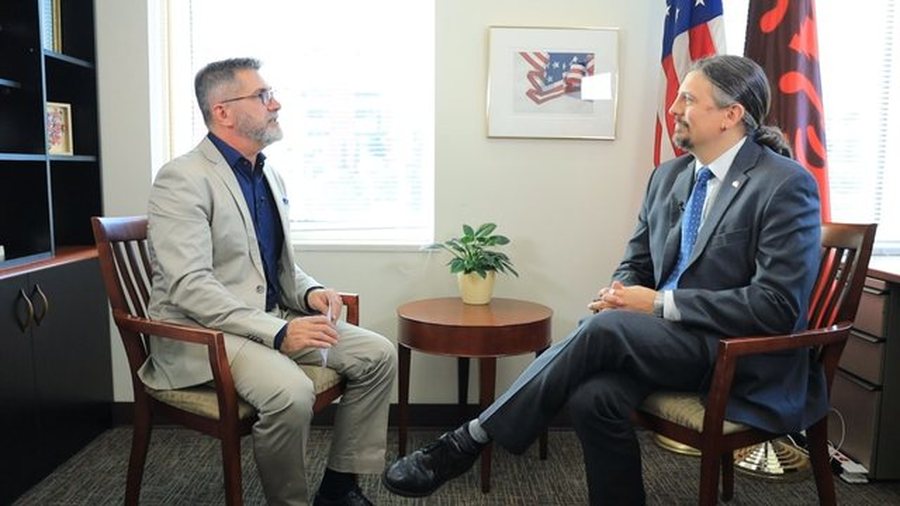
The Coordinator for Global Anti-Corruption at the US Department of State, Richard Nephew, who visited Tirana, says that at the center of the talks with the Albanian authorities, was the importance of eliminating impunity and the fight against corruption, as well as maintaining the progress made in strengthening the judiciary and its independence.
In an interview for the Voice of America, Mr. Nephew states that Albania has made progress in the fight against corruption, but that there is still a lot of work to be done. He praised the work of SPAK, as well as commented on the recent initiative of the socialist majority for a new cycle of reforms related to good governance, the rule of law and anti-corruption.
Voice of America: Mr. Nephew, what were the issues you discussed with the Albanian authorities in this first visit of yours to Albania, as Coordinator of the State Department for the fight against corruption?
Richard Nephew: First, I really enjoyed the visit to Albania. I have wanted to visit Albania to discuss the important work being done in the fight against corruption for several years, so I am very pleased to be here.
I think the main focus of our discussions has been the importance of eliminating impunity and the fight against corruption, ensuring that judicial reforms and the progress that has been made to ensure the independence and strength of the judiciary will be maintained.
We had several discussions and we also discussed the importance of bringing civil society and other voices into this discussion, since they often have ideas that can be really useful in the efforts for judicial reforms.
Voice of America: The latest report of the Department of State for Human Rights assesses that Albania has made progress in the fight against corruption, but on the other hand it has also been noted that corruption is present in all branches and levels of government. Does this mean that the efforts so far have been insufficient?
Richard Nephew: I think both may be true, that progress may be being made and that more progress needs to be made. The reality is that the fight against corruption is long-term. It requires a lot of persistent effort. Of course, it also requires persistent efforts where you always have to see ways to engage in reforms, in the solutions that can be found and to ensure that the bodies that are tasked to ensure the fight against corruption successfully have the ability to do so. So I think there has certainly been progress, but there is a lot more that can be done and we are here to support Albania in this effort.
Voice of America: The Albanian government insists that it has undertaken reforms and measures to fight corruption and that the situation has improved. But we also have the reports of international institutions, which measure the perception of the public and they prove that according to the public this phenomenon remains widespread. Do you think that the Albanian government should take these findings more seriously?
Richard Nephew: Absolutely. Reports from monitoring or international organizations, or civil society organizations and others are intended to help. At the end of the day, none of us can fully evaluate and analyze, alone, what is happening in our countries when it comes to the fight against corruption.
We need the support of international institutions to be able to do this and the findings are intended to provide clear information on what can be done next. So, even if progress is being made, even if there are achievements, it is absolutely essential to find new ways to address the problems that are being highlighted by different groups, whether international organizations, civil society organizations, or others.
Voice of America: The head of SPAK, one of the most reliable institutions in the country, has publicly stated that in the last year, public and state institutions have made fewer denunciations of corruption cases. Does this bother you?
Richard Nephew: I think SPAK is doing a great job. And of course we see all the good efforts that are being made and we are also making the best efforts to support SPAK and everything that it does, but it cannot be all in the drive against corruption in Albania.
To succeed in the fight against corruption, the efforts of the entire society and the entire government are required. Therefore, I think it is appropriate to find new ways for all the various government institutions as well as civil society organizations to contribute to these efforts to share ideas and work together as they do so.
VOA: In the last two years, we have seen cases of high-ranking government officials or former government officials who have either been convicted or indicted for corruption. The Prime Minister has always treated this as an individual matter. Technically correct, also because legally the responsibility remains individual. But when we have a considerable number of officials, even former members of the government cabinet, doesn't it seem difficult to believe that responsibility is only a matter of individuals. How do you see this?
Richard Nephew: Sigurisht është e vërtetë që korrupsioni ka të bëjë me individë, individë që kryejnë shkelje që nuk duhet t’i bëjnë. Por është po ashtu e vërtetë që ata individë funksionojnë brenda një sistemi. Ndaj kur ke shenja se ka një numër individësh që përfshihen në shkelje, duhet të shohësh jo vetëm se si t’i përgjigjesh atyre.
Dhe kjo bëhet duke siguruar që gjyqësori të jetë i pavarur dhe i aftë të funksionojë i pavarur, që prokurorët janë në gjendje të veprojnë të pavarur, por në të njëjtën kohë, edhe që je duke bërë ato lloj përmirësimesh të sistemit që nevojiten dhe kjo është arsyeja pse raportet ndërkombëtare dhe organizatat e shoqërisë civile bëjnë gjithë atë punë për të identifikuar se ku janë këto nevoja për të kryer përmirësime të sistemit dhe, në Shqipëri, ashtu si në shumë vende, kur çështje të tilla identifikohen, është me rëndësi që të merresh me to ballë për ballë.
Zëri i Amerikës: A mendoni se brenda institucioneve shqiptare duhet të ketë mekanizma që të funksionojnë për të parandaluar rastet e abuzimit dhe korrupsionit?
Richard Nephew: Mendoj se të gjitha institucionet që kanë lidhje me pjesët e shtetit që mund të merren me kontrata apo prokurime dhe të tjera, duhet të kenë mekanizma për të lejuar raportimin e ankesave, t’i identifikojnë ato ankesa dhe t’ua sjellin ato hetuesve. Mendoj edhe që në Shqipëri sisteme të tilla ekzistojnë sigurisht. Ndaj do të thoja që në vend që të themi se ka nevojë për institucione të reja apo zëvendësuese, duhet të shohim që të sigurohemi që institucionet që ekzistojnë në sistemet ekzistuese funksionojnë sa më efektshëm që mundet dhe aty ku nuk funksionojnë, të gjenden mënyra për t’i përmirësuar ato.
Zëri i Amerikës: Kohët e fundit, shumica, miratoi në parlament, ngritjen e një komisioni të posacëm për atë që quan Shqipëria 2030, i cili ka të bëjë me luftën kundër korrupsionit, reformat për mirëqeverisjen, dhe sundimin e ligjit. Cili është opinioni i SHBA për këtë nismë dhe a do të kenë SHBA një rol në të?
Richard Nephew: The United States will continue to support Albania in its efforts to improve and work with existing judicial activities and to ensure that those bodies that already exist are as effective as possible. Our point of view is that any type of reform mechanism, any type of legislation that is presented needs to be comprehensive and needs to take into account the different actors that exist in the country, especially civil society organizations and others. I also think that we want to ensure that whatever additional reforms are made, they continue to preserve the independence of the judiciary and ensure that prosecutors continue to take cases forward, that they can do their work as independently as possible and based on facts. I think as we look at the reforms and as we look at the kind of work that's being done to improve the systems here, a lot will be decided by how comprehensive they are, how much all the different actors bring and that we don't lose the good progress that's been made now, to make the justice sector as independent and efficient as possible.



Lini një Përgjigje