


 Shkruar nga Pamfleti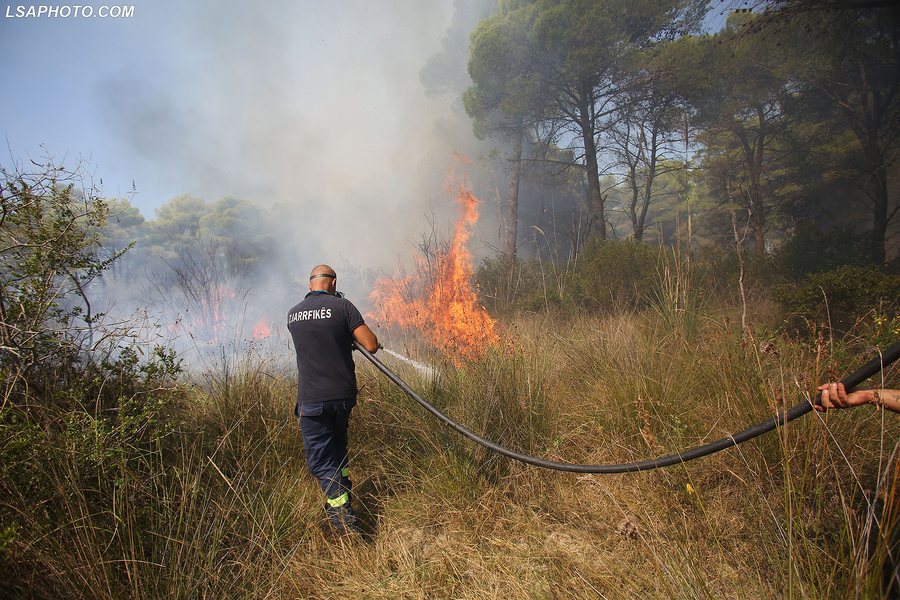
In less than two weeks, the forest massif with pines on the coast of Pishë Poros and Darëzeza burned. The fire started on September 24 and was brought under control only on October 5, having burned 700 hectares of pine forest. The first massive fire appeared in Darëzeze and burned within a few hours over 100 hectares of pine forest. A few days later, the fire affected the southern part of the forest near Pishë Poros and after 8 days it reached the initial focus in Darëzeze.
To extinguish the flames, hundreds of firefighters from all over the country, army forces and two "Canadair" planes that came to help from Greece were engaged. But the fight with the flames was not easy.
"It is difficult to put out the fire in these forests because even when it seems that there is no flame, the layer of plants and leaves stays on for days reactivating as a hearth in the conditions of high temperatures and strong wind," said the prefect of Fier County, Lefter Shehaj.
"This is what happened in Pishë Poro and Darëzeze where the fire that we thought was extinguished, reappeared a week later", he explained.
According to local environmental experts, the damage caused by this fire was great, while the firefighters emphasize that the lack of equipment made it impossible to extinguish it in time.
"The burnt surface is more than 1/3 of the forest, which has completely lost its ecological functions, becoming inactive", said Zydjon Vorpsi, specialist of the Agency of Protected Areas in Fier.
The Pishë Poros forest was planted 40-50 years ago under the dune system on both sides of the mouth of the drainage channel of Povelça, in a length of about 7 kilometers. In 2022 it was declared by the Council of Ministers as a 'protected landscape' and was part of the 'Emerald' network – a network of ecological areas declared to be of particular importance by the Council of Europe under the Berne Convention.
The flames that engulfed the area this year have not only burned the trees, but have scorched the entire food chain, destroying the shelter of dozens of wild species of animals and birds.
According to Zydjon Vorps, a preliminary logical assessment easily leads to the conclusion that the loss of biomass translated into figures is at high levels, while the entire food chain has disappeared along with the possibility of sheltering wild life.
"The nesting sites of the species that were observed there will no longer be there, removing the possibility of the presence of these species," Vorpsi explained.
"This includes the types of night birds such as the barn owl, the bearded owl or the common owl, the different types of woodpeckers that were present in the area, the woodpecker or the tree creeper", he added.
Drejtori i Agjencisë së Zonave të Mbrojtura në Fier, Fotjon Premçe i tha BIRN se zjarri shaktërrimtar i këtij viti në Pishë Poro ishte më i madhi gjatë një dekade.
“Pylli ishte djegur në 2013-ën por u rikuperua, megjithëse pemët ende nuk kishin arritur lartësinë e mëparshme,” tha Premçe, ndërsa shtoi se tashmë ‘gjithça u dogj sërisht.'
Premçe thotë se pylli kishte shumë specie që tani janë bërë shkrumb e hi.
“Fakti që është zonë e mbrojtur do të thotë se ka specie bimësh dhe kafshësh të veçanta,” tha ai.
“Konkretisht në këtë pyll kishte bimë dhe pemë endemike që tani me zjarrin mund të jenë zhdukur përfundimisht”, përfundoi Premçe.
Taulant Bino, drejtues i shoqatës së Orintologjisë shpjegon se situata ka sjellë humbje të habitatit për mjaft prej shpendëve, ndërsa thotë se speciet më të dëmtuara janë amfibët, reptilët dhe zvarranikët.
“Kjo është zonë e mbrojtur dhe përveç pyllit ka edhe një lagunë, ndaj mendohet se dëmi në gjallesa është i konsiderueshëm,” tha Bino. “Breshka është një specie që pëson humbje të mëdha në zjarre te tilla”, shtoi ai.
Sipas Vorpsit dëmi nuk është shkaktuar vetëm në pjesën e djegur të pyllit. Zjarri pritet të ndikojnë negativisht edhe pjesën tjetër të ekosistemit Nartë-Pishë Poro dhe në zonën e lagunës.
“E gjithë masa e djegur rrezikon të depërtojë në ekosistemin ujor duke e ndotur dhe duke ndryshuar parametrat biologjike”, tha Vorpsi.
Sipas Vorpsit, zjarri “dogji” edhe mundësinë që pylli të përfshihej në rrjetin “Nature 2000” – një rrjet europian i zonave të mbrojtura.
Ai sqaroi se për zonën kishte një studim të vitit 2020, sipas të cilit ajo kishte habitate që përfshihen në Direktivën e Habitateve të Bashkimit Evropian, për këtë arsye ajo u propozua si një zonë kandidate për tu futur ne rrjetin e ardhshëm të ‘Natura 2000' nga ekspertët.
Zjarret në Pishë Poro kanë ndikuar negativisht dhe blertarët e Fierit, të cilët raportuan rënie drastike të prodhimit të mjaltit. Më të prekur janë bletërritësit pranë masivit pyjor dhe në zonat bregdetare.
Fran Radi bletërritës prej 30 vitesh tha për BIRN se nga një ton mjaltë që prodhonin 150 kosheret e tij me bletë, ketë sezon nxorri vetëm 100 kilogramë. Radi shpjegon se shkak kryesor ishin zjarret që dogjën bimësinë, madje edhe vetë bletët kur ndodhen në kullotë.
”U thanë bimët nga të cilat bletët merrnin nektarin, pastaj ranë zjarret gjithandej,” tha Radi, ndërsa shtoi se “shumë bletë u vranë duke mbledhur nektar”.
Bletërritësi tha se prodhimi do të ndikohet edhe në vitin e ardhshëm, pasi gjysma e bimësisë në zonë është djegur. Të dhënat nga sektori veterinar në Fier konfirmojnë se prodhimi i mjaltit është ulur dhe se zjarret kanë goditur rëndë bletarinë.
”U thanë kullotat nga temperaturat e larta, ndërsa zjarret e përkeqësuan situatën”, tha Ferrik Avdia, agronom dhe shef i administrimit pyjor dhe veterinar pranë Agro Pikës në Fier.
Për banorët e zonës, shtëpitë e të cilëve i ndajnë vetëm disa dhjetëra metra nga pylli, zjarri i këtij viti ishte më i madhi që nga viti 2013.
"Almost every year, a small area burns," said Neki Tafa, the elder of Darëzeza to BIRN, while adding that in 2013 there was "an even bigger fire than this one now".
"We are not directly affected, but we are sorry for this burning property", he underlined.
Firefighters without tools
While environmental activists complain about the loss of biodiversity, the measures to deal with similar fires are missing in the municipality of Fier.
The head of the Fire Service in Fier, Zija Hyka, told BIRN that if they had been equipped with additional equipment, tools and personnel, the fire would have been extinguished faster, even without the need for planes from Greece.
"We need small vehicles like fire trucks that can easily penetrate areas like this," he said. "If we had them, the time to extinguish the fire here would not be so long", added Hyka.
Prefect Shehaj explained that apart from the tools for the firefighters, care for the forests must be permanent, keeping the road open for the firefighters, which creates the possibility of quick intervention.
"The forest used to have passageways that, in the event of a fire, firefighting vehicles could penetrate into the interior to put out the flames," he explained. /BIRN





Lini një Përgjigje