


 Shkruar nga Pamfleti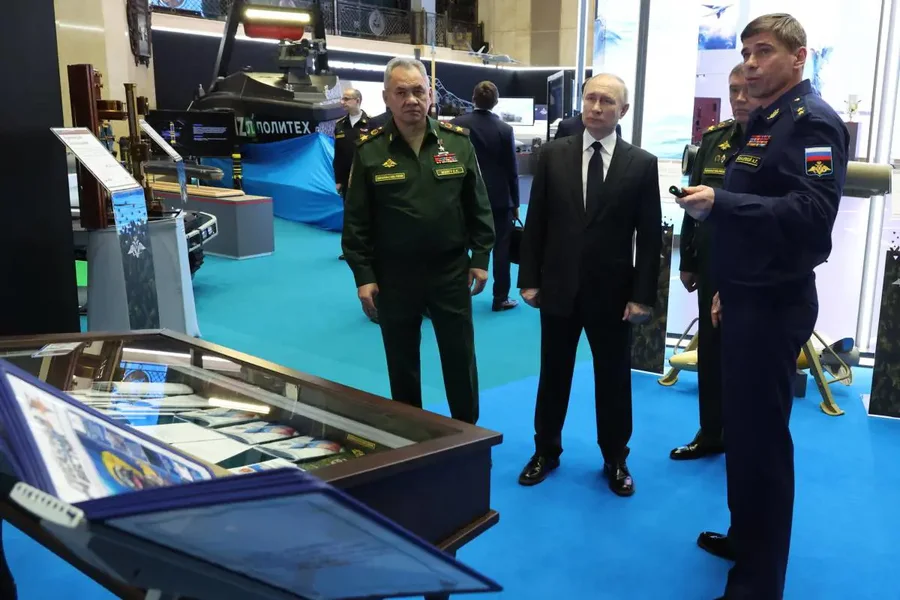
Despite sanctions and isolation, Russia continues to export billions of dollars in weapons, using the military market as economic and political leverage...
Amid geopolitical tensions and under Western sanctions, Russia continues to maintain one of its most sensitive economic drivers: the export of arms and armaments of various types.
The numbers are the best indicator. In 2025, Moscow earned over $15 billion from the sale of military systems to more than 30 countries, a significant sum that speaks to much more than just commercial success.
Vladimir Putin himself confirmed this during a meeting of the Commission for Military-Technical Cooperation with Foreign States, highlighting how the sector has withstood "unprecedented pressure" exerted by the West to isolate Moscow's defense industry. Arms exports, in addition to being a source of hard currency, represent a means of political influence, a diplomatic lever and a way to maintain a military-industrial complex strained by the war in Ukraine.
Putin's arms business
According to Defense Blog, Russia has not only fulfilled most of the supply contracts planned for 2025, but has also strengthened its portfolio of new orders for 2026. Putin, in particular, emphasized the ability of the military cooperation system to “continue to function in difficult conditions,” despite Western attempts to block relations with Moscow’s partners.
Export revenues, the Kremlin explained, are reinvested in modernizing industrial facilities, increasing production capacity, and financing future research programs. Officially, a significant portion of production remains destined for civilian use, but it is clear that the core of the system remains defense-related. At the same time, Russia is pursuing over 340 joint military projects with 14 countries, a figure that indicates a dense network of strategic relationships that extends far beyond simple arms sales.
Africa, Russia's new arms market
What is striking is not only the aforementioned business volumes, but also the geographical and technological transformation of exports. After 2022, it is no coincidence that the Kremlin’s customer base has increasingly shifted towards Africa and countries under sanctions or with limited access to Western markets. In these contexts, Moscow presents itself as an alternative supplier, less constrained by political and human rights conditions.
At the same time, the composition of sales has changed: aviation-related systems, fighter jets, trainer aircraft, drones and space services, represent a growing share of orders, while exports of armored vehicles and missile systems are declining compared to the pre-war period.
This evolution reflects both Russia's operational needs, which must prioritize the domestic front, and international demand, which is increasingly oriented towards aerial and unmanned technologies.
In this scenario, military exports become a safety valve.
Economically, but also politically, despite its isolation, Russia remains a key player in the global arms market.
Behind these 15 billion dollars is not just business, but a long-term strategy. /Adapted from Il Giornale /


Lini një Përgjigje