


 Shkruar nga Pamfleti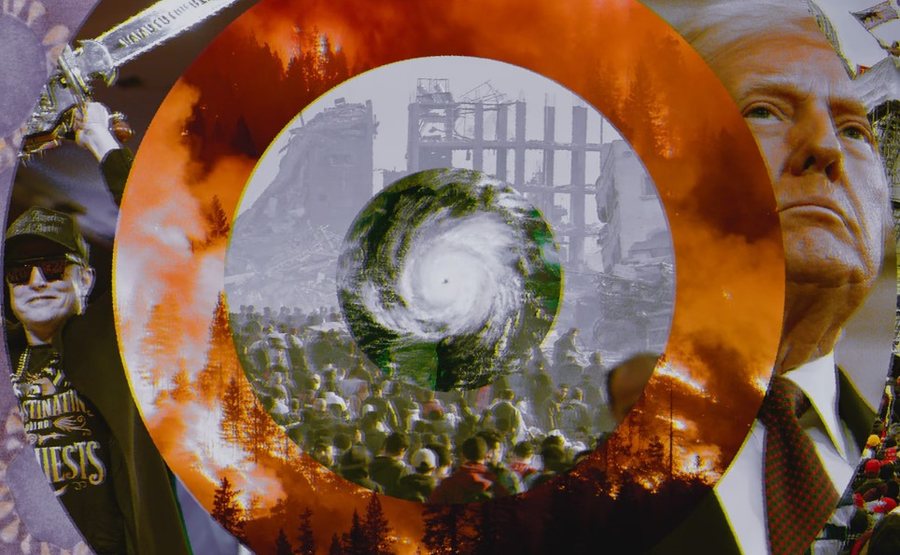
From Ukraine to climate: how new conflicts feed each other...
The word “polycrisis” has become fashionable in international discourse, a situation where the world faces several crises simultaneously, interconnected with each other, creating a general situation of destabilization. But in reality, many analysts are noticing that it is no longer a matter of spontaneous crises, but of a deliberate architecture of destabilization, where state and non-state actors use chaos as a political and strategic instrument.
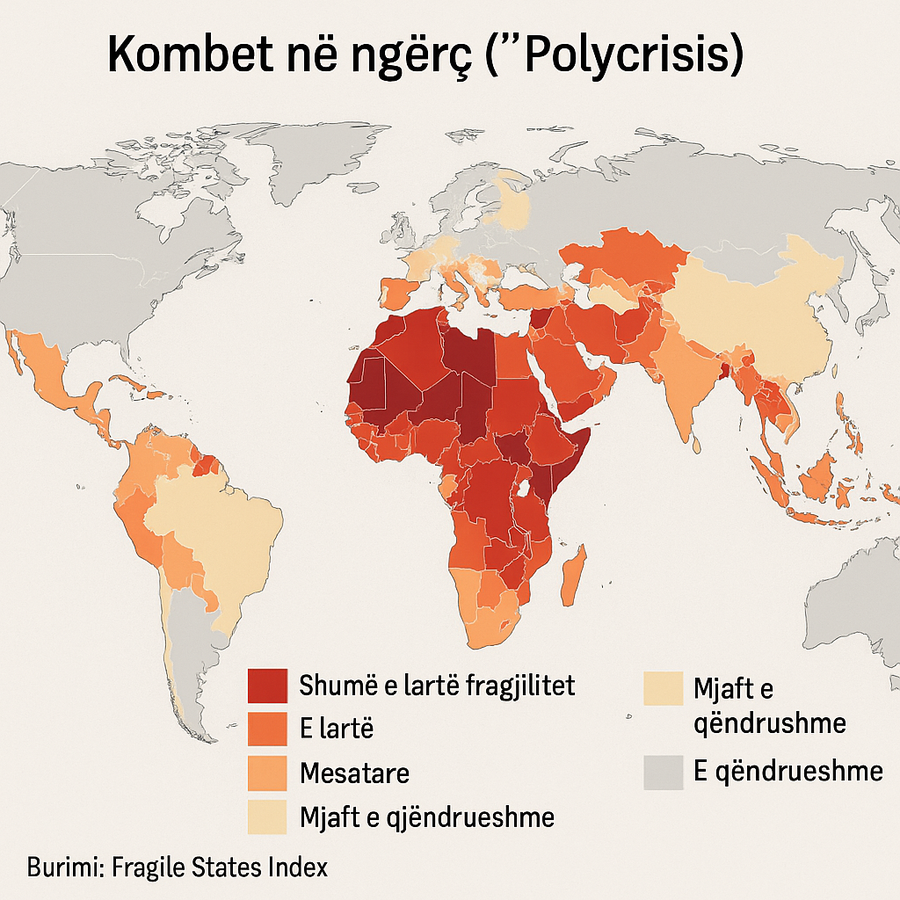
According to the latest international reports, 22 countries have been identified as the most at risk from this phenomenon, places where economic, climate, and security crises collide one on top of the other, putting them in a dangerous spiral.
Multiple crises or manufactured crises?
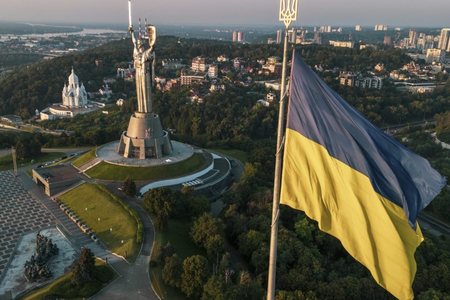
Today’s crises are not isolated. The war in Ukraine, the US-China clash, the rise of an authoritarian bloc between Beijing, Moscow, Tehran and Pyongyang, the climate crises and water shortages, and the challenges of artificial intelligence do not occur in a vacuum. They feed off each other, making it harder to distinguish between natural consequence and deliberate maneuver. For example, Russian aggression in Ukraine has not only caused security insecurity, but also energy and food crises that were used as a tool of pressure on Europe and developing countries.
The alliance of authoritarians and the weakness of the West
Meanwhile, China and Russia are promoting a new world order by aligning themselves closely with Iran and North Korea. This “authoritarian bloc” uses global destabilization as a political card. Whenever the West deals with domestic emergencies, this bloc gains ground. In the face of this, the West often seems caught off guard, confused between rhetoric and the lack of a clear strategy.
Climate crisis as a catalyst for conflicts
Climate change is no longer just an environmental issue. It is directly affecting the stability of states. In Africa, where temperatures are expected to rise by 1 to 4 degrees Celsius by 2030, economic losses could reach up to $50 billion. This means more conflicts over natural resources, more migration, and more ground for extremist groups that exploit poverty and chaos.
Technology as a double-edged sword
Artificial intelligence is the best example of a crisis that is both an opportunity and a threat. If used without regulation, it increases inequalities, cuts jobs and becomes an instrument of propaganda and control by authoritarian regimes. If managed carefully, it could alleviate many of the world's problems. The dilemma lies in the fact that there is no global regulator to balance this technology.
From polycrisis to the "stalemate strategy"
Today it is no longer clear whether the world is facing a spontaneous polycrisis or a well-organized global stalemate strategy. Every crisis becomes a pretext to weaken the liberal international order, strengthen authoritarians, and undermine citizens' trust in democracy.
For small countries, like Albania, this means more uncertainty, more dependence and the need for smart policies that read the times and adapt intelligently to international challenges. /Pamphlet






Lini një Përgjigje