


 Shkruar nga David Carretta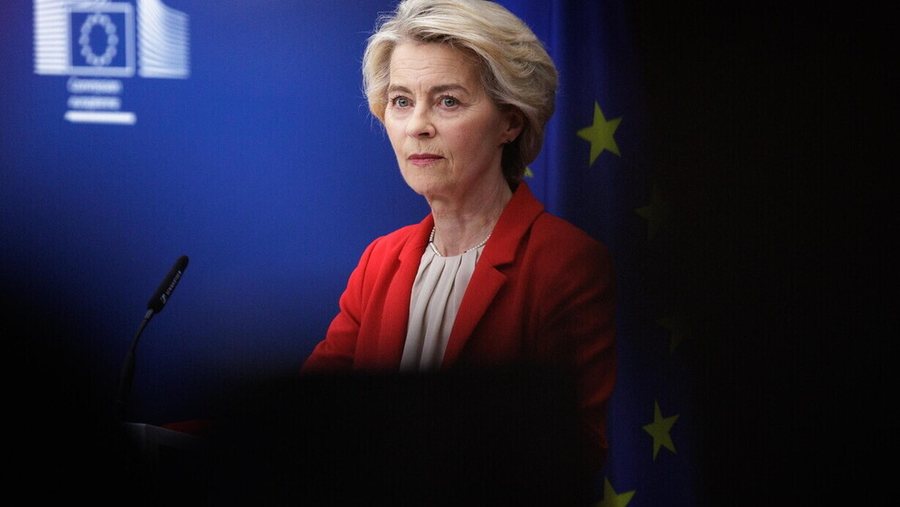
The agreement that allowed the European Union to free itself from border controls is in crisis, and European Commission President Ursula von der Leyen is turning a blind eye. Since September 2015, when the Syrian refugee crisis engulfed the EU, member states have sent Brussels 434 notifications of temporary exemptions from Schengen.
The Interior Ministers of the European Union countries celebrated the 40th anniversary of the signing of the Schengen Treaty on Thursday evening aboard a ship named after the Princess of Luxembourg, Marie Astrid.
The treaty allowed most of Europe to be freed from internal border controls, facilitating the free movement of people and goods. Schengen is one of the EU's great successes. A success that is felt in the daily lives of citizens.
Or at least those old enough to remember the queues at border crossings between member states. The celebrations, however, were subdued. Unlike her predecessor Jean-Claude Juncker 10 years ago, the current European Commission president, Ursula von der Leyen, did not consider a trip to the small Schengen town in Luxembourg.
In her place went the Vice-President of the EC, Henna Virkkunen, and the Commissioner for Home Affairs, Magnus Brunner. But it is not only the nationality of Juncker (former Prime Minister of Luxembourg) that explains the absence of Ms. Von der Leyen (former German minister).
Ten years after the Syrian refugee crisis of 2015, the borderless Schengen area of Europe has entered a deep crisis due to the obsession with migration among public opinion and governments. More and more member states are reinstating controls at their borders.
This is making life difficult for migrant workers and truck drivers, and is increasing political friction with their neighbours. The European Commission has chosen to turn a blind eye to this situation, allowing it to happen and not using its powers to properly restore the Schengen system.
The latest conflicts over this movement regime are linked to the decision of the government of Friedrich Merz in Germany to reintroduce controls at all internal borders. Last weekend, guard patrols appeared at the Dutch borders to check cars crossing the border with Germany in the town of Ter Apel for illegal immigrants.
The initiator of this action, a man with a criminal record for defamation and hate speech, explained to local media that the checks were a reaction and a counter-response to German police operations that return illegal immigrants caught in Germany to the Netherlands.
Merz's government has urged Dutch authorities to prevent further incidents. Even more politically explosive is the conflict with Poland, where Donald Tusk's government has repeatedly criticized Germany's pushback of all asylum seekers crossing the Polish-German border.
This issue was also exploited in the recent election campaign by the ultranationalist candidate Karol Navrocki, who narrowly won the presidential election on June 1. Former German Chancellor Angela Merkel has publicly criticized her successor Merz for his decision to reintroduce border controls.
But Germany is not an isolated case. The Netherlands has also reintroduced border controls with Belgium and Germany. So has Denmark with Germany. Sweden with Denmark. France with Belgium, Germany, Luxembourg, Spain and Italy. Austria with Slovakia, the Czech Republic, Slovenia and Hungary.
Italy with Slovenia. Slovenia with Croatia and Hungary, while Bulgaria with Romania. The Schengen suspension should be limited in duration, as controls will remain in force for a maximum of 6 months, a period that can be extended up to 2 years.
But some of the countries that decided to implement them in the last 10 years have not lifted them. Since September 2015, when the Syrian refugee crisis engulfed the European Union, member states have sent Brussels 434 notifications of exemptions from the Schengen system.
They have often cited large flows of illegal immigrants, human trafficking or migration-related security threats as reasons. In theory, the European Commission is supposed to assess whether the decision is proportionate, draw up a report and initiate disciplinary proceedings in cases of violations.
But Von der Leyen chose not to do so, in the name of dialogue with the national governments of the bloc's countries. And the results were seen in the celebrations held aboard the Marie Astrid ship.
Regarding internal migration flows in the European Union, experts and independent institutions - such as the Dutch government's audit services - agree that border controls have almost no impact on reducing asylum applications./ Adapted from "Pamphlet" by "Il Foglio"



Lini një Përgjigje