


 Shkruar nga Angelo Panebianco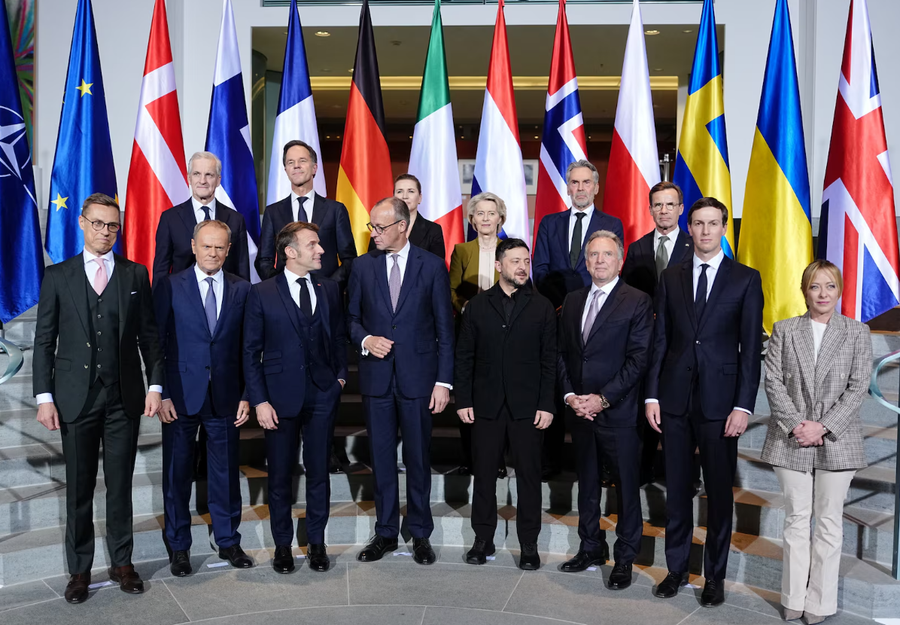
Will the European integration process be revived, or will it stall forever, or at least for a long time?
Next year, general elections will be held in Italy, France, Spain and Poland. Elections will follow in Germany and the United Kingdom in the following years, unless there are snap elections. This means that the political face of Europe could soon be different from what we have known so far. The stakes will be extremely high: will voters resist the lure and appeal of nationalist movements? Will the process of European integration be revived, or will it stall forever, or at least for a long time? Will Europeans continue to support Kiev, or will they stop? Will they develop a barrier to protect them from a resurgent Russian imperialism, or will they choose the path of appeasement, choosing to submit to the dictates, no matter the cost, of Russian leaders?
In many countries, the elections will have the character of a referendum and the result may be clear and indisputable. Italy may be an exception. It is possible that here, instead of bringing clarity, the elections will generate uncertainty and ambiguity. Whoever wins. On paper, there are three possibilities. The right wins without Vannacci. A right open to Vannacci wins. Or, finally, the left wins.
The first scenario, given how things have played out, seems unlikely. It is possible that without Vannacci, the right would lose the elections. So let's imagine a right-wing party that wins, but that cannot do without Vannacci's parliamentary support. A moderate party like Forza Italia would certainly be incapable of having Vannacci's people in government. This also applies to many in the Brothers of Italy and the League. Therefore, it is more likely that external support will be negotiated. There could be nothing better for the general, because he could engage in a daily guerrilla war against the government, aiming to weaken it for his own benefit.
Vannacci is not Salvini; he would not be forced to submit to Meloni's demands to avoid jeopardizing the stability of the government. Things would be good for him too: whether he remained in the majority for a while, but dedicated to sabotaging the government's actions, or by withdrawing external support at the right moment. For the general, it would be essential above all to destroy Giorgia Meloni's leadership, to compromise her image before the country. Meloni is the only obstacle preventing him from presenting himself to the voters as the only and authentic leader of the right. It is a scenario that has played out many times throughout history: attempts are made to neutralize the extremist by appropriating him. Without success. In fact, the (unintended) result is that of strengthening his leadership and his ability to appeal to the most confused and frightened segments of public opinion.
What would Italy's foreign policy be like with a governing majority that included Vannacci? It would be as unpredictable and ambiguous as one can imagine. Of course, continuity with the past would be officially proclaimed, loyalty to alliances, cooperation in Europe, support for Kiev, etc. But actual daily behavior would be conditioned by Vannacci's presence in the majority and the need to maintain his support, otherwise the government would fall. Every foreign policy choice, as well as every decision regarding national security, would be affected.
What if the left wins? As for the country’s international status, the outcome would likely not be much different from what would be achieved with an all-right coalition led by Vannacci. As is well known, the left is divided, and apparently irretrievably, on foreign policy grounds. Moreover, the left lacks the same energetic leadership that Meloni has exercised over its coalition. There would be no way to prevent left-wing Putinism from shaping Italy’s international status. Even then, vacillation, uncertainty, and ambiguity would characterize the government’s actions. A group of intellectuals, but also some clerics, would push the left to further escalate its protests against European rearmament policies. This time, not from the opposition, but by exploiting its control over the government.
As with a right-wing and inclusive Vannacci government, a left-wing government would find it difficult to maintain military support for Kiev, as well as adopt a favorable stance toward a European policy of deterrence against Russia.
It is possible that in other European countries, the election results will give a fairly clear answer: either on the one hand, in favor of European cooperation and the choice to defend oneself and Europe, or on the other hand in favor of disarmament and pacification. Only in Italy, perhaps, things will go differently. Perhaps, as has happened other times in our history, Italy will follow a different path: a little on one side and a little on the other./Adapted from “Pamphlet” by “Corriere della Sera”



Po ky surrati cifut ngjitur me ate gruan c'mutin do ne Europe? Mos jane ne dhjere ne breke nga crimet ne LIndjen e Mesme e duan te sistemohen ne Europe tani qe tre na vene dinamitin?
Hey, politika po u be biznes familje te con ne fashizem criminel. Po nuk reagoi tani bota e qyteteruar tani sa nuk eshte vone bota do perfundoje ne katraure.