


 Shkruar nga Tim Willasey-Wilsey
But even Ukraine is running out of soldiers and is starting to lose courage.
Let us hope that the peak of European illusion was reached on December 7, when a TV analyst asked at the moment of the reopening ceremony of Notre Dame Cathedral in Paris, whether the yellow tie and blue suit of the newly elected US president, Donald Trump , was to be taken as a positive signal that he would not abandon Ukraine.
But NATO Secretary General Mark Rutte had no such illusions. Two weeks ago, he met with Trump in Palm Beach, Florida. According to a senior NATO official in Brussels, he came out of that meeting very shaken.
Rutte was wondering whether a commitment by European countries to spend 3 percent of GDP on defense would satisfy the incoming US administration, or whether a 4 percent spending rate would be required. Since then, he has called on allies to adopt a wartime mentality.
From that moment there have been many movements. British Prime Minister Keir Starmer visited Estonia to meet British troops stationed there, and to attend a meeting of the Joint Expeditionary Force (JEF), a grouping of NATO members in Northern Europe (Britain, the Netherlands, the 5 Nordic countries and 3 Baltic states) where he stated: "I think we all need to put more skills in Ukraine with our equipment".
Britain is seen as the leader of the JEF, but a senior Estonian official told me that London's position is increasingly viewed with suspicion. Because unlike Poland, which has significantly increased military spending, Britain has said nice words, but without making them concrete with military capabilities.
He praised former British Defense Secretary Ben Wallace for training Ukrainian forces since 2014, and for sending to Ukraine NLAW anti-tank missiles, and shortly after long-range Storm Shadow missiles. Meanwhile, the new minister, Al Carnes, recently declared that Britain can only afford a war lasting 6 months.
However, most experts doubt whether British forces can survive more than a few weeks. A small example. Britain currently has only 213 Challenger 2 tanks while Ukraine has lost over 5,000 tanks in less than 3 years of war.
Current defense spending of 2.3 percent of GDP may seem reasonable, but it includes nuclear deterrence, which takes away from resources available to conventional forces. The obvious need for Britain to have some basic anti-missile defenses and improved drone capabilities means that nothing will be left to put Britain on a credible war footing.
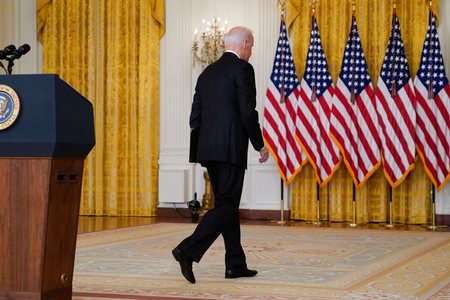
Starmer did not even include Ukraine among his 6 priorities in his annual speech on December 5. Europe will have a hard time getting a seat at the table if Trump opens negotiations with Putin. She was not even consulted on the US evacuation from Afghanistan.
So the only way to be taken seriously by the US administration would be to announce a transformative change in European defense, and commit to shouldering the bulk of the costs of the Ukraine war, in exchange for US- of NATO and the continued provision of its key capabilities, such as air transport and intelligence.
This may be a minimum requirement to change Trump's mind, and it would be much more effective if offered from the start, rather than met under pressure from Washington. However, it is strange that the future of Europe's security rests almost entirely on the whims of a very unpredictable man.
Finally, what will happen if Putin refuses to accept a "cease territory for peace" style deal next year? From his perspective, he is winning in Ukraine, albeit at a snail's pace and suffering heavy casualties.
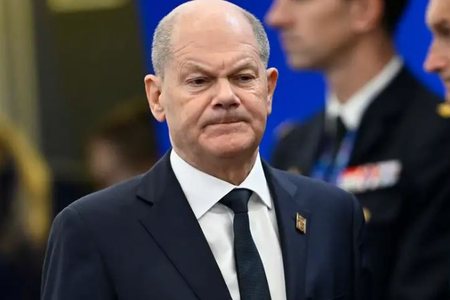
But even Ukraine is running out of soldiers and is starting to lose courage. France and Germany are in political chaos. Having experienced failure in Syria, Putin may not be in the mood to compromise on Ukraine.
What would NATO do if Russian troops broke through Ukraine's defenses and suddenly (like the British army in 1918) started advancing 20 miles instead of just 20 meters every day. What if Mykolaiv and Odessa, on the Black Sea coast, capitulate and Russian troops head for Moldavia, or if they cross the Dnipro River and march northwest toward Kiev?
Note: Tim Willasey-Wilsey, professor of war studies at King's College London, and a former British diplomat. / Adapted "Pamphlet" from "The Scotsman"



Lini një Përgjigje