


 Shkruar nga Pamfleti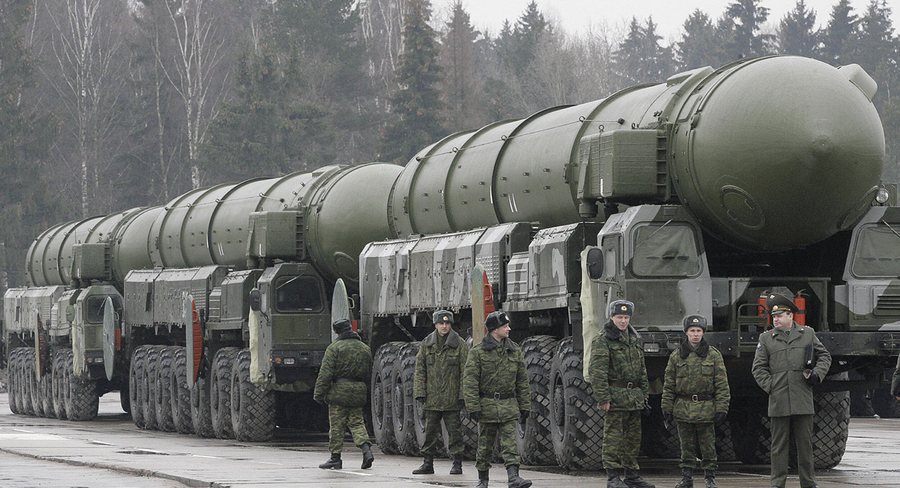
Russia, with its roughly 2,000 tactical nuclear warheads, outnumbers NATO forces by nearly ten times, which can rely on a modest arsenal of 250 B-61 bombers.
In recent months, growing attention to Russia's tactical nuclear arsenal has raised concerns across the Atlantic alliance. Russia, with its roughly 2,000 tactical nuclear warheads, outnumbers NATO forces by nearly ten times, which can rely on a modest arsenal of 250 B-61 bombers, still being upgraded. This gap is not only numerical, but represents a strategic breach that could redefine the concept of nuclear deterrence in the 21st century.
Russian Nuclear Doctrine: An Ever Lower Threshold
Russia's nuclear doctrine has undergone a significant evolution. Recent changes introduced by the Kremlin have lowered the threshold for the use of nuclear weapons, allowing them to be used in response not only to conventional attacks, but also to "perceived threats". This strategic ambiguity increases the risk of escalation in tense contexts, such as the current one between Russia and Ukraine, and raises questions about NATO's response capacity.
A versatile and deadly Arsenal
Russian superiority is not limited to quantity, but extends to the variety of its arsenal. Cruise missiles, nuclear torpedoes, coastal defense systems, and short-range ballistic missiles comprise an array of offensive-defensive capabilities that exceed the uniformity of NATO's B-61 gravity bombers. This technical and tactical imbalance reflects a fundamental shift in strategic thinking: Russia has invested in a flexible arsenal, while NATO has focused on strategic nuclear systems, neglecting tactical capabilities.
The risk of escalation on the battlefield
Tactical nuclear weapons, designed to strike limited targets with relatively little destruction, pose a unique risk. Despite their smaller power compared to strategic weapons, their destructive capacity is by no means negligible. A tactical warhead with a yield of 170 kilotons far exceeds the energy released by the bombs dropped on Hiroshima and Nagasaki in 1945. This means that even "limited" battlefield use can have devastating consequences.
NATO: Between security and vulnerability
NATO's response to this growing threat appears, at least for now, fragmented. The United States is working on modernizing its B-61s with the B61-13 version, but the process is lengthy and does not provide an immediate answer to the current gap. Meanwhile, some member states, such as Poland, the United Kingdom and France, are considering acquiring non-US tactical nuclear weapons to bolster their defenses.
A Prevention Strategy at Risk
The fundamental problem lies in the prevention strategy itself. Classical nuclear deterrence is based on the balance of the threat of mutual destruction, but the growing disparity in tactical weapons is destabilizing this balance. Russia may feel emboldened to use tactical nuclear weapons, believing that a proportionate response from NATO is unlikely or ineffective.
Conclusions: Towards a New Arms Race?
Russian superiority in tactical nuclear weapons represents an unprecedented challenge for NATO. The combination of numbers, variety and a more aggressive doctrine makes the strategic landscape extremely dangerous. The alliance will have to respond with a clear and coordinated strategy, strengthening its tactical nuclear capabilities and investing in advanced defense systems.
Prevention, as we know it, may be at a tipping point. In a world where the threshold for the use of nuclear weapons is lowering, peace becomes an increasingly precarious balance./ Adapted "Pamphlet" from "InsideOver"





Lini një Përgjigje