


 Shkruar nga Pamfleti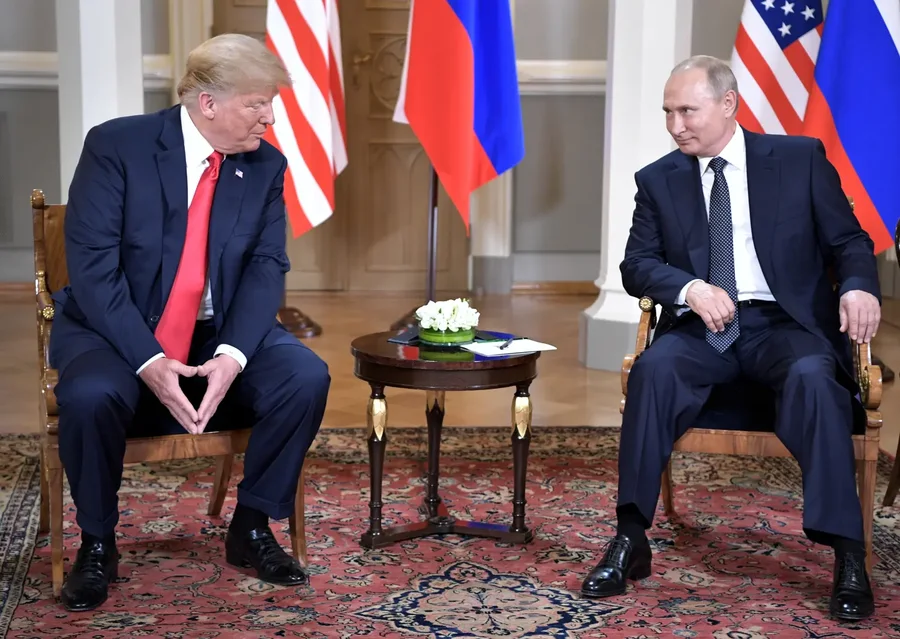
Although there is no clear evidence of a direct connection, the timing of Russian attacks often coincides with the harsh statements of the American president, but the reality is deeper and more dangerous...
The brutal violence of recent days in Ukraine and Donald Trump's heated statements cast serious doubts about a possible connection between the American president's words and the Kremlin's aggressive reactions.
Initially, Trump openly expressed his disappointment at Putin's unwillingness to engage Russia in a serious peace process.
" They throw a lot of crap at us, to say the least ," Trump said during a cabinet meeting. " It's always very nice, but in the end it turns out to be worthless ," he added.
The next day, as if to respond to his statements, Russia carried out the largest drone airstrike against Ukraine, 728 drones and 13 missiles were launched in several waves against Ukrainian cities.
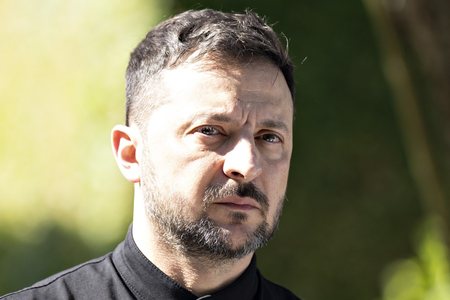
Ukrainian President Volodymyr Zelensky called this a "significant attack", clearly timed to hinder any peace efforts.
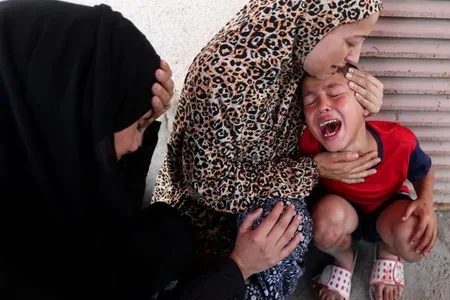
This was not an isolated incident. Just days earlier, after a long phone call with Putin that yielded “no progress,” as Trump himself complained, Russia bombed Ukraine again with 539 drones and 11 missiles, one of the most devastating attacks of the war so far.
If we were to rely solely on these chronologies, we would be allowed to think that every time Trump speaks harshly about Putin, the Kremlin responds with increased violence against Ukraine.
But the situation is more complicated than that.
Russia has launched massive strikes even when Trump has not publicly expressed any stance on the war. On June 29, for example, Moscow carried out the largest airstrike of the war, 477 drones and 60 missiles, without any fresh comment from Trump.
Even when Trump told G7 leaders that he regretted Russia's exclusion from the G8, the Kremlin did not "relent", but instead increased its attacks on Kiev and killed at least 28 people in a single night.
Even positive words do not serve as a deterrent to Putin's cruelty.
The Kremlin, on the other hand, denies any connection between Trump's statements and Moscow's military decisions. " We take it very calmly ," said spokesman Dmitry Peskov, adding that " Trump has a tough style in general ."
In reality, Russia's military strategy is more tied to its long-term objectives of capturing as much territory as possible before the conflict reaches a stalemate.
The increase in drone use, according to Western observers, is more related to the lack of missiles and the increase in drone production, than to any sudden anger by Putin over some Trump joke. /Adapted from "Pamphlet" by "CNN"


Lini një Përgjigje