


 Shkruar nga Pamfleti
Iran's attack on Israel was dangerous, provocative — and apparently designed to fail.
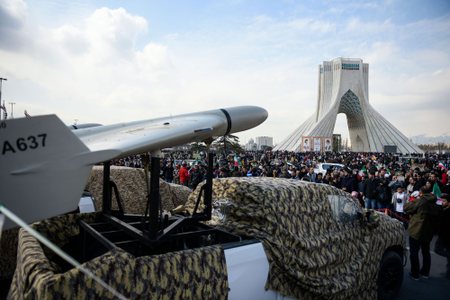
None of the hundreds of shells fired at Israel hit a major target.
So what was the point?
The latest crisis to erupt in the region has many analysts wondering what Iran's real intent was — whether the direct attack was primarily a face-saving exercise or a genuine attempt to escalate — and whether the United States could manage to prevent what they have been trying to avoid for more than six months, a full-scale regional war.
Israel and Iran have been engaged in a gradual, head-to-head escalation since October 7.
On April 1, tensions worsened dramatically when Israel—retaliating for attacks on Israeli citizens suspected of being orchestrated by Iran's Islamic Revolutionary Guard Corps along the Syrian border—destroyed an Iranian consulate building in Damascus, killing Gen. , Mohammad Reza Zahedi, a senior IRGC commander, and seven other IRGC officers.
Iran's supreme leader, Ayatollah Ali Khamenei, then declared that Israel would be "punished," according to state news agency IRNA.
And the Iranian response on Saturday – a direct strike on Israel launched by Iran – marked a dramatic and highly dangerous departure for Tehran, which until now has preferred to operate mainly through proxies in Lebanon, Syria and elsewhere in the region.
"There is a willingness to take risks from Iran like never before," said Behnam Ben Taleblu, a senior fellow at the right-wing Foundation for Defense of Democracies and an expert on Iran's missile capabilities.
"Until now, Iran had never directly targeted Israel from Iranian territory in an overt and attributed manner. The attack was also the first ballistic missile attack from Iranian territory against a protected target."
According to him, Iran wanted to break the taboo of targeting Israeli territory.
Tehran has so far signaled it does not want an all-out war, having restrained its Hezbollah ally from launching more than sporadic token attacks.
But "Iran's government appears to have concluded that the Damascus attack was a strategic turning point, where failure to strike back would have more downside than upside," said Ali Vaez of the International Crisis Group.
At the same time, Vaez added, Tehran's choice of weaponry was careful.
"They could have used a much larger number of shells, synchronized drones and missiles in a way that would have overwhelmed air defense systems and launched their new hypersonic missiles."
"They wanted something spectacular, but not fatal."
Officials said more than 99 percent of the drones and missiles were shot down and there was only one reported injury, that of a 7-year-old girl who was hospitalized.
"The matter can be considered closed," Iran's mission to the United Nations said in a post on the social media platform X hours after the operation began late Saturday.
"However, if the Israeli regime makes another mistake, Iran's response will be significantly tougher."
US President Joe Biden is now in the tricky position of persuading Israeli Prime Minister Benjamin Netanyahu and his hawkish cabinet to moderate his response to avoid all-out war.
So far, Biden has aimed to deter Tehran by signaling that war with Israel also means war with the United States.
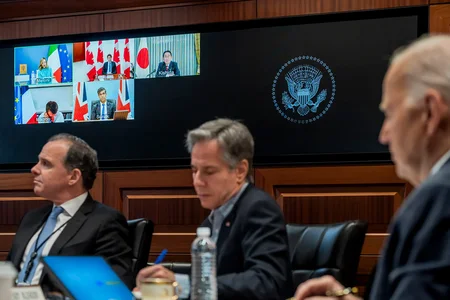
In a statement, Biden said the US military had "moved ballistic missile defense aircraft and destroyers into the region over the past week" in anticipation of the Iranian attack, and "we helped Israel shoot down nearly all incoming drones and missiles."
While some Republicans called for a tougher US response, even some longtime critics of Biden on the right praised the president's cautious approach.
However, Biden reportedly told Netanyahu during a phone call on Sunday that he would not support an Israeli counterstrike against Iran.
(Biden has said he will coordinate a diplomatic pressure campaign against Iran from the G7 countries.)
Biden reportedly told Netanyahu: “You've won. Take the win,” according to Axios.
Despite this, Israel's hardline government is sure to continue its habit of defying Washington and attacking Iran directly.
Netanyahu is "a leader who simply would not want to be remembered for not responding to a direct attack from Iran," Hussein Banai said.
He added that “a limited US-led counterattack may be the best option in terms of escalation control; but that would mean reaching a consensus between Biden and Bibi, which may be difficult to achieve at this time"./ Politico.eu




Lini një Përgjigje