


 Shkruar nga Jan Kallberg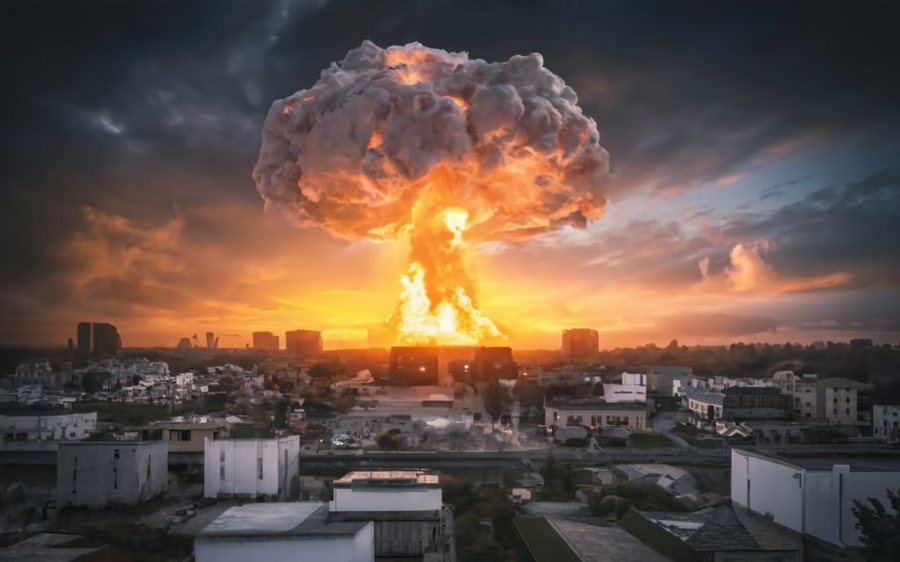
Meanwhile, by re-investing in NATO's European nuclear arsenal and command structure, Europe would also protect itself from any drastic political swings in the United States.
Europe's nuclear forces—those of Great Britain and France—are highly capable, largely dependent on the United States, and partially integrated. And with growing threats to Western European democracies, the continent must urgently adjust its nuclear shield.
NATO's three nuclear-armed nations - with the US leading the charge - currently use systems that are at their core legacy Cold War forces, and are intended to achieve strategic deterrence of potential attacks by adversaries.
And all three are modernizing their systems, mostly based on submarines. Also, all three have their own internal agendas and nuclear doctrines, even though they are part of the same alliance. Also, all three are entering an era of reinvestment in nuclear capabilities after years of reliance on command and control, weapons and legacy launch platforms.
This provides the opportunity for the two European nuclear states to build a unified European nuclear command structure, to ensure that the continental nuclear deterrent is effective, sustainable and includes the entire territory of NATO.
Of course, in order to achieve this goal, important practical and political obstacles must be overcome. The first problem concerns who will own the release buttons. The second problem is allies who do not agree with the alliance approach, such as Hungary. And the third is the need to reach an agreement between Britain and France, but also with other allies.
But given the grim international picture, no one can seriously question the need for a unified command system. And surely everyone has heard the complaints of Ukrainians linking Russia's direct aggression to their decision to give up nuclear weapons in 1994.
Then what should be done? First, as the United States faces ever-increasing geopolitical competition in the Indo-Pacific, it is likely to shift resources there at critical moments and may not fight alongside Europe in the event of a crisis. taking into account the statements of the Republican presidential candidate, Donald Trump.
However, uncertainty is dangerous in geopolitics, and especially in the theory of deterrence. And this makes building a more capable European nuclear defense system an urgent matter. European democracies can achieve this by avoiding the nuclear proliferation they have pledged to avoid.
As permanent members of the UN Security Council and as long-established nuclear powers, the continent must devise a system to officially regard France and the United Kingdom as its nuclear weapons carriers. Thus a European nuclear command would be formed within the NATO system, uniting British and French nuclear forces.
Meanwhile, by re-investing in NATO's European nuclear arsenal and command structure, Europe would also protect itself from any drastic political swings in the United States. A stronger European nuclear posture frees up US resources for the Indo-Pacific, but also accelerates its own nuclear modernization.
Second, NATO's European nuclear deterrent serves all member states, but is offered only by Britain and France. To support NATO's European Nuclear Command and its nuclear forces, there must be cost sharing by all European countries.
And this is not simple. Because the UK's new Dreadnought-class nuclear-armed submarines are under construction, and will enter service in the early 2030s at a cost of £41 billion ($52 billion).
This does not include the cost of new replacement Trident missiles. The new French Le Triomphant submarines are also expected to be ready by 2035 at a similar cost. Once completed, the 8 French and British ballistic missile submarines will provide continuous deterrence at sea, with at least three patrols at any given time.
In addition, France is updating its tactical nuclear arsenal through the AMSPA-R missile. For its part, Britain has no tactical nuclear devices. So this is an extremely expensive business and European NATO does not currently make any contribution. This approach had to change.
Even if France and Great Britain continue to bear the main financial burden, the other 28 members of the European alliance must bear a significant part of the cost, and must provide supporting infrastructure and port facilities.
Third, all NATO countries must accept, even if only in transit and temporarily, nuclear weapons on their territory. From a "first strike" and "retaliation" perspective, the less a potential adversary knows about the positioning of nuclear weapons, the more difficult a well-calculated first strike becomes, and this strengthens deterrence.
Fourth, increased attention to low-yield nuclear weapons increases the risks to an aggressor, and strengthens our ability to counter an adversary. Russia has used the last few decades to build a variety of low-yield and "designer" nuclear weapons for tactical and operational missions.
The serious imbalance between strategic and tactical weapons undermines deterrence, as a Russian 1-kiloton (KT) strike, in a broader context, will either be matched by a 10-megaton (MT) weapon response or not. is acted upon at all. (The current French tactical nuclear arsenal offers some options, but is thought to be small.)
The Russians have developed a variety of unique nuclear weapons, many of which are no match for NATO's capabilities. Some experts argue that such weapons lower the threshold for a nuclear war. But the inability to respond adequately undermines deterrence, and poses a far greater risk of using nuclear weapons.
Fifth, potential adversaries of NATO and the US are increasing their research on electromagnetic pulse (EMP) weapons in all forms and on a large scale. They make it possible for attacks on NATO and US assets to be devastating, especially in the early hours of a war.
A European NATO nuclear command can therefore accelerate, focus and direct research and weaponry, both offensive and defensive, against EMP, leading to the fielding of these capabilities. NATO's European nuclear command is a very good solution for increasing security and prevention against a nuclear attack on the European countries of the alliance./ Adapted "Pamphlet", from: CEPA
Note : Jan Kallberg, member of the Transatlantic Defense and Security Program at the Center for European Policy Analysis (CEPA).







Lini një Përgjigje