


 Shkruar nga Pamfleti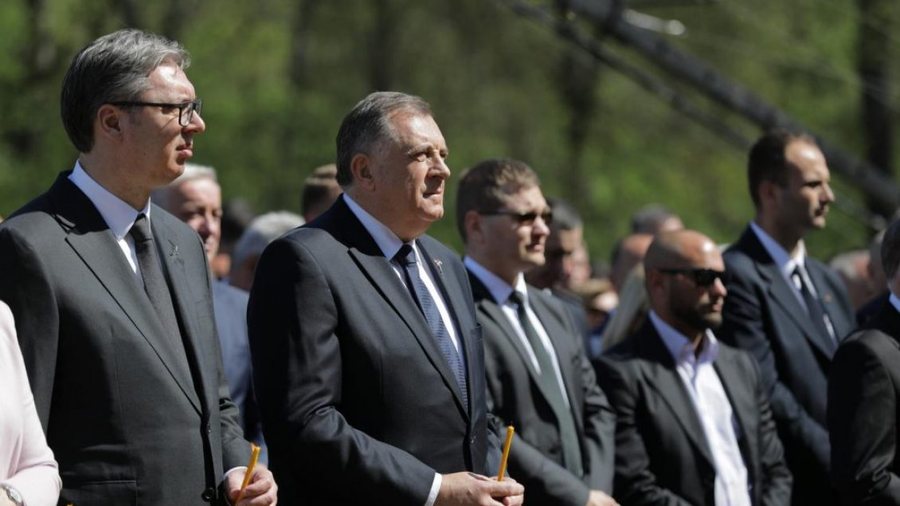
Ambitions for the formation of Greater Serbia threaten peace in the Western Balkans and that the key to peace is in the district of Brčko, which is the "Achilles' heel" of Serbia, writes the Swiss daily Neue Zürcher Zeitung (NZZ).
It is emphasized there that the president of the Republic of Serbia, Milorad Dodik, is trying to create parallel military forces.
"Since November 21, 1995, the term Dayton has indicated a special kind of diplomacy, all participants were closed until they reach an agreement. So wrote the 'architect' of the Dayton Peace Agreement, Ambassador Richard Holbrooke in his 1998 book My Mission. Holbrooke's tireless diplomatic efforts, along with NATO bombing of Serbian positions, almost ended the war four years in Bosnia and Herzegovina", writes the author of the text Alexander Rotert.
Rotert has been researching events in the former Yugoslavia since 1991. He has worked, among others, for the Otto Zur Institute (OSI), the East European Institute (OEI) as well as for various international missions.
The author reminds us that even today, almost thirty years after the end of the war, peace in the Western Balkans is not only fragile, but also in great danger. He estimates that this has to do with the efforts of Serbian President Aleksandar Vučić to realize the project of creating a Greater Serbia, started by his predecessor Slobodan Milosevic.
That plan, as Rotert writes, is based on Vladimir Putin's "Russian World" and is now called the "Serbian World". Its main protagonist is the head of the Serbian Security and Information Agency (BIA), Aleksandar Vulin.
Vulin, who was recently sanctioned by the US due to his loyalty to Moscow, together with the leader of the BiH Serbs, Milorad Dodik, participated in a "security forum" in Russia.
Dodik is getting armed
The author describes Dodik as "the main active power of Belgrade in the Western Balkans". Rotert also mentions the well-known "Order of Merit" that he gave to Putin as a sign of gratitude.
The NZZ text then cites the UN Security Council Resolution from 2022, which states that "the situation in the region of the former Yugoslavia continues to pose a threat to international peace and security".
"One of the reasons for this is Dodik's efforts to build parallel military forces. If you watch the annual anti-constitutional military parade on the occasion of the establishment of Republika Srpska on January 9, you can feel that the number of members of those forces is already considerable: at that time, up to 2,000 heavily armed members of paramilitary groups and police special forces marched, followed by dozens of armored vehicles and helicopters", emphasizes NZZ.
Dodik's arming of his paramilitary units goes hand in hand with the massive arming of the Serbian armed forces, which Vučić has been pushing for for several years.
Brçko si “thembra e Akilit”
Qyteti në pjesën veriore të BeH është “thembra e Akilit” e strategëve serbë, vlerëson Rotert dhe kujton se “Bota Serbe” nuk do të ishte e mundur pa kontrollin e Brçkos.
“Një prani ushtarake ndërkombëtare e armatosur fuqishëm në Brçko mund t’i kundërvihej çdo aventure pa shkrepur asnjë plumb. Do të ishte e rëndësishme që njësitë të zhvendosen në Brçko sa më shpejt të jetë e mundur. Në rast të shpalljes së pavarësisë, njësitë e Dodikut fillimisht do ta merrnin dhe do ta pushtonin Brçkon”, beson autori i komentit.
"One thing must be clear: there has never been a peaceful border movement in the Balkans. "Military control of the Brčko district by international forces - be it EUFOR or NATO, which still has a mission in Bosnia and Herzegovina and is led by an American general - is a prerequisite for lasting peace in and around Bosnia in the Western Balkans," adds Rotert.
"This is especially true as long as secessionists and politicians working to destroy the state, like Milorad Dodik, are in power. With the 'Brçko option', the EU can achieve the maximum profit with very limited investments", he concludes.


Lini një Përgjigje