


 Shkruar nga Pamfleti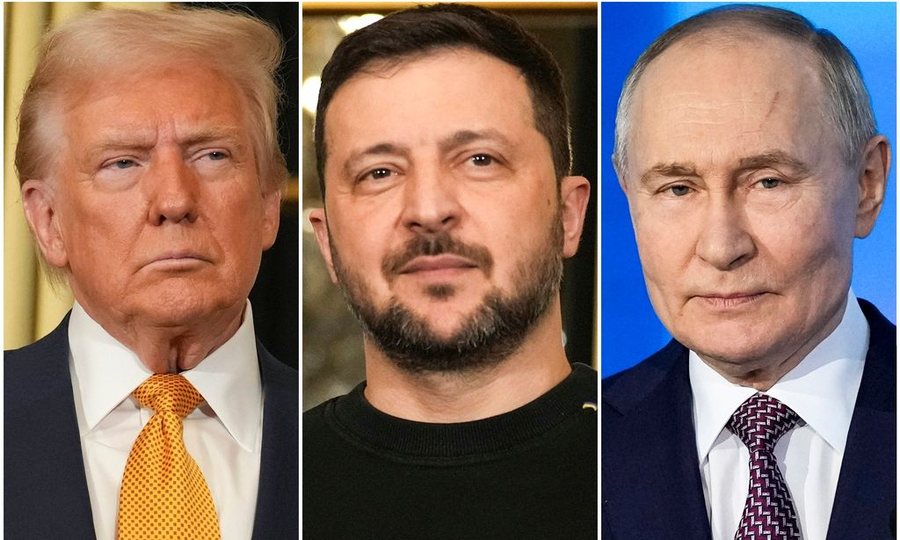
US President Donald Trump repeatedly repeated a phrase during the tense atmosphere of his meeting with his Ukrainian counterpart, Volodymyr Zelensky, at the White House earlier this year.
"You have no documents, you have no documents."
Since then, European leaders have tried to give Zelensky another chance to be heard. They negotiated a meeting at the Vatican to restore relations between the White House and Kiev and agreed to cover the cost of weapons sent to Ukraine by the United States, with hundreds of millions of European taxpayer dollars going to American weapons manufacturers.
Seven leaders: Keir Starmer, Emmanuel Macron, Friedrich Merz, Giorgia Melonia, Alexander Stubb, Mark Rutte and Ursula von der Leyen, accompanied the Ukrainian president to Washington in a show of diplomatic support, following the Trump-Putin meeting in Alaska in August.
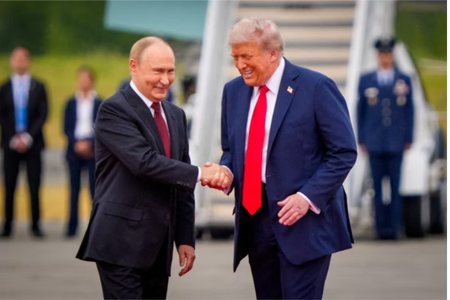
Despite pressure from the Europeans, Trump's basic view of the conflict remains unchanged since their meeting at the White House in February. To Trump, Zelensky is trying to win a better compromise by bluffing with losing cards. The US president believes that Putin has all the "assets."
The 28-point peace plan released is clearly pro-Russian, notes the Times of London. It was drafted during three days of negotiations in Miami in late October by the president’s special envoy, Steve Witkoff, a New York real estate investor who does not speak Russian and relied on Kremlin translators. Witkoff struggled to name the five Ukrainian provinces he was discussing, and he has visited Russia five times without ever traveling to Ukraine.
On the other side was Kirill Dmitriev, the head of Russia's sovereign wealth fund, who speaks fluent English, has a deep knowledge of American politics, and is of Ukrainian descent from Kiev. His presence confirms Putin's assumption that Kiev rightfully belongs to the "Russian world."
The result of this apparent asymmetry was a plan that pleased Putin. According to the draft, Ukraine would have to reduce its army to 600,000 troops, withdraw from its positions in Donetsk, constitutionally enshrine that it would never join NATO, lift sanctions against Russia, and reinstate Putin to the G8.
The plan also calls for a ban on “Nazi ideology and activity,” suggesting a tacit US acceptance of Putin’s claims that Zelensky, one of only three Jewish leaders in the world, runs a Nazi regime. The Ukrainian president would also have to hold elections within 100 days, giving Putin a chance to intervene.
Zelensky has not directly condemned the plan, as he cannot risk Trump's wrath, but his time is limited to avoid a deal that is damaging to Ukraine.
Trump had promised to end the war in Ukraine within a day of returning to the White House. Although he has said he has already resolved eight wars and wants Ukraine to be the ninth, recent election losses for Republicans in Virginia and New Jersey have forced him to focus on issues of cost of living for American voters.
As Trump tries to refocus on the domestic agenda, he believes it will be quicker to put pressure on Zelensky than on Putin to end the war, believing that, in this "game of poker," the Ukrainian president does not have the cards in his hand.


Lini një Përgjigje