


 Shkruar nga Adrian Wooldridge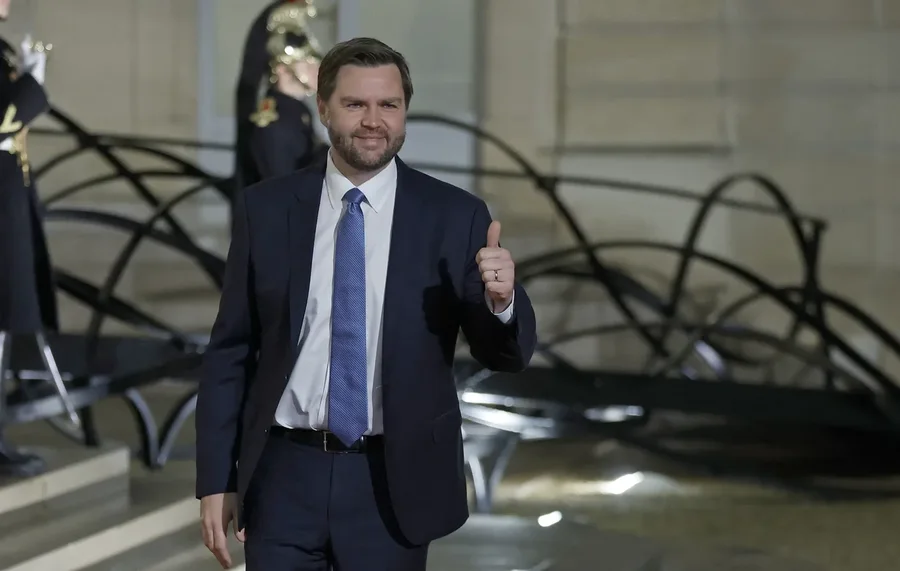
The MAGA movement is undergoing a profound transformation, led by a new intellectual elite intent on overthrowing the liberal order. This intertwining of academic elitism with popular anger may be the paradox that will lead to its dissolution…
Something strange is happening in the Populist World, as it grows by the day: the movement is attracting and generating elites. That is, people who have first-class academic credentials from elite universities, who prefer books to wrestling and sushi to McDonald's, and who want to use popular anger to achieve often esoteric goals: the return of virtuous rule or the overthrow of the secular state.
Welcome to the era of aristo-populism! The phrase “aristo-populism” was coined by Patrick Deneen, a professor of political theory at the University of Notre Dame, in his 2023 book “Regime Change: Towards a Postliberal Future.”
Deneen believes that liberal elites are destroying society from within, and that the only way to counter their influence and save the Republic is to produce conservative elites, trained in high culture and dedicated to restoring traditional values.
Christopher Buskirk, the genius behind the Rockbridge Network, perhaps the most influential group of MAGA funders and influencers, is more of a businessman than a philosopher. But he is just as enamored with the idea of aristocracy.
In his 2023 book, “America and the Art of the Possible,” he argues that progress is driven by a creative elite of businessmen and scientists. What determines the health of a society is whether the elite is exploitative or creative: an oligarchy or an aristocracy.
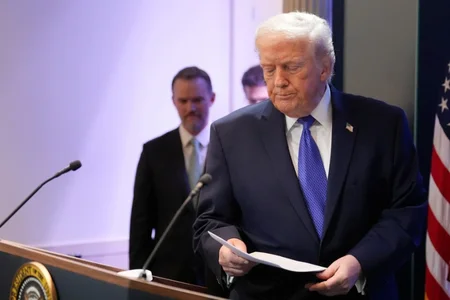
The task of Trumpism is to replace the exploitative liberal oligarchy with a creative MAGA aristocracy. He sees his role as a coordinator, bringing together the elements of the winning formula, “brains + money + support base.”
The godfather of “aristo-populism” is Leo Strauss, a German intellectual who fled Nazi Germany and taught political theory at the University of Chicago from 1949 to 1968. Strauss worried that democracy could easily degenerate into tyranny, thanks to its reliance on sensationalism and fame.
He thought that the best way to prevent this was to produce an intellectual aristocracy trained in the great works of the Western tradition, especially the works of the ancient Greeks.
Strauss exerted a defining influence on neoconservatives like Paul Wolfowitz and Bill Kristol. Now he is exerting an equally decisive influence on MAGA intellectuals who support unconventional foreign policy.
Selia e “MAGA Straussians” ndodhet në Institutin Claremont në Kaliforninë Jugore. Claremont u ofron akademikëve konservatorë jo vetëm një strehë nga akademia liberale, por edhe bursa për konservatorët e rinj që kalojnë muaj duke lexuar tekste të lashta si përgatitje për të punuar në Uashington. Ka pasur kaq shumë ish-studentë të Claremont në administratë, nga figura të larta si Michael Anton deri te mbi 70 përfitues të bursave të Claremont, saqë ata kanë nofkën e tyre, Claremonsters. Charlie Kirk ishte gjithashtu një bursist i Claremont.
Laura Field, autorja e librit “Mendje të tërbuara: Shndërrimi i MAGA-s në të djathtën e re”, identifikon tre grupe intelektualësh të MAGA-s, përveç Claremonsters, të cilët ndajnë të njëjtin pasion me Strauss-in për një aristokraci intelektuale, por që i çojnë bindjet e tyre konservatore edhe më tej.
Post-liberalët besojnë se themeluesit e Amerikës u ndikuan shumë nga idetë e Iluminizmit në lidhje me të drejtat individuale. Ata duan ta rindërtojnë vendin bazuar në bindje më tradicionale. Deneen, udhëheqësi i këtij grupi, argumenton se kjo do të kërkojë përdorimin e “mjeteve makiaveliane për të arritur qëllimet aristoteliane”.
Integralistët duan të dobësojnë vijën ndarëse midis Kishës dhe shtetit. Adrian Vermeule, një studiues kushtetues në Shkollën e Drejtësisë të Harvardit dhe mbështetës kryesor i “qeverisë unitare”, argumenton se “qëllimi qendror i rendit kushtetues është të promovojë sundimin e mirë, jo të mbrojë lirinë si qëllim në vete”.
Titanët e teknologjisë së Amerikës, të cilët i kanë dhënë mbështetjen e tyre Trump-it, ndajnë shumë nga këto paragjykime aristokratike. Kjo pjesërisht sepse industria e tyre i predispozon ata ndaj elitizmit intelektual: nuk mund të prodhosh “alfa” pa punësuar njerëzit më të mirë.
Por kjo ndodh edhe sepse një numër i habitshëm i tyre ndajnë bindjen e Strauss se demokracia degjeneron nëse nuk udhëhiqet nga një elitë vizionare.
Curtis Yarvin, një nga mendimtarët e preferuar të së djathtës teknologjike, thotë se ka ardhur koha që oligarkia liberale t’i lërë vendin një hibridi monark-drejtor ekzekutiv, i cili mund ta drejtojë SHBA-në si një startup dhe të fillojë punën për të “ç’virusuar” sistemin nga oligarkia liberale, veçanërisht gjatë valës së fundit të lëvizjes Woke.
E njëjta aleancë elitë-populiste mund të shihet jashtë SHBA-së. Në pjesën më të madhe të Evropës, filozofi Roger Scruton luan një rol të ngjashëm me Leo Strauss. James Orr, një filozof fetar nga Kembrixhi, i afërt me J.D. Vance dhe i sapoemëruar këshilltar i lartë i Nigel Farage, është një dishepull i Scruton.
Kryeministri i Hungarisë, Viktor Orban, i cili studioi me Scruton në Oksford, ka shpenzuar 1.7 miliardë dollarë për krijimin e një universiteti konservator, Mathias Corvinus Collegium, me qëllim krijimin e një elite konservatore.
Budapest even boasts a café named “Scruton.” Giorgia Meloni, the Italian prime minister, refers to it in her speeches, and Mattias Karlsson, the Sweden Democrats’ chief intellectual, pays homage to it.
European countries that are less respectful of classical British intellectuals have many homegrown aristo-populists. Benedikt Kaiser, a political theorist affiliated with the Alternative for Germany (AfD) party, argues that the postwar liberal order is entering its death throes.
In France, Ivan Rioufol, a former editor of Le Figaro, has just published a book, La Revolution des oubliés, calling for the masses to rise up against the elites. Meanwhile, Nicolas Conquer, a Franco-American and spokesman for the Republicans Abroad, dreams of a “French Project 2027,” based on the Heritage Foundation’s “Project 2025,” which sets the agenda.
It is difficult not to see a Marxist element in this whole movement. Our Aristo-Populists are taking on the role of Lenin's vanguard party in raising the consciousness of the proletariat and giving it a historic push in the right direction.
The same catastrophic view of the present is evident, and the same willingness to engage in revolution to move things forward. Some Claremont intellectuals referred to the 2020 presidential election as a “Biden coup” that needed to be overturned.
Christopher Rufo, one of MAGA's most successful activist intellectuals, acknowledges his debt to Lenin and Antonio Gramsci. But the real Lenin of it all, the man who combines organizational skill and ideological zeal with fiery discontent, is JD Vance.
Vance combines elite credentials as a product of Yale Law School with working-class roots, as he notes in his autobiography, “Hillbilly Elegy.” He also admits to being “connected to a lot of weird right-wing subcultures,” from the Claremont Institute in Silicon Valley to the James Orr compound in Cambridge, England.
If Trump's takeover of the Republican Party was bottom-up, Vance's is top-down. The problem with Marxism, however, is that ordinary people don't like it very much.
They do not like to be dehumanized as agents of a predetermined historical process. Nor do they like to be treated as counterattackers in a war among intellectual elites. Trump’s great virtue, from a populist perspective, is that he is more interested in war than in ideas. In fact, he is not interested in ideas at all.
Critics have often assumed that MAGA’s downfall will come from its vulgar money-grabbing. It would be an extraordinary example of the cunning of Hegelian reason if MAGA ultimately falls because it cares too much about ideas that contain grave errors./ Adapted from “Pamphlet” by “Bloomberg”






Detyra e Trumpizmit është të zëvendësojë oligarkinë liberale shfrytëzuese me një aristokraci krijuese të MAGA-s. Ai e sheh rolin e tij si koordinues, duke bashkuar elementët e formulës fituese, “tru para baza e mbështetësve”. Njeriu që bashkon aftësinë organizative dhe zellin ideologjik me pakënaqësinë e zjarrtë, është J.D. Vance.