


 Shkruar nga Pamfleti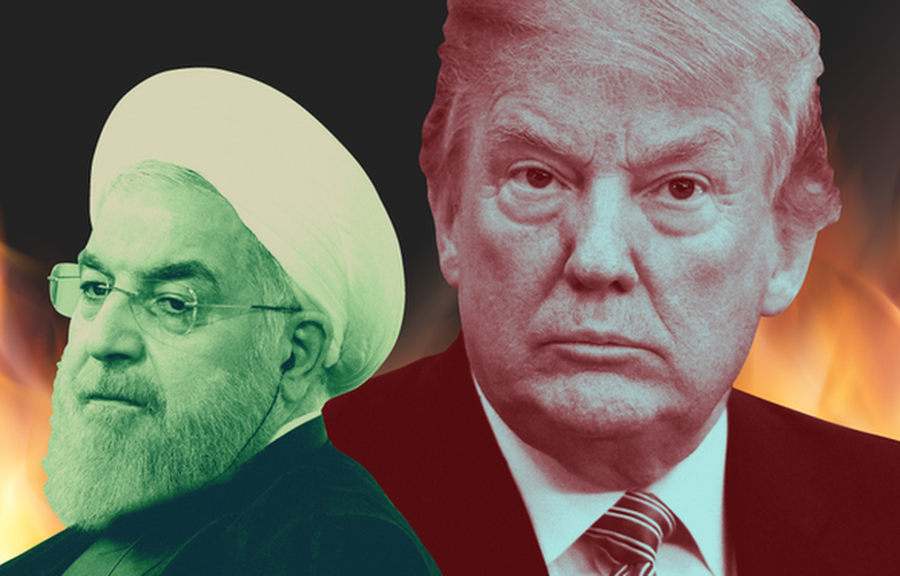
Trump and his advisers are planning a return to "maximum pressure," but Iran's program may be so advanced that this strategy may not be effective.
The year 2025 promises to be a crucial year for the future of relations between the United States and Iran. Donald Trump is poised to return to the White House with the goal of limiting or destroying Iran's nuclear program.
"Anything can happen," Trump told Time in November, responding to a question about the possibility of war with Iran. "The situation is very unstable," he added. Tehran is increasingly in control, in a Middle East already divided between an expanding Israel and a Turkey relaunched as a regional power.
Thus, recent advances in Iran's nuclear program to resist the escalation desired by Benjamin Netanyahu pose a crucial challenge for the new head of the White House: will it be possible to neutralize the threat of Israeli-American excess power through negotiations and pressure, or would it be better to choose a military attack?
Trump's decision in 2018 to withdraw from the nuclear deal sought by Barack Obama prompted Tehran to accelerate its nuclear program, leading the country to tighten domestic economic autarky and seek greater diplomatic and economic integration. with Russia and China. The withdrawal from the agreement, along with the "maximum pressure" campaign waged between 2018 and 2020 by Trump against Iran, were also applauded by the Western neoconservative galaxy, which, although opposed to Trumpian populism, has always considered its predecessor too weak and compromised with radical Islam and the Ayatollah.
Despite the impoverishing effect on the population, US sanctions do not appear to have done much harm to the regime or the wealthier Iranian ruling class. Esfandyar Batmanghelidj, founder and CEO of the think tank Foundation Bourse & Bazaar, is also convinced of this, explaining how the economic crisis actually slows down and does not encourage protests in Iran. The journalist and researcher of Iran, Luciana Borsatti, in an article recalls the European responsibilities in the state of isolation in which the Islamic Republic is located.
If the action of moderate Iranian reformists seems weakened today - although they are back on the offensive in the domestic political scenario - it is because nothing has been done by Europe to support it since the first Trump administration. He chose maximum pressure. Unfortunately, Italy has also lost, by gradually aligning itself with the same hard line, some of the ability to negotiate and communicate with Tehran that it had only a few years ago.
Trump and his advisers are planning a return to "maximum pressure," but Iran's program may be so advanced that this strategy may not be effective. This makes the military option a real possibility. After a meeting between Israel's Strategic Affairs Minister Ron Dermer and Trump at Mar-a-Lago, Dermer hinted that Trump could support an Israeli military strike on Iranian nuclear facilities — or even order direct intervention by the United States. United.
While some of Joe Biden's advisers suggested a pre-emptive strike on Iran's nuclear sites before Trump takes office, but with Iran and its regional allies weakened by the ongoing conflict with Israel, the bombing by Democrats was called off.
However, a new deal is not ruled out by Iranian Foreign Minister Abbas Araghchi, who stated that Tehran is ready to resume negotiations with the United States to reach a new agreement. It is known that the road to compromise is blocked by years of mutual hostility and pressure from pro-Israel radicals on Team Trump, who would like to remove the ayatollahs once and for all.
In his first term, Trump surrounded himself with anti-Iran hawks and neoconservatives like Mike Pompeo, Rudy Giuliani and John Bolton, who led him to believe that escalating sanctions would break Iran, allowing him to achieve a better deal. This was a strategy designed to push Washington toward war with Iran. In fact, the demands were out of reach for Tehran. The demands included a total renunciation of uranium enrichment, unrestricted IAEA access to all Iranian sites and an end to support for Hezbollah, Iran's historic ally. In essence, Pompeo was calling for the complete surrender of Iran.
Years ago, it was not without reason that Tehran sought in Trump's aggressive rhetoric to flatten the strategy of Pompeo and Bolton, to be close to Netanyahu and Saudi Prince Mohamed Bin Salman, with the objective of regime change. The refusal of any talks with Trump prompted the Pentagon to increase the pressure.
Massoud Pezeshkian, Iran's new president, described by many as a "reformist" during his election campaign, stressed the need for Iran to renew diplomacy with the United States, including with Trump, to solve the country's economic problems.
The problem is that now, with the fall of the Assad regime in Syria and the weakening of Hezbollah, Iran can no longer bring its ancient military strength to bear on negotiations. Syria and Lebanon are lost, and Trump may be tempted to banish Tehran for good.
What seems certain is that the internal politics in Tehran, and in particular the more conservative currents of the Shiite clergy, would not allow Pezeshkian to attempt diplomacy./ Adapted "Pamphlet" from "Insideover"



Lini një Përgjigje