


 Shkruar nga Myra Adams
 '
'
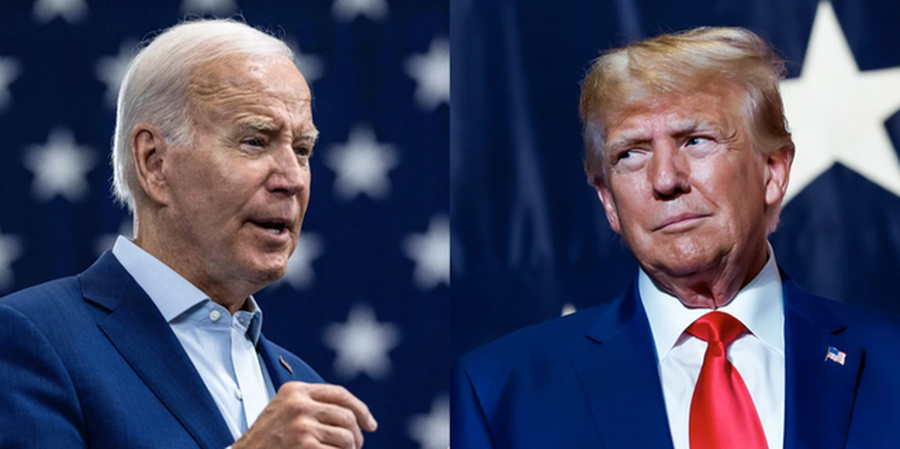
The appearance of both during the last debate was a disaster for US national security.
In February of this year, President Biden refused the traditional interview before the final of American football, the Superbowl, during which he could have appeared in front of more than 100 million American viewers. That decision prompted Democratic strategist James Carville to warn that it was "a sign that the staff or Biden himself has no confidence in himself."
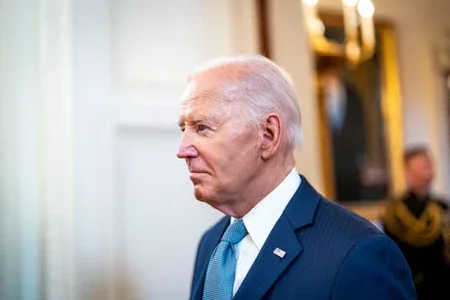
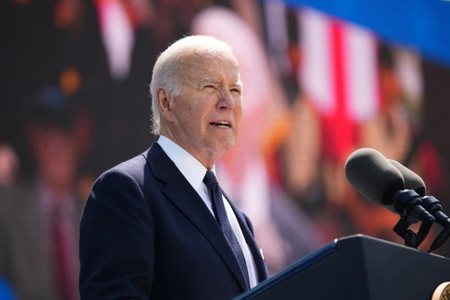
Carville's analysis has been proven correct by Biden's terrible performance in the last debate, which broke the "protective shield" created by his family and staff. At 81, Biden's shocking mental and physical frailty was seen by at least 51.3 million Americans.
Former President Donald Trump, 78, is also considered unfit for office by half the nation. Both men are disliked by at least 56 percent of citizens polled, signaling that the presidential nomination system needs to change.
Even globally, the BBC has reported disparaging ratings after the Biden-Trump debate. Chinese state media said it was "like a reality show" with a "liar" Trump and a "mumbling" Biden, concluding that both are "currently facing the difficulties of age".
Russian media described Biden's performance as a "total failure" and with concerns about his "mental health". I then called a prominent defense adviser, very concerned that the debate posed a national security risk.
"The appearance of the two during the last debate was a disaster for US national security. Trump's election or Biden's re-election is a sign of weakness that tempts China to invade Taiwan and encourages Putin to continue the war," he said emphatically, not wanting to be named.
There are at least 7 reasons why the election of Trump or Biden as president would endanger the national security of the USA. First, the unwritten rule of "one president at a time" can be tested. Suppose Trump already has 312 electoral votes, so that Biden is seen as a weak president between now and Election Day.
During this time, the president can be sabotaged by elected officials. Meanwhile, Trump loyalists are attacking cabinet posts and the last few members of Trump's foreign affairs team that he did not fire. A prime example is Richard Grenell, whom Trump calls his "emissary" around the world and who could be the next Secretary of State.
Grenell was Trump's ambassador to Germany, and then his acting director of National Intelligence (NSA). On April 5, Britain's The Guardian reported how "Grenell's shadowy foreign policy campaign is troubling diplomats and threatening to harm US interests." In fact, our enemies can find many ways to exploit even the mere hint that there are two presidential contenders this fall.
Second, Biden's exposed weakness will be sorely tested by America's adversaries. Was it really a coincidence that 3 days after the June 27th debate, there was an alert for terrorist attacks on US military bases in Europe? A "3 a.m." crisis occurs when a tired and weak commander-in-chief can cause delayed or indecisive action followed by a blame game by the Trump team.
Third, Trump poses a unique national security risk, should the intelligence community trust him with classified material. Last year, he was charged in a 32-count indictment with violating the Espionage Act after he refused to turn over boxes of classified government-owned documents stored at his private residence in Florida.
Also, allies may be reluctant to share vital information with the Trump administration, given the former president's history of leaking secrets and having dubious alliances. As a private citizen, after being convicted of 34 felonies and convicted of civil financial fraud, Trump will be denied a security clearance, but if elected president, will still be given unlimited access to Secret Service records .
Fourth, NATO's 75th anniversary summit begins on July 9 in Washington. And it will be the first time that Joe Biden can be perceived as a wounded "lame duck". Something ironic, because it was Biden's leadership that helped strengthen the alliance and that has successfully restrained Vladimir Putin's invasion of Ukraine.
On the agenda at the summit will be two main issues of global security. The first is whether or not Ukraine will be invited to join NATO. And secondly, how NATO can "prove" itself and its support for Ukraine. With Trump's former anti-NATO stance seen as a threat, members anticipate relying less on US funding, weapons and leadership
Also, Biden signed a law in December 2023 that requires the approval of 2/3 of the Senate, before the US can withdraw from the alliance. As Biden hosts NATO leaders in Washington, the "one president at a time rule" could be tested. Sensing victory, a chest-beating Trump might start sending emissaries or start making surprise visits abroad to hold some informal meetings.
Fifth, the Trump Organization's new foreign projects clearly carry national security risks. The Trump Organization announced this week a new project in Saudi Arabia. And more business deals between the Trump family and the Saudis mean more conflicts.
Shortly after Trump left office, the Saudi government invested over $2 billion for Trump's son-in-law, Jared Kushner, through his investment company. Let's also not forget Trump's failed attempt in 2016-2017 to build a Trump Tower in Moscow. Perhaps this project can be revived in his second term, when there will be no more restrictions on the exercise of his presidential power.
Sixth, the status of the relationship between Trump and Vladimir Putin poses another national security risk. Some worry that Putin may have financial influence over the former US president. Others believe that there is a "kompromat", that is, compromising information, which Putin can use to force Trump to behave according to his wishes.
If Trump is re-elected president, you will see how quickly he will try to end US support for Ukraine, pleasing Putin and having devastating consequences for Europe. It has long been reported that U.S. intelligence agencies believed Russia had "leverage" over President Donald Trump, one more national security risk to be overseen by the Secret Service in the event of a second Trump term.
Seventh, Trump will have an "imperial presidency," thanks to the Supreme Court's decision to grant him immunity from prosecution, prompting Justice Sonia Sotomayor to say, "In every exercise of official power, the president is now a king above the law!".
Both Trump and Biden present national security problems. But if Biden ends his campaign, leadership uncertainty dramatically increases near-term risk globally. A second Trump term is potentially even more dangerous, as many believe he worships power and money and seeks revenge, supported by an army of followers who worship him as God's chosen one.
Note: Myra Adams served on the team of two Republican presidential campaigns in 2004 and 2008. / Adapted "Pamphlet " from "The Hill" .


Lini një Përgjigje