


 Shkruar nga Rachel Kleinfeld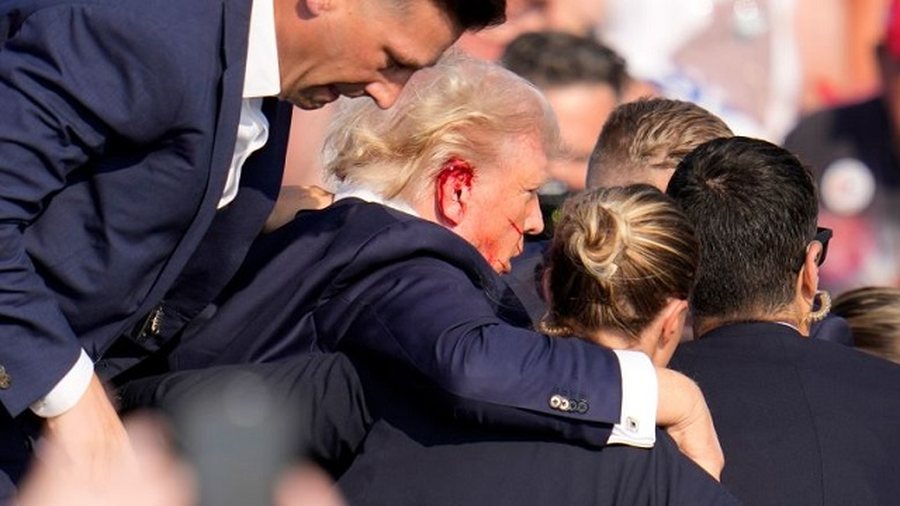
In a polarized society, violence rarely stays on one side for long. The last period of political violence in the United States began with the right, as segregationists in the South lynched black Americans and killed civil rights activists in the 1950s and early 1960s.
Americans tend to assume that their country's problems are truly unique. Since the July 13 assassination of former US President Donald Trump, many analysts have described the event and the tensions surrounding it as unprecedented.
Others have aimed to make comparisons, but in each case they have focused on domestic politics and the very large number of guns in the hands of citizens, compared to any other country in the world. Of course, it is true that the event of July 13 was a terrible moment, although part of a growing wave of threats.
In recent years there have been a number of major violent events: the attack of a mob on Capitol Hill to prevent the certification of the 2020 elections; the wounding of Republican congressman Steve Scalise during a baseball game on a field near Congress in 2017, or the plot to kidnap Democratic governor Gretchen Whitmer in 2020.
This dangerous environment had escalated for all types of public servants. Between 2016 and 2021, threats against members of Congress increased 10-fold, falling only slightly after the Trump presidency. Meanwhile, threats against federal judges have doubled since 2021.
And in recent 3-month surveys, one-fifth of local elected officials — such as school board members and county commissioners — report receiving threats of violence. But Americans need to understand that such problems are not theirs alone. In fact, political violence is increasing in many of the world's democracies.
Trump's frightening experience from a young man without a clear political agenda also reminds us of the attempted assassination of Japanese Prime Minister Fumio Kishida last year. A year ago, former Japanese Prime Minister Shinzo Abe was assassinated. It was the first act of its kind since the 1930s.
In August last year, an Ecuadorian presidential candidate was killed at the end of an electoral rally. Meanwhile, in May of this year, a man tried to kill the prime minister of Slovakia. But current and former heads of state are not the only victims of assassinations. During 2022-2023, France experienced a 12-fold increase in violence against elected officials.
51 candidates were physically attacked in the 3 weeks leading up to the July local elections. Meanwhile, Germany has recorded over 10,000 attacks on its politicians over the past 5 years, and thousands more on political party headquarters. This year's election in Mexico was the deadliest first to date, with 37 candidates killed and more than 800 injured.
Violence against officials is also on the rise in Colombia, India and Nigeria. Although each country's violence has different local causes, clear patterns are also observed in all cases. Thus, American political violence has much in common with what is happening in Germany and India, as well as the most recent elections in France.
In all these countries, a significant proportion of attacks are mainly the product of radicalized militants, often instigated by parties. Not every country experiences political violence for the same reasons. The violence in France, for example, stems from a mix of riots over police brutality and pension reform in 2022-2023, before turning into political attacks on parliamentary candidates ahead of this year's elections.
Colombian candidates are often targeted by armed groups to intimidate political actors and serve criminal interests. In Nigeria, many local officials are kidnapped by bandits just to get a ransom. However, there are similarities between the countries.
Mexican candidates, like Colombian ones, are often killed by criminal organizations. In France and Germany, political violence is fueled by radicalized political groups, who have created an atmosphere in which violence is more acceptable as political behavior, even though it often backfires on them.
How can the United States limit such attacks? There is no easy answer to this. But some of the other countries facing political violence have done a better job than others, and offer a possible model. Let's take France and Germany as an example again. In both countries, the main parties have limited the strengthening of extremists by creating a cordon sanitaire, or buffer, around their most dangerous actors. In Germany, the main center-right party has ruled out the possibility of governing with the AfD, and thus its legitimacy.
France's center-right party has been eclipsed in size by the far-right National Rally. The latter is now the main conservative party. But in France's last parliamentary election, the center-right teamed up with the center-right, the center-left and even the mainstream left to block the far-right from winning a governing majority.
Of course, adapting these lessons to the two-party system of the United States is difficult, but not impossible. First, doing so requires putting aside odds and forming a big tent with a greater chance of winning. For Democrats, this would require changing the presidential candidate.
For anti-Trump Republicans, it would mean gaining a distinctly non-violent and classically liberal identity around which they can rally, as the French Republicans have. In a polarized society, violence rarely stays on one side for long.
The last period of political violence in the United States began with the right, as segregationists in the South lynched black Americans and killed civil rights activists in the 1950s and early 1960s. But these killings prompted a backlash from those who felt that there Gone are the days of the pacifism that Martin Luther King, Jr. embraced.
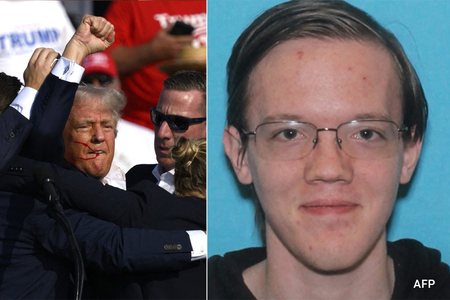
Violence spread to the left throughout the 1960s and 1970s, with riots, militant groups, and assassinations by extremists such as the Symbionese Liberation Army. On Saturday, July 13, the United States avoided the assassination of its leading presidential candidate. But they were very lucky.
The 20-year-old missed just 1 cm from Trump's skull. But the US may not be so lucky next time, and the consequences could be catastrophic. When a 19-year-old in Sarajevo assassinated Austrian Archduke Franz Ferdinand, a deeply divided world was thrown into war. Americans should learn from other countries to avoid the worst./ Adapted "Pamphlet" from " Foreign Affairs"
Note: Rachel Kleinfeld, member of the "Carnegie Endowment for International Peace" and author of the book "Savage Order: How the World's Most Dangerous Countries Can Find a Path to Safety."




Lini një Përgjigje