


 Shkruar nga Federico Rampini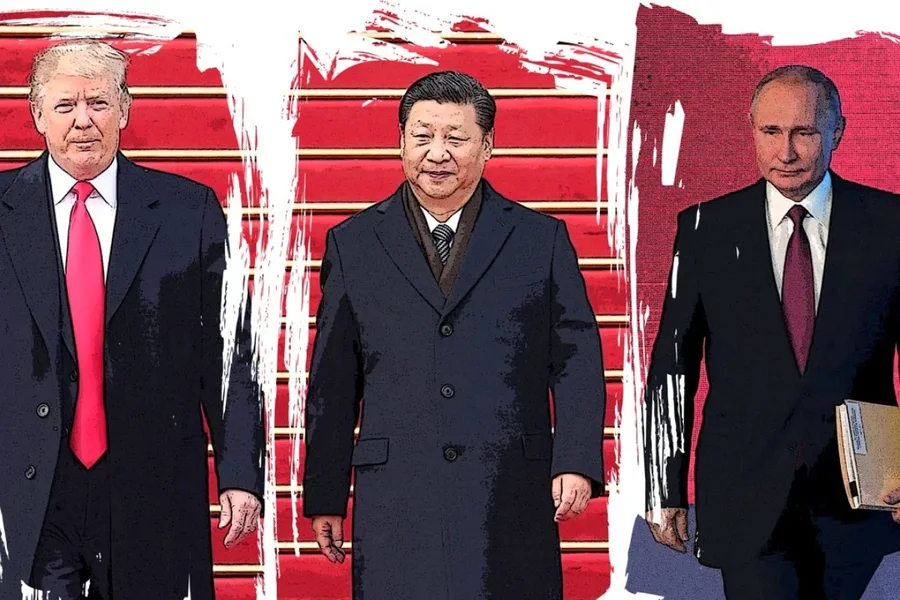
In the long run, Russia and China have rarely gotten along. More often, they have been rivals, antagonists, competing for strategic control of the Eurasian landmass, the vast territory over which they compete for influence. But Putin and Xi Jinping continue to challenge theories of geopolitics...
Vladimir Putin disappoints and irritates Trump by rejecting American proposals to end the war in Ukraine and pushing the White House to reactivate suspended military supplies to Kiev. Trump attacked the BRICS summit, the organization that China has supported in an anti-American way.
Do you remember the theory according to which the 47th president of the United States has transformed the global order into a kind of G3, a triumvirate of autocrats, with his two friends Putin and Xi Jinping?
Like many theories, it is subject to rigorous fact-checking. Trump certainly doesn't treat his traditional allies (Canada, Europe, Japan) well. But neither does he throw himself into the arms of the two "strongmen" who command in Moscow and Beijing.
Instead, the alliance between the Russian Bear and the Chinese Dragon stands. Seen from a historical perspective, it is deeply unnatural.
In the long run, Russia and China have rarely gotten along; more often they have been rivals, antagonists, competing for strategic control of the Eurasian landmass, the vast territory over which they compete for influence.
The traditional laws of geopolitics say that two continental and border powers like Russia and China are made to fight each other, not to unite; while they have less reason to fear a distant, and mainly air and sea power, like today's USA (or yesterday's British Empire). Putin and Xi Jinping, however, continue to defy the theories of geopolitics, and even common sense: the axis between these two stands, for the moment showing no signs of crisis.
The paradox arouses the curiosity of a great English historian, one of the greatest scholars of the Silk Roads (the original ones, of the ancient world), Peter Frankopan. In the latest cultural supplement of the Financial Times, Frankopan emphasizes the unnatural and absurd nature of the Gold-Dragon axis.
He highlights how both leaders, in order to give credibility, are forced to rewrite the past history of their nations, doing violence to the facts. Both, in reality each on their own, must describe a world where the West is the predator and their country is the victim of aggression, oppression and injustice: which makes them suitable to defend the cause of all the oppressed peoples of the planet.
Në Kinë, kjo përkthehet në propagandën e njohur nacionaliste rreth "shekullit të poshtërimeve", një shprehje që nxënësit e shkollës e mësojnë që nga shkolla e mesme, dhe që Xi shpesh e rilançon në fjalimet e tij. Kushtojini vëmendje datave. Ngjarja më simbolike e "shekullit të poshtërimeve" janë Luftërat e Opiumit, të fituara nga Anglia kundër Kinës në 1842 dhe 1860.
Më pas të ashtuquajturat traktate të pabarabarta, forma të mbështjelljes gjysmëkoloniale të fuqive të huaja në disa qytete kineze. Periudha e poshtërimit në fakt përfundon, në rrëfimin patriotik të propagandës zyrtare, vetëm kur Mao Ce Duni triumfon dhe themelon Republikën Popullore në 1949, domethënë fillimin e epokës komuniste. Është e rëndësishme të mbahen mend datat. A mund ta imagjinoni një vend perëndimor, udhëheqësit e të cilit sot vazhdojnë t'i qortojnë njerëzit për abuzimet e pësuara në mesin e shekullit të 19, për të nxitur nacionalizmin dhe për të denoncuar ligësinë e fuqive të huaja?
Është pak a shumë sikur në Italinë e sotme presidentët e Republikës ose Kryeministrat ishin mësuar të sulmonin Austrinë për qeverinë e saj në Lombardi-Venecia, ose monarkinë e huaj të Burbonëve për sundimin e saj mbi Mbretërinë e Dy Siçilive.
Udhëheqësit italianë që përdorën historinë e shekullit të 19 për qëllime propagande aktuale do të konsideroheshin të çmendur. Xi e bën këtë vazhdimisht, për t'i kujtuar popullit të tij se sa i lig ka qenë Perëndimi me Kinën; dhe për të mbështetur tezën se Amerika e sotme është ekuivalenti i Anglisë së shekullit të 19, e cila synon të nënshtrojë Kinën. Midis shumë gënjeshtrave historike, është edhe kjo për rolin e perëndimorëve në parandalimin e zhvillimit të Kinës si fuqi. Në realitet, një vend fqinj shumë më i vogël, Japonia, nisi një modernizim të frikshëm, administrativ dhe industrial, në gjysmën e dytë të shekullit të nëntëmbëdhjetë, duke kopjuar Perëndimin. Nëse Kina mbeti e varfër për një kohë të gjatë, kjo ishte për shkak të gabimeve të klasës së saj sunduese, përfshirë Maon. Periudha e bumit ekonomik kinez filloi falë përfshirjes së Republikës Popullore nga Amerika në globalizim: duke filluar me dialogun Nixon-Mao (1972) dhe deri në hyrjen në Organizatën Botërore të Tregtisë (2001).
Sa i përket Putinit, këtu është Frankopani ai që na kujton të vërtetën historike. Rusia ishte një nga perandoritë më të mëdha që ka ekzistuar ndonjëherë, një agresore dhe pushtuese sistematike: "që nga koha kur dinastia Romanov u ngjit në fron në vitin 1613, dhe deri në fillim të shekullit të 20, Rusia u zgjerua me ritmin prej 55 miljesh katrorë në ditë, duke i nënshtruar popullsi të mëdha autoritetit të Carit, pastaj të komunizmit."
Here is the embryo of that conflict born between Russia and China that has always marked the history of the two civilizations. Far from being a "victim of the West," Russia has always seen itself as a great Western power, a white empire, defender of Christian civilization, superior to the Asian peoples that it has gradually colonized. During the communist era, Moscow considered itself to have educated the Chinese, teaching them a doctrine of progress that had come from Europe (Karl Marx was German).
China, on the other hand, has always considered itself the most advanced civilization in human history, for 3,000 years the center of the universe: Middle Earth. The peoples around it had to acknowledge its superiority, pay homage to it and in that case could aspire to its protection, as respectful and obedient vassals. Mao used Soviet support to win the civil war against the Nationalists, but began to quarrel with Moscow almost immediately after Stalin's death (1954). The rift between the two churches of world communism became so serious that in 1969 there were military clashes between Soviet and Chinese troops on the border on the Ussuri River.
When Mao inaugurated the merger with Nixon's America in 1972, he did so also because he was convinced that the Soviet Union was preparing to wage war against him.
Under Putin and Xi, the balance of power has now been forever reversed. Russia is an economic and technological dwarf compared to this China. But the deeper reasons for the rivalry are written on geographical maps.
And in history: the truth, of course. Propaganda revisionism may tell these two peoples a completely different version, but ancient feelings pulse under the skin of both peoples. Every now and then someone gives voice to a more truthful version. Frankopan quotes an authoritative Chinese expert, Feng Yujun of Peking University, according to whom "Russia wants to restore its empire and rebuild a Eurasian geopolitical space dominated by it, from East to West."
While a nationalist theorist close to Putin, Alexander Dugin, has called for the disintegration of China, considering it a threat to Moscow. Another interesting observation from Frankopan: since the beginning of the war in Ukraine, which apparently strengthened the Bear-Dragon axis and the Xi-Putin friendship, cases of espionage between the two allies have been on the rise. /Adapted from Pamphlet from Corriere della Sera/


Lini një Përgjigje