


 Shkruar nga Pamfleti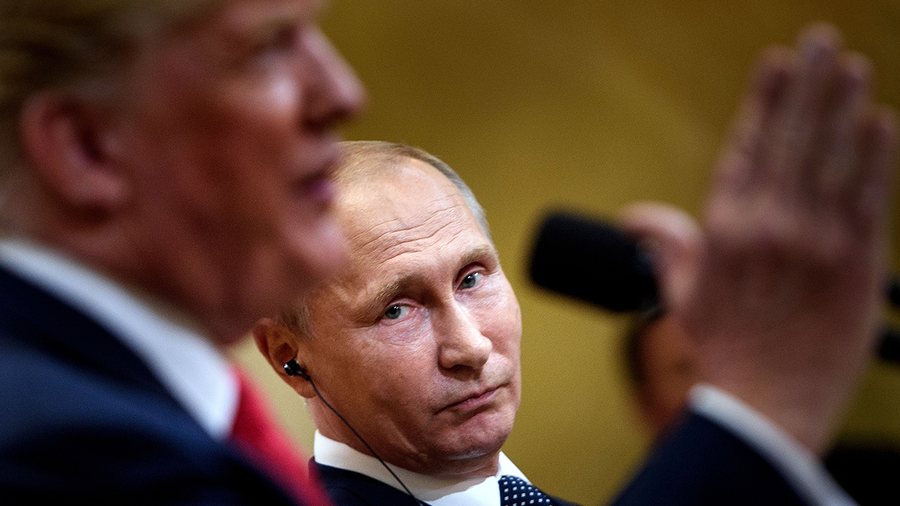
The ball is in Putin's court, and the American president has some strings he can pull if Moscow does not respond positively.
In the negotiations so far, Donald Trump's team has taken what could be kindly called a steady approach to Russian demands, giving in to some before beginning the difficult steps to secure a peace agreement.
But now, the calculation has changed.
In Jeddah, the United States managed to encourage Ukraine to accept its proposal for a 30-day ceasefire, a broader pause in fighting than the British and French plan to halt attacks from the sea and air.
The ball, as Marco Rubio, the US Secretary of State, said, was now in Russia's court.
But Vladimir Putin has shown few signs that he is willing to agree to a ceasefire.
At his annual press conference in December, he said a pause in the fighting would simply give Ukraine a chance to rearm and replenish its military.
But the Russian president now faces a dilemma: as Rubio said, if Russia does not agree to a deal, "we will know who is the obstacle to peace."
It is learned that the Trump administration, although it seems unlikely now, can "retaliate" against Kiev.
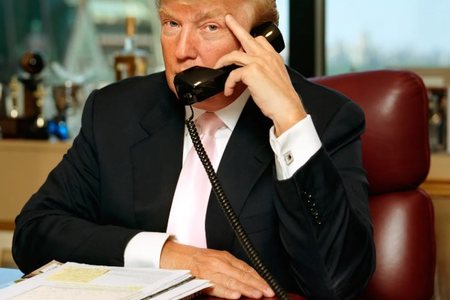
Of course, when they hold a phone call this week, Trump will talk about the risks of Putin stalling or rejecting the deal on the table.
There are some words that Trump could give up on something. He could express a willingness to bring Moscow out of the deep diplomatic freeze and eventually participate in a series of joint economic projects, as a condition of this 30-day ceasefire.
Putin has long considered the presence of NATO troops near Russia's borders an insult he cannot accept.
There are suggestions that, in an eventual peace deal, Trump could withdraw some of the 30,000 US troops in Europe, giving Moscow "more breathing space".
But Trump may suggest that the only way he would be able to take such a controversial step is if Putin immediately proves his willingness for peace.
In this regard, Trump may make Russia's eventual readmission to the G7, and other diplomatic forums, conditional on a swift ceasefire.
For Putin, a 30-day pause in fighting—a period during which he is unlikely to radically reshape the battlefield—would be a relatively small pill to swallow in exchange for eventual normalization of relations with the US.
To push him in that direction, it is possible to imagine Trump presenting the Russian leader with a full list of possible diplomatic and economic projects, such as joint development of the Arctic, and saying that every day Putin delays this confidence-building ceasefire, more of these options will be taken off the table.
The second key point of pressure relates to the existing measures the US has imposed on Russia – in particular sanctions.
Earlier this month, Trump reportedly expressed his first sign of frustration with Moscow, warning that he was ready to impose new sanctions on the regime if it continued to "hit" Ukraine while he seeks peace.
So the US could impose further sanctions on Russia and the nations that have helped it avoid them so far, for example, India, which has extracted Russian oil.
Conversely, the US president could signal his willingness to lift sanctions on Russian energy, a key demand of Putin, in line with this 30-day ceasefire.
"Stop fighting and we can start talking about relief right away," Trump might say.
There are specific projects that the US president could also confront the Russian leader with, such as the US purchase of the Nord Stream 2 project and overseeing the operation of pipelines that would once again transport Russian gas to Europe.
Otherwise, the last thing could be armaments and military support for Ukraine.
Putin's troops have been advancing rapidly on Kursk following Trump's decision to suspend intelligence sharing.
The Russian president will certainly try to make such support part of the agreement for this initial ceasefire.
This will not please Kiev or its European allies, but Trump could suspend aid once again, framing it as consistent with his desire to act as a “neutral” peace arbiter./"The Telegraph"



Lini një Përgjigje