


 Shkruar nga Pamfleti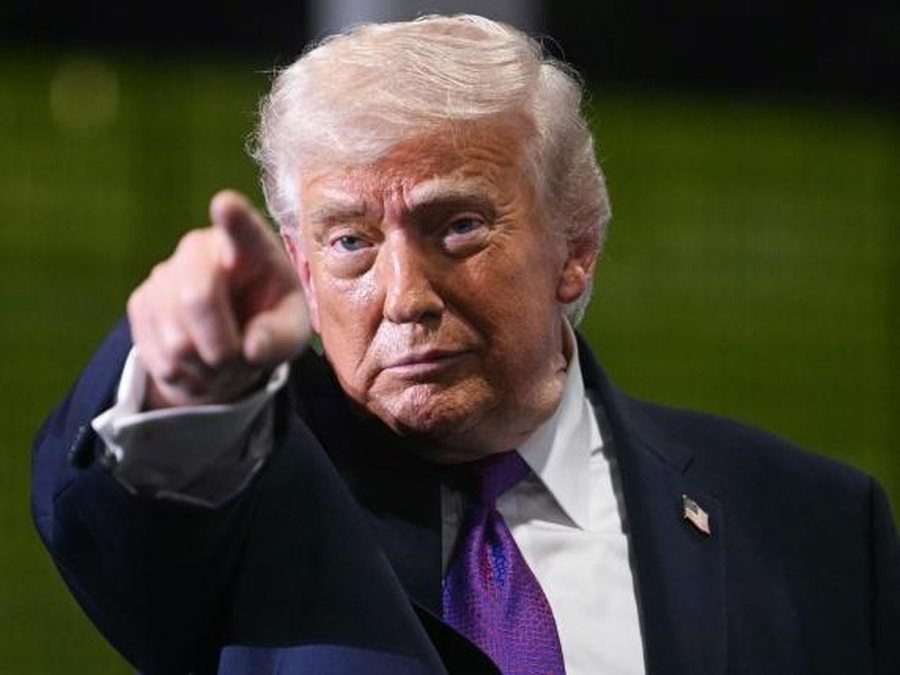
The president declared on Tuesday that the war will end "very soon," but also said that what Pete Hegseth has said may be true, that the war is only "at the beginning."
No one can predict with certainty what Donald Trump will decide to do in the coming days regarding the conflict with Iran. There are signals that suggest he may be looking for a way to withdraw from the war, while at the same time issuing statements that indicate a contrary stance.
The US president said on Tuesday that the war could end “very soon”, but at the same time said that what Pete Hegseth had said, according to which the conflict is only “at the beginning”, could also be correct. A night later, Trump said that the war was “going very well” and that the United States was “doing very well”, warning that “Iran will pay a very high price”. However, the cost of the conflict is also rising significantly.
Pentagon officials told the Senate on Tuesday that the war has cost more than $11.3 billion in the first six days alone. Democratic Senator Chris Coons of Delaware estimates that the real figure could be even higher if the costs of replacing used weapons, which already exceed $10 billion, are included.
During a visit to Ohio and Kentucky on Wednesday, Trump sought to reassure the public that the economic impact of the war would not be too great, despite concerns that existed even before the conflict began. Energy Secretary Chris Wright told CNN that there was no oil shortage or tight energy market in the Western Hemisphere, stressing that the main problem was in Asia. He added that the US administration was focusing on “pragmatic solutions to deal with a few weeks of energy shortages.”
Meanwhile, Treasury Secretary Scott Bessent announced that purchases of Russian oil have been temporarily authorized. The White House is also considering a temporary exemption from the Jones Act, a maritime transportation law, to allow energy and agricultural products to be transported more quickly between U.S. ports.
This exemption would allow foreign ships to transport fuel between U.S. ports, reducing transportation costs and speeding up supply.
In a post on the Truth Social network, Trump stated that the United States is the world's largest oil producer and benefits when prices rise. However, he stressed that his priority as president is to prevent Iran from obtaining nuclear weapons and destabilizing the Middle East.
Meanwhile, the price of oil has risen by about 8%, approaching $100 a barrel. When asked if the price could reach $200, Secretary Wright called such a scenario “impossible.”
However, the impact of the conflict is not just related to oil. Gulf countries have invested in important sectors such as data centers and the aluminum industry, which are considered vulnerable to missile and drone attacks from Iran.
Exports of helium, essential for microchip production in South Korea, have been blocked, while the Persian Gulf remains an important center for the production of chemical fertilizers, raising concerns among American farmers about possible price increases.
According to the New York Times, it is possible that Trump will withdraw from the conflict, as he has done on several occasions with tariff policies, looking for a way to get out of the war without a clear victory.
Even some voices within his camp have expressed criticism. Popular podcaster Joe Rogan, who supported Trump in the 2024 election, declared on his show that war with Iran is "crazy" and that many Americans feel "betrayed."
"During the campaign he promised that there would be no wars and that he would end unnecessary conflicts. Now we are in a war and it is not clear why we are doing it," Rogan said.
If Iran manages to force the United States to end the conflict before the issue of control of the Strait of Hormuz – a key route for global trade – is resolved – this could be considered a loss for Trump and for American prestige.
On the other hand, if the American president manages to promote the creation of a more pragmatic government in Tehran, this could be interpreted as a political victory.
Analyst Walter Russell Mead estimates that the most likely scenario is an intermediate solution: the United States will ensure freedom of movement in the Persian Gulf, while the current regime in Iran can survive. In this case, the operation called “Epic Fury” may be remembered as an intervention that preserved the balance of power in the region, without fully solving the fundamental problems.
Meanwhile, according to the Washington Examiner, Trump said he doesn't know if war with Iran could help him win the Nobel Peace Prize.
"I don't know and I don't care. I'm not talking about the Nobel Peace Prize," he declared./ Taken from Corriere della Sera



Lini një Përgjigje