


 Shkruar nga Pamfleti
Tehran has drawn up a clear plan against US-Israeli attacks and there are 3 points on which they are focusing.
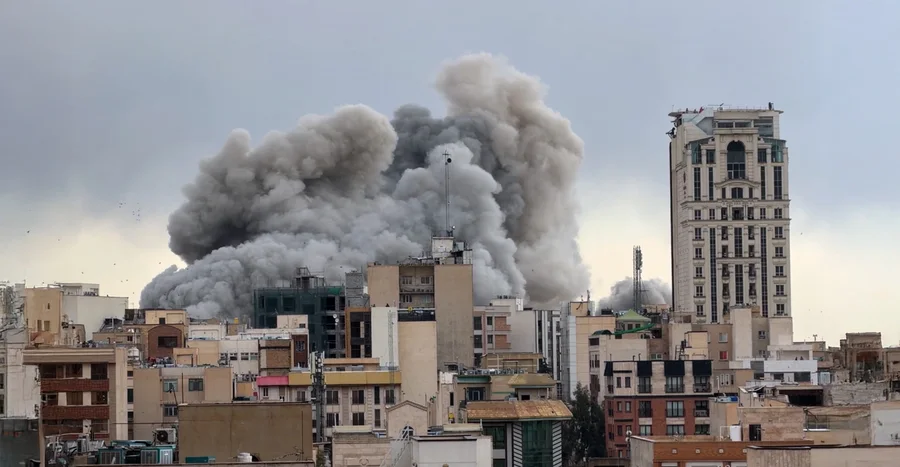
Although it has not been confirmed by official sources, it seems to some analysts that Iran has launched more ballistic missiles and drones against the United Arab Emirates than Israel since the start of the war in the Middle East.
Although Tehran has been subjected to a massive attack by the armed forces of Israel and the United States over the past thirteen days, it is now clear that for the Iranians the center of gravity of the conflict is not the aggressor forces, but the Arab states of the Middle East, with a key role in the global economy.
Iranians "ready"
Better prepared than in the first American operation, when they were surprised by a significant delay in their reorganisation, the Iranians now appear to have developed a clear high-level strategy against US-Israeli attacks, which is not based solely on their preventive capacity, but includes a series of regional countermeasures leading to the spread of the conflict on a global scale.
This is because the Iranians have focused on attacks against the Arab world, focusing on:
· Sea routes and ocean shipping
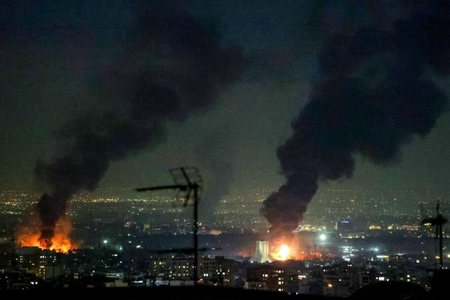
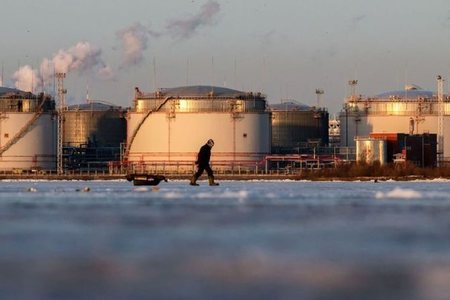
· Energy infrastructure and refineries
· Tourist units, transportation and airports.
In other words, the structures that initiate the "extroversion" of war, culminating in pressure on the Gulf countries, but also on the international community.
The closure of the Strait of Hormuz announced by Iran's new religious leader, Mojtaba Khamenei, has already sent oil prices soaring, while supply chain disruptions and a surge in oil prices are starting to be felt across the West.
In such an approach, the focus for Iran is not necessarily solely on successfully fending off US-Israeli attacks, but rather on worsening the global economic environment so that consumers can shift the pressure from shelves and gas stations to national governments to achieve an immediate ceasefire and end the war.
Quick end
If Iran's strategy succeeds, military operations against it could end earlier or at least before the regime collapses or is exhausted and has achieved a significant weakening of other states in the wider region, when for example one of the most "acceptable" targets for Iran is the Aramco refineries.
At the same time, it would also weaken the hegemonic image of the United States, which is heading into the midterm elections with the first criterion for voters being the course of the American economy. At the same time, Iran's high strategy also sends messages for the future in the wider region, as in the event that it shows high resistance to repeated attacks, it will impose its conditions on a number of Arab states.
In this sense, escalating the war only benefits Iran, writes Foreign Affairs, adding that the Iranian attacks "represent a strategy of horizontal escalation, an attempt to transform the risks of a conflict by expanding its scope and prolonging its duration."
"Such a strategy allows a weaker combatant to change the calculations of a more powerful enemy. And it has worked in the past, to the detriment of the United States," she adds, meaningfully "pointing" to... Vietnam.
At the same time, attacks on strategic infrastructure, such as tourism, in Arab states are leading to a rapid dismantling of the security regime that has so far inspired global tourist destinations, such as Dubai, while the New York Times claims that the US President's advisers underestimated the turmoil in the markets from military operations, even during the first wave of bombings last June.
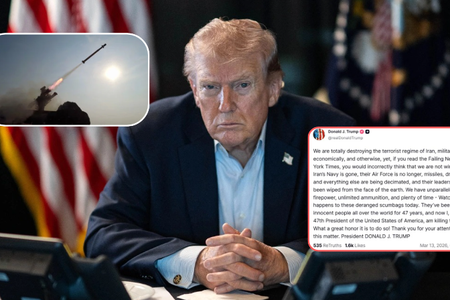
Therefore, “President Trump downplayed the risks to energy markets as a short-term concern that should not overshadow the mission of destroying the Iranian regime,” the newspaper emphasizes, arguing that “the search for ways out of the war has gained urgency since the weekend, as global oil prices rise and as the United States burns through expensive munitions,” the cost of which was estimated at $5.6 billion for the first twenty-four hours of the war alone.



Lini një Përgjigje