


 Shkruar nga Pamfleti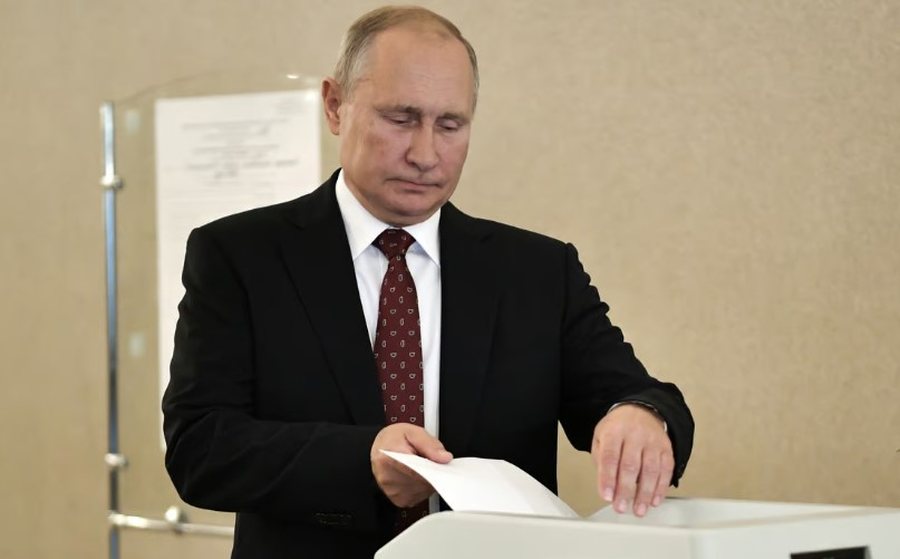
Vladimir Putin's fifth term as president of Russia is likely to be dominated by the war in Ukraine.
After 24 years in the Kremlin, the Russian leader is on the verge of securing another six years as president, as presidential elections concluded on Sunday. The vote itself is largely a formality, putting him on track to surpass Stalin as Russia's longest-serving leader. His government pulled out all the stops to ensure victory. He jailed critics, suppressed the press and introduced new laws to stamp out anything that could be considered critical of his war in Ukraine. Putin's most effective opponent, Alexei Navalny, fled, found dead in an Arctic prison camp last month, serving a 30-year sentence under circumstances that have not been fully explained.
What matters most is his win rate. Putin, now 71, doesn't just want to win. Analysts who follow the country's politics say he has a lot to gain if he wants a free hand in reviving what he says are Russia's conservative Orthodox traditions and dominance in Ukraine and in his broader confrontation with the West.
" This would legitimize Putin's legacy and his war of aggression, relegating the remaining opposition to an even more marginalized role and allowing Putin to implement, unchecked, his vision for the next six years ," it said. in a paper from the European Parliament's Think Tank, which provides analysis and research on policy issues relating to the European Union.
According to government data, the last presidential election in 2018 reached 67.5%, with nearly 77% of the vote going to Putin. The Kremlin has made it clear it wants even higher numbers this time to give the Russian leader a free hand in pursuing his goals, following the "tradition of post-election carte blanche" for Putin, as Boris Vishnevsky, vice president of the opposition party.
Putin has already signaled some of his plans in speeches and interviews. Chief among them is his insistence on continuing the war in Ukraine, as US support for Kiev shows signs of wavering.
Observers predict the Russian leader could soon launch another wave of arrests and house arrests, new laws to stifle dissent and tax hikes on the wealthy. Analysts said there could also be a new wave of mobilizations to reinforce Russia's growing advantage on the battlefield in Ukraine.
" What we have seen recently is an increase in the activity of Russian intelligence and security services, which are extremely aggressive, a reflection of the regime's pre-election paranoia ," said Andrei Soldatov, a senior fellow at the Center for Europe-based in Washington, DC.
Policy Analysis said at a press conference on Thursday that because political stability is at stake, anything is justifiable, including the killing of political opponents and attacks abroad.
Putin may face a more delicate balancing act in keeping Russia's economy afloat. It has fared relatively well despite Western sanctions, with trade with China and high oil prices helping to insulate the country's political and business elite from any real hardship. Analysts said he is likely to focus on ensuring Russians can continue to live life as normal, also announcing plans to spend billions of dollars to tackle poverty and rebuild much of the country's aging infrastructure, while most of the economy goes on a war footing.
To pay for it, Putin has proposed a more progressive tax system that some analysts have suggested is intended to appease poorer Russians who are making the most sacrifices, both financially and in terms of family members being drafted in. fight in the war.
" Indeed, the distribution of the tax burden should be fair in the sense that corporations, legal entities and individuals who earn more should contribute more to the national treasury, towards addressing nationwide problems, mainly towards the fight against poverty, " said he in an interview on state television on Wednesday.
He also spoke of creating a new elite made up of veterans and those who served in the Ukraine war and called for more support, including academic opportunities and training.
" The real elite is everyone who serves Russia, reliable workers and fighters, who have proven their devotion to Russia ," Putin said.
Some analysts described such rhetoric as empty pre-election promises. What seems more realistic, they said, was that Putin could eventually order a second mobilization, needed to gain a battlefield advantage at a time when Ukraine has faced some pushback from Western countries backing its campaign. military.
Putin's first draft of some 300,000 men in September 2022 sent hundreds of thousands fleeing across the border, among them a host of young professionals. The Russian leader will have to find a way to prevent a repeat of the exodus, such as closing the border, some analysts said.
Other Russia watchers suggested that in addition to throwing more money at potential contract soldiers, another way to replenish troops on the battlefield would be to draw more conscripts into the war.
Under Russian law, conscripts are not supposed to be deployed to fight in Ukraine, only reservists who have completed their military service and training. But last summer, Russia raised the maximum conscription age by three years to 30 and ruled that recruits would be able to enter into one-year military service contracts in certain circumstances, including during a period of mobilization, in wartime and when the army Russia's armed forces are fighting abroad.
Some Russians faced the threat of arrest for expressing their opposition to Putin as voting began on Friday. The Central Election Commission reported five incidents of voters attempting to sabotage ballot boxes by pouring liquids, including paint, on them. The Investigative Committee, the country's main federal investigative authority, said it was investigating several such incidents on criminal grounds.
In a separate incident, investigators said they had opened a criminal investigation into the case of a woman suspected of setting fire to a voting booth at a polling center in southeast Moscow. Maria Andreeva, who is among a movement of women and mothers campaigning for their mobilized husbands to return home, posted a letter from prosecutors on Telegram warning her against attending unauthorized public events planned in polling stations in Moscow.
The real test of the opposition may yet come.
Critics of Putin, including Navalny's widow, Yulia Navalnaya, joined forces urging voters to flood the polls at noon on Sunday and for those brave enough to wear blue and white - colors that have been used to symbolize opposition to the Russian occupation of Ukraine. Opponents have also encouraged people to spoil their ballots or vote for someone else.
At this point, though, it's more of a defiant gesture, and one that could result in dire consequences for anyone caught in another shot.
The most important election may be the US presidential vote in November, where Putin is likely to await the result along with other elections in Europe, where support for Ukraine is also showing cracks.
He is waiting to see what happens if Western support for Ukraine erodes, he will continue the war as long as necessary. At this point, he feels that time is on his side./ Adapted "Pamphlet" from "The Wall Street Journal"


Lini një Përgjigje