


 Shkruar nga Inside Over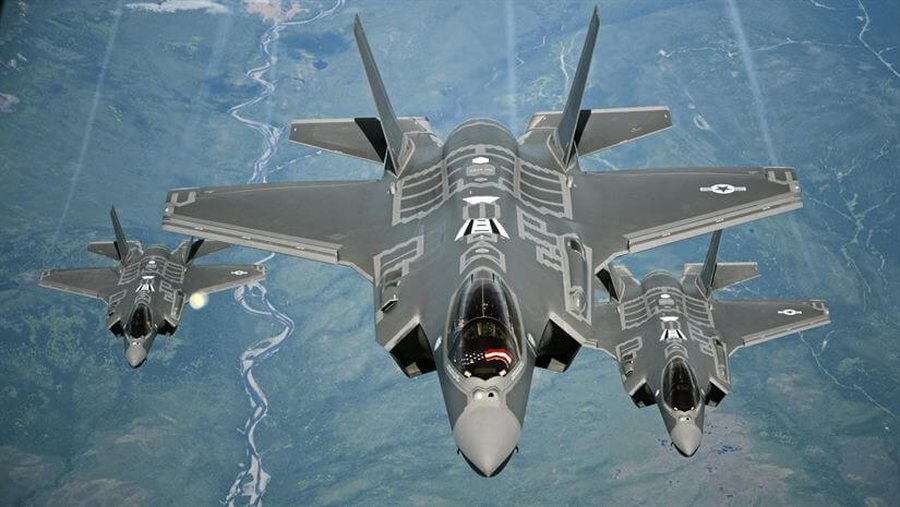
It was 2013 when Barack Obama declared that the United States would no longer be "the world's policeman." Today the world has changed compared to ten years ago and the sources of tension have multiplied...
The Israeli crisis is another file that finds space in the very busy international agenda of the United States. The Biden administration actually has to deal with many sharp issues: from the far-out draw of the war with China, to tensions with Beijing over the Taiwan case, from the Ukrainian conflict to Kim Jong Un's missile tests, not to mention secondary hot spots. .
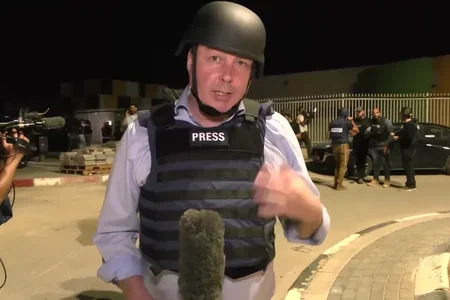
The crisis that has erupted between Israel and Hamas is therefore another blow to the global order. The Israeli government reacted to the attack by the pro-Palestinian group by launching an offensive in the Gaza Strip. The biggest risk is that the dispute could spread throughout the Middle East, involving multiple actors. The worst-case scenario is that the fighting in Gaza turns into a regional war.
In this case, as the Nikkei Asian Review has pointed out, if the situation in the Middle East were to expand - moreover at the same time as the war in Ukraine, which is still at a stalemate stage - then there is a risk of an attack on Taiwan. The strait and the Korean peninsula could be deeply affected. The reason is simple: according to various analysts, the United States would not have the military power to deal with so many crises, and so serious, at the same time.
What does the US risk?
It was 2013 when Barack Obama declared that the United States would no longer be "the world's policeman." Today the world has changed compared to ten years ago and the sources of tension have multiplied. How can the US military deal with two or more major conflicts erupting simultaneously in Europe, the Middle East and Asia?
Last July, then-Chairman of the Pentagon's Joint Chiefs of Staff, Mark Milley, explained that the United States is capable of handling a major war at once, but that at the same time it can prevent or deter multiple conflicts at the same time. Milley's words are clear: The United States would face serious challenges if China were to invade Taiwan, taking advantage of unrest in Ukraine and the Middle East, or if North Korea were to send troops to South Korea for the same. reason.
To discourage such actions, according to Milley himself, Washington and its allies should increase deterrence against the two countries. However, it may not be enough, and in any case there are many views on the subject. In fact, there are those who argue that a war in Europe may not significantly affect Asian security because land forces will probably play a key role on the Old Continent, while the main battles in Asia will probably be fought at sea. However, managing such a situation would not be easy for the US, as the armed forces would need ammunition, missiles and aircraft on both sides of the border.
Reduce voltage hot spots
In Asia, the military balance between the US and China has already shifted in favor of Beijing. US forces estimate that as of 2021, the number of Chinese warplanes, ships and submarines has already reached five to 5.6 times that of the Indo-Pacific Command in every category. Given such a context, it is reasonable to assume that China and North Korea can take advantage of the situation to try to achieve their goals. Even more so if the war in the Middle East were to expand and be prolonged.
To defuse one scenario, the United States, Japan and South Korea have long strengthened their deterrence against Beijing and Pyongyang. Again, this may not be enough. That is why the US government is carefully monitoring the Israeli crisis, trying to curb Tel Aviv's "revenge".
"We have no intention, nor do we have any plans, to send combat troops to Israel or Gaza," repeated the vice president of the United States, Kamala Harris. Finally, according to the Wall Street Journal, it was the US that pushed for the restoration of telephone and Internet communications in Gaza, which Israel had severed before the ground operations began. As long as the Israeli crisis ends without spreading to the rest of the region, the US sleeps peacefully. / Pamphlet





Lini një Përgjigje