


 Shkruar nga Pamfleti
Although it is still too early to write Orbán off the hook completely, it is important to reflect on the extent to which Orbánism and, by extension, Trumpism, as well as similar experiments in radical and revolutionary nationalist politics, have proven to be a dead end, both politically and in substance…
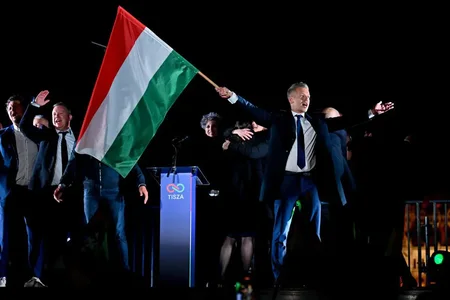
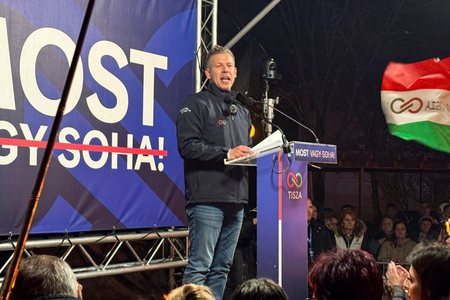
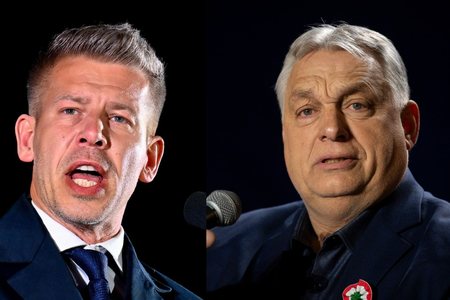
The road ahead for Hungary's new government, expected to be formed in the coming days by Péter Magyar's Tisza party, is not easy. The country is facing worsening economic problems: high inflation, slow growth and shrinking public finances. After 16 years of unchecked rule, the defeated Fidesz party will continue to have loyalists in key positions in business, public administration, the judiciary and elsewhere.
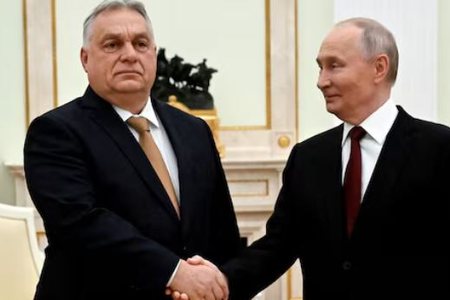
Still, Sunday was a major day for European and American politics. The form of divisive populist nationalism, first led by Viktor Orban and then taken to a new level by Donald Trump, was convincingly defeated at the ballot box. Moreover, it was defeated by such a large margin that any attempt to overturn the result would have been doomed to failure.
Despite allegations of vote-buying and other irregularities voiced on election day by Viktor Orban’s political director, Balazs Orban, his boss decided to end his term on a high note, admitting defeat and congratulating his opponent. In doing so, he is hoping to set an example that his American followers will decide to follow when the time comes, unlike what happened after the 2020 elections.
Although it is still too early to write Orbán off the hook completely, it is important to reflect on the extent to which Orbánism and, by extension, Trumpism, as well as similar experiments in radical and revolutionary nationalist politics, have proven to be a dead end, both politically and in substance.
Once again, Fidesz did not lose the election by a narrow margin. At the end of the vote count on Sunday evening, Tisza's lead appeared to be around 16 percentage points, well above the poll average, giving the new prime minister the two-thirds majority needed to break more decisively with the legacy of the past 16 years.
About a decade ago, Orbán's idea of "illiberal democracy" might have seemed to some as a fresh, counter-current way to respond to the failures and blind spots of "liberal internationalists," "neoliberals," or the "establishment."
Today, for a decisive majority of Hungarians, this slogan is a summary of misgovernment, economic stagnation, and rapprochement with some of the worst regimes on the planet. Despite the fascination of American social conservatives with Hungary, Orbán’s policies have brought neither a renewal of family life nor organized religion, but rather demographic decline and a decline in church attendance.
Drawing conclusions from a single election is fraught with risks, but after the Hungarian elections, the project led by figures like Orbán and Donald Trump no longer has any truly influential champions. Robert Fico, Orbán's Slovak disciple and current prime minister, with friendly ties to the Kremlin, has no real ideological convictions (apart from Soviet nostalgia), is worn out, and also an insignificant actor on the international stage.
Meanwhile, Italy's Giorgia Meloni has proven herself to be a perfectly normal, non-revolutionary political actor. You may not agree with her views on gay marriage or immigration, but if she were to become the embodiment of a new form of right-wing politics across the West, neither our democracies nor our alliance system would be in danger.
Jordan Bardella, the leader of France’s National Rally, has put as much distance as possible between himself and the MAGA movement, and also presents himself in a non-threatening manner. There are still the Alternative for Germany, with its far-right leanings, Austria’s Freedom Party, Nigel Farage’s Reform UK, and many other actors. However, their radicalism, but also their electoral appeal, are likely to be shaped by the success, or lack thereof, of other champions of the same cause.
Putting aside Trump’s domestic struggles and his mishandling of major international situations, such as Iran, the 79-year-old US president looks less like the pioneer of a new, emerging political movement and more like a figure whose relevance has passed. Increasingly abandoned by figures like Tucker Carlson and Alex Jones, Trump has now lost the only credible international model for his style of governance.
The opportunity offered by Orbán's defeat and his acceptance of the result gives Europe a chance to leave behind the period of extraordinary politics, in which the very existence of the EU and democracy in its member states was under threat.
It remains to be hoped that the successive defeats of the current version of the Republican Party at the ballot box, as well as Trump's eventual departure from American political life, will bring a similar degree of relief to the United States, its political institutions, and its alliances. /Adapted from The Spectator /


Alex Jones deri dje eshte quajtur konspiracionist, è cuditerisht ju te pamfletit se keni permendur asnjehere. Sdq, si Jones, Carlson, Owens, Logan etj., nuk kane qene asnjehere dhe nuk jane figura kryesore qe e kane mbeshtetur Trump, thjeshte pi ti kishte qene per keta ai as governator nuk mund te ishte zgjedhur e jo me president. Pavaresisht gjithshkaje, e gjithe situata duhet pare me gjere e jo ngushte, besoj Trump do fitoje mazhorancen ne zgjedhjet e mesme ne Nentor 2026.