


 Shkruar nga Pamfleti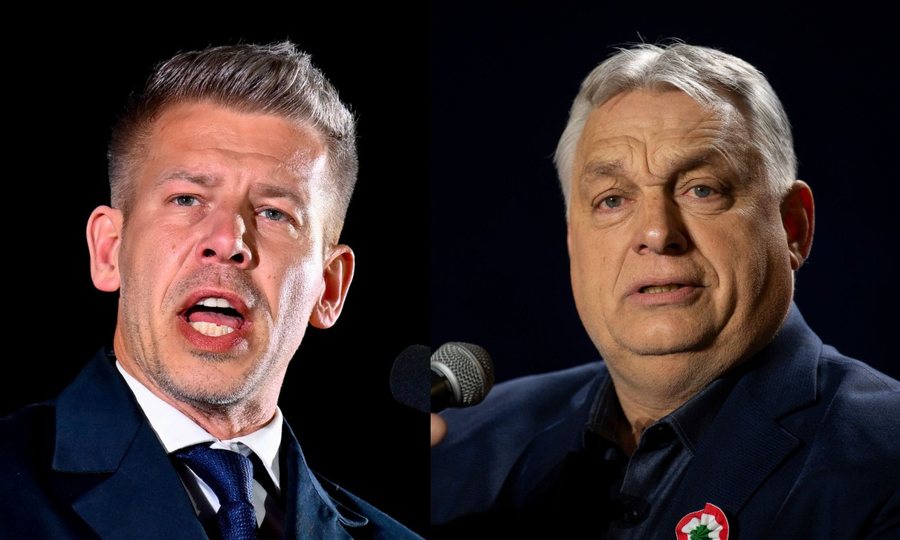
The new government will have the majority needed to completely overhaul Hungary's legislation and all the changes promised by Hungary during the election campaign...
Peter Magyar and Viktor Orbán, the two central figures of the elections in Hungary, come from the same political space and even if today they appear as two diametrically opposed political forces, they maintain certain points of convergence.
With 98.94% of votes counted, Peter Magyar's Tisza Party is estimated to secure 138 seats in the new parliament, compared to just 55 seats for Viktor Orban's Fidesz and 6 for the far-right Mi Hazánk ("Our Homeland") party.
These results mean that the new government will have the critical two-thirds majority (133 seats or more), necessary for the broad reform of the country's legislation, creating real conditions for a significant break with the Orban era.
Viktor Orban's 16-year hold on power is over and a system that has been described as "electoral authoritarianism" is collapsing, following his defeat by a 45-year-old former party figure who managed to convince a majority of Hungarians to end it.
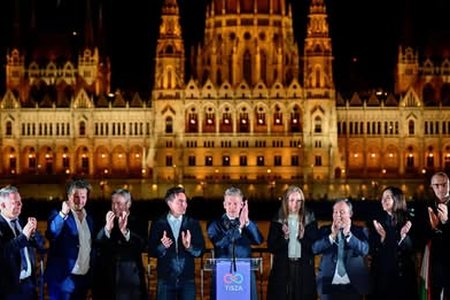
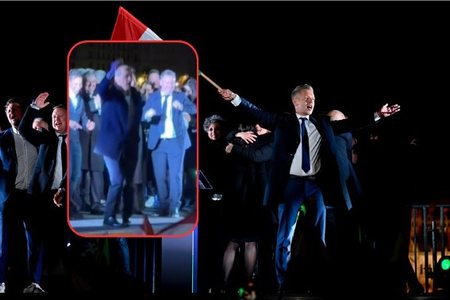
"We did it," Peter Magyar declared to a crowd of enthusiastic supporters on the banks of the Danube, overlooking the impressive Parliament building in Budapest, adding, "together we overthrew the Hungarian regime."
The landslide victory is expected not only to allow Hungary to overturn Orban's increasingly unpopular domestic policies, but also to redefine Hungary's international relations. Magyar has made distancing Hungary from Russian influence a top priority, seeking smoother relations with the European Union and Ukraine.
Distancing from Europe or rapprochement?
One of the main differences between Magyar and Orban is in the relationship with the European Union. Magyar is promoting a clearly pro-European agenda, emphasizing the restoration of relations with Brussels and the release of European funds that remain "frozen."
On the contrary, Orbán has adopted a confrontational stance towards the EU in recent years, promoting national sovereignty and questioning European policies, particularly on issues of the rule of law.
Different governance model
In the area of democracy and institutions, the differences are also pronounced. Magyar supports strengthening the transparency and independence of institutions, trying to appear as an exponent of a more “normal” European democracy. On the other hand, Orbán has built the model of the so-called “illiberal democracy”, with critics accusing him of concentrating power and controlling the media and the judiciary.
The West or "multidimensional" foreign policy
Significant divergences have also been registered in foreign policy. Magyar seems closer to the Western line, supporting relations with the EU and NATO and seeking to limit dependence on Russia. In contrast, Orban has maintained close ties with Moscow, but also with China, pursuing a more multidimensional and often autonomous foreign policy, even when this conflicts with European elections.
Economy and corruption in focus
Magyar has placed the fight against corruption and the need for institutional reform at the center of his politics, trying to express the dissatisfaction of a part of society with the existing system. In contrast, Orbán's governance model has been accused of strong state intervention and clientelism, with economic policy based on a network of powerful allies.
Convergence zone
Despite their differences, the two sides are not as far apart on immigration as they are on other issues. Orban has pursued a particularly hardline stance against immigration, while Hungarians maintain a more conservative stance, avoiding moving in a completely liberal direction.
The points that bring them closer
Beyond immigration, a common denominator is the emphasis on national identity and patriotic discourse, albeit with a different style and intensity. At the same time, Hungarians seem to adopt a more pragmatic stance in international relations, without proposing a complete break with the line the country has defined in previous years.
The essence of the confrontation
Ultimately, the main differentiation between Orban and Magyar is not simply about ideological labels, but about the country's governance model and international orientation.
Magyar expresses a pro-European and reformist version of the center-right, while Orbán remains the exponent of a nationalist and centralist model of power.
At the same time, their common references to issues of identity and social cohesion indicate that the political conflict in Hungary is not evolving into a classic "right-left" dichotomy, but into a more complex confrontation over the country's future within and outside Europe. /Pamphlet/



Lini një Përgjigje