


 Shkruar nga James Crisp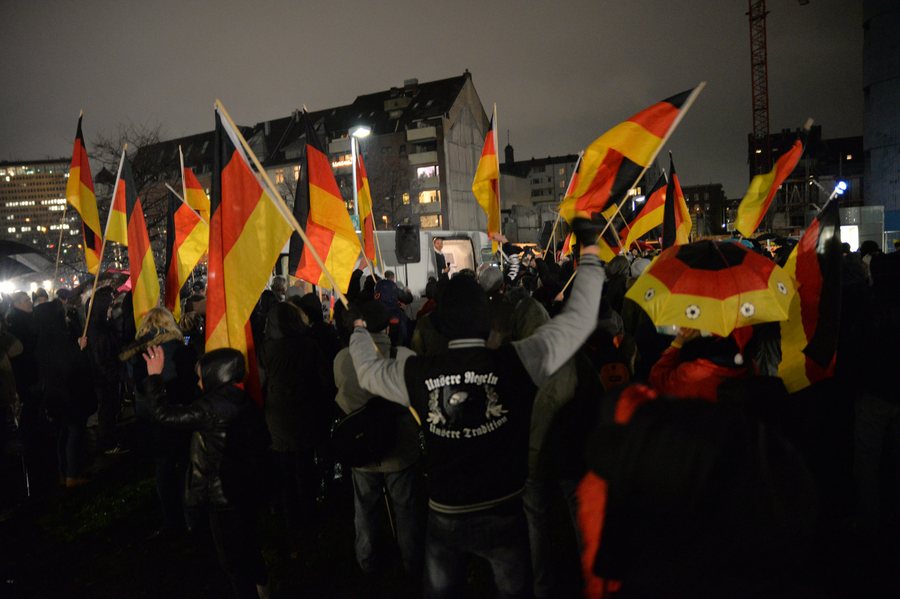
A third of all government spending – around £105 billion – went on pensions last year.
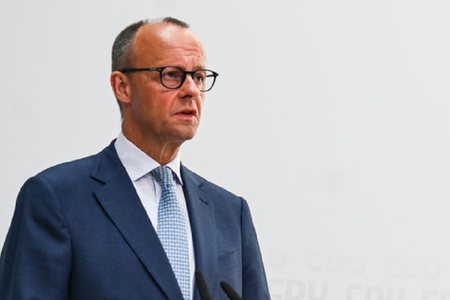
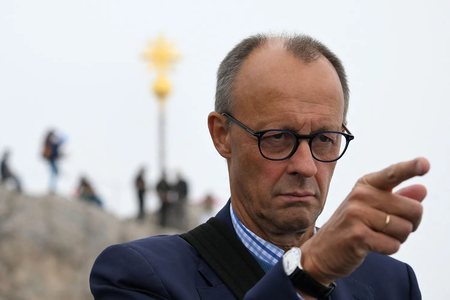
New Chancellor Friedrich Merz has a tray from hell after today's election. Huge sums of money must be found for the damaged economy, pensions and defense. There is immense pressure to pay off public spending and debt rules that are deeply embedded in the national psyche.
The hyperinflation suffered by Weimar Germany in the 1920s, which wiped out savings and made the currency worthless, is blamed for the rise of Hitler. More recently, German fiscal discipline was the stick used to beat Berlin's allies in the EU.
During the eurozone crisis, sane German politicians lectured the likes of Greece, Italy and Spain for their irresponsible spending. Berlin insisted on strict EU-wide limits on budget deficits and public debt after playing an influential role in financing and designing the eurozone's bailout programs.
The glory days are over.
The German economy, the richest in the EU and the envy of Europe for decades, appears to be over. The economy shrank for the second straight year in 2024, inflation is at its highest level in half a century and energy prices are high.
German industry was cut off from cheap Russian gas after Putin's invasion of Ukraine. Production and exports have fallen, sales to China have declined and now there is the prospect of US tariffs from Donald Trump.
Infrastructure and businesses are in dire need of modernization in a country where the fax machine has not yet died out. The population is aging. Children born during the all-time high birth rate between 1955 and 1969 are retiring, while the workforce shrinks.
This has created a looming pension crisis, but reforming a system linked to wage inflation is politically explosive with older and influential voters.
A third of all government spending – around £105 billion – went to pensions last year. This is set to almost double by 2050.
It’s a daunting bill to pay, but Germany also needs to start spending heavily on defense to curb the Russian threat and satisfy U.S. demands. Donald Trump will not accept Berlin’s claim of poverty. Last year, Germany had a record trade surplus of more than 59 billion pounds with the U.S., its biggest trading partner, to which it sends more than 10 percent of its exports.
Chancellor Olaf Scholz announced 100 billion euros to repair the German military after the invasion of Ukraine. Progress since then has been slow and inflation has eroded the fund.
Scholz, who is expected to come in third in the election, has only promised to meet NATO's minimum target for defense spending of 2 percent of GDP. Friedrich Merz, the chancellor-in-waiting, has also refused to commit beyond that target, which will not please a US president who expects more than 5 percent.
The leader of the center-right CDU, a fiscal conservative, must now decide what to do with Germany's debt curb, which was introduced after the 2008 financial crisis.
The "debt brake", provided for in the constitution, limits the federal budget deficit to 0.35 percent of GDP, while from 2020, German states are required to maintain balanced budgets with zero new borrowing.
Scholz's attempts to reform the rules led directly to the collapse of his dysfunctional coalition and his expected departure from power. Any change, which requires a two-thirds majority in the Bundestag, will be even more difficult for a conservative than for Scholz's center-left.
Merz has suggested he might be willing to loosen the reins to allow investment in the economy, but not to pay for social policies. Joint European borrowing and debt pooling with EU allies is intended to boost defense spending after decades of neglect.
Putting German taxpayers on the hook for other, more spendthrift EU countries remains extremely controversial, even after Angela Merkel broke the taboo with a "single" contribution to finance the bloc's massive pandemic recovery fund.
Germans associate high debt with economic and political instability. France, Germany's only rival as the EU's most influential country, is already mired in high public debt and is in violation of European rules on national budgets.
Paris knows it must spend more on defense, especially if Trump withdraws American security guarantees for Europe. Emmanuel Macron's efforts to reform the French pension system led to unrest and helped create a political crisis that has left him a limp president.
France is in its second government in just under three months, and few would bet that it will last long in the fragmented and polarized world of French politics.
Like Germany, French voters are concerned about immigration and security after terrorist attacks in both countries. Marine Le Pen's eurosceptic right-wing National Rally is the largest party in the French parliament. It is poised for another run at the Élysée in 2027, when Macron is no longer eligible to run.
In Germany, the far-right AfD is expected to make historic gains and become the main opposition party. It will be waiting to attack if a Merz coalition falls over one of the many hurdles it faces. As things stand, the European Commission judges Germany to be within deficit and spending limits, while France definitely is not.
Last year, French debt reached more than 2.7 trillion pounds, which is 113.7 percent of GDP. Germany's public debt is more than 2 trillion pounds - roughly 62 percent of GDP.
Merz may be counting on the fact that the only solution to Germany's many problems is to bite the bullet, face the political blowback, and scrap the national credit card.
This risks Germany violating the very EU fiscal rules it once demanded, which could lead to fines from Brussels. After years of reprimands from Berlin, this would be greeted with much scorn in southern Europe. No longer a special case, Germany would become like every other European country.
For Germans, it will be a deeply unsettling experience, as they look anxiously at France's mountains of public debt and ask, "Will we be like them in a few years?" /Adapted from "The Telegraph"


Lini një Përgjigje