


 Shkruar nga Pamfleti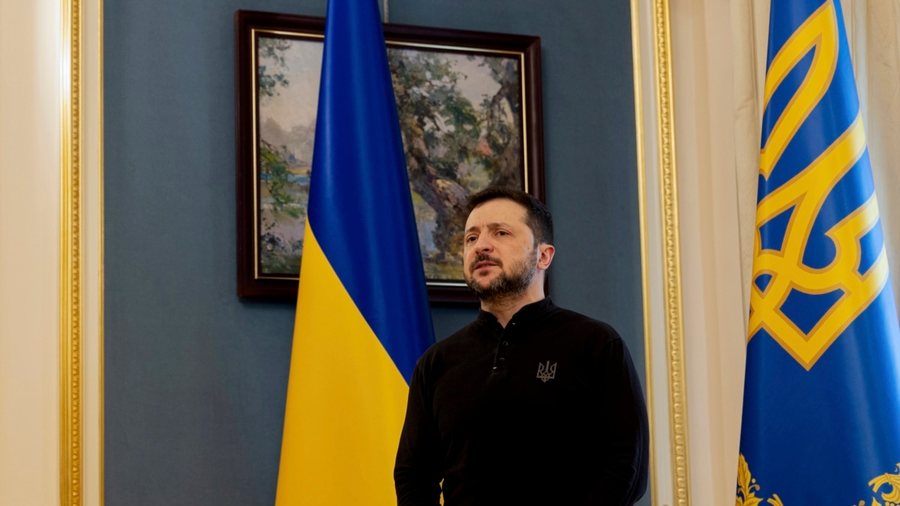
February 24 marks the third anniversary of the start of the Russian invasion of Ukraine. The anniversary comes amid international efforts to end the conflict. As President Donald Trump's administration criticizes Ukrainian President Volodymyr Zelenskyy, VOA's Lesia Bakalets reports from Kiev about a survey showing that a majority of Ukrainians support President Zelenskyy and do not want new presidential elections during a time of war.
Volodymyr Zelenskyy became president of Ukraine in May 2019, winning over 73% of the vote. Immediately after the election, his support set a record for Ukraine, says Anton Hrushetskyi, executive director of the Kyiv International Institute of Sociology (KIIS).
"About 90% had confidence in the president, but then this indicator dropped to 35% on the eve of Russia's attack in 2022," he says.
Mr. Hrushetskyi says that immediately after the attack by Russian forces, support for President Zelenskyy rose to 90%, according to a survey by the institute.
The last survey was conducted in early February.
“Currently, 57% of Ukrainians trust Zelenskyy and 37% do not,” says Mr. Hrushetskyi.
The decline in support is quite common for Ukrainian society, says Olga Aivazovska, chairwoman of the board at the democracy support organization Civil Network OPORA.
"Ukrainian society is unique. It, in principle, does not support the government. For the entire period of independence, only one president has been re-elected twice, so the current rating of the president is quite high. At the end of Yushchenko's term, support for him was about 5%," she says.
Viktor Yushchenko lost the 2010 elections.
But support for Mr. Zelenskyy, whatever it is, is not a reason to talk about presidential elections now, says Ukrainian political scientist Mykola Davydiuk.
"The cessation of fighting, the end of the war, the achievement of peaceful solutions, this is a reason to talk about elections," he says.
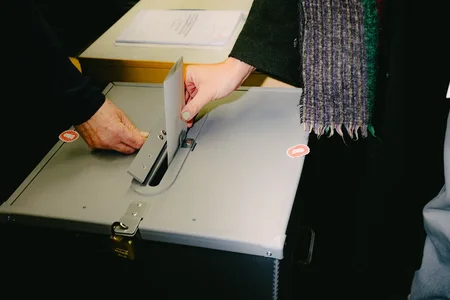
Mr. Zelenskyy's presidential term would have ended last year if it weren't for the war. Ukrainian law prohibits holding elections while a state of emergency is in effect.
"From an organizational point of view, holding elections is a very difficult process, because the demarcation line, the front line, is not stable. The level of threat from Russia to any region of Ukraine is extremely high," says Ms. Aivazovska.
OPORA has been monitoring elections in Ukraine for 20 years. Ms. Aivazovska says Ukraine will need at least a year after a ceasefire is established to begin its election campaign.
The country needs security guarantees and a solution on how to organize voting for military personnel and refugees, says Ms. Aivazovska.
"We have 7.5 million citizens abroad, 65% of whom are eligible to vote. If we start the elections, there must be every guarantee that we will complete this process, because a missile attack on election day would cause a drop in turnout to 5-10%," she says.
This could lead to a complete delegitimization of the government, which would benefit Russia, says Ms. Aivazovska. Political scientist Davydiuk agrees.
"There is a desire to change the authorities. But at the same time, there is a consensus - this cannot be done during the war, for one reason: Putin will benefit from this," says Mr. Davydiuk.
According to a survey by the KIIS institute, about 70% of Ukrainians are against elections during the active phase of the war./ VOA


Lini një Përgjigje