


 Shkruar nga Pamfleti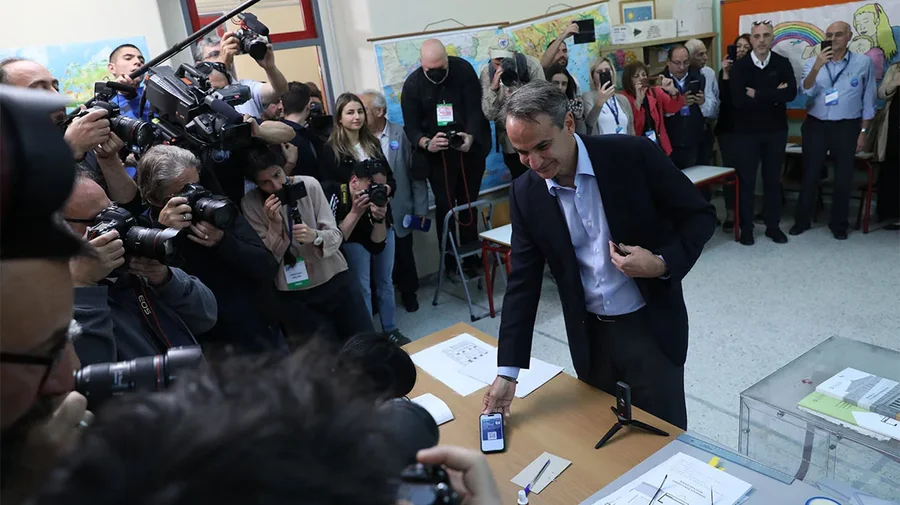
Today, June 25, Greeks will vote for the second time in a month to elect a new government.
In May, incumbent Prime Minister Kyriakos Mitsotakis convincingly defeated his center-left rival, but called new elections in a bid to govern Greece alone.
Sunday's vote comes just over a week after a migrant boat disaster off the Greek coast in which 500 people are thought to have died.
Mitsotakis's conservatives won last month's election by a 20-point margin over the centre-left Syriza party of Alexis Tsipras, another former prime minister, and he is confident of a repeat victory that would give him a second term.
But without a majority of more than 150 in the 300-seat parliament, Mitsotakis says his New Democracy party cannot form the stable government that is needed.
A Harvard graduate, Mitsotakis has vowed to change Greece's image as a pro-business eurozone member who responsibly manages the country's finances.
While opposition leader Alexis Tsipras, head of the left-wing Syriza party, who served as prime minister from 2015 to 2019, is already fighting for political survival.
Tsipras, whose campaign is centered on the issue of the health service and the welfare state, failed to capitalize on a series of scandals that hit the Mitsotakis government at the end of his term, among them the publication of wiretapping targeting journalists and politicians high, as well as a serious rail accident on February 28, which highlighted lax safety measures.
The campaign for the June 25 election has been further complicated by a surge in support for several small and fringe political parties, and a resurgence of a once-powerful socialist party, but polls give Mitsotakis the edge.
About nine parties have a realistic chance of winning national representation, ranging from a far-right, ultra-religious group with dark roots to two left-wing breakaway parties founded by former members of top of the former 'Syriza' government.








Lini një Përgjigje