


 Shkruar nga Max Boot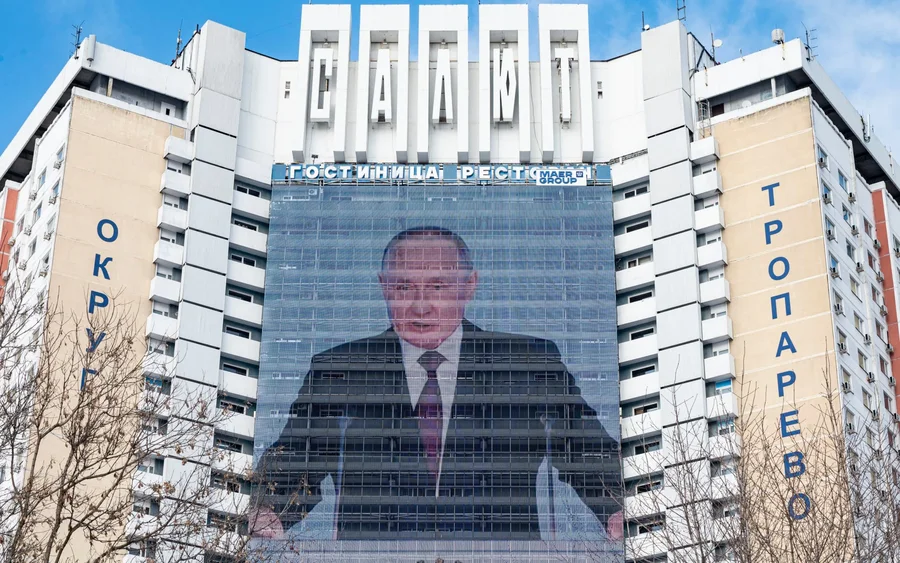
The illusion of a dictator's control can all too often crumble in the cauldron of fighting especially if the war turns into a protracted and bloody conflict, as has happened in Ukraine...
Russian President Vladimir Putin is learning what many tyrants have learned before him: When you unleash the dogs of war, there's a risk they might come back to bite you.
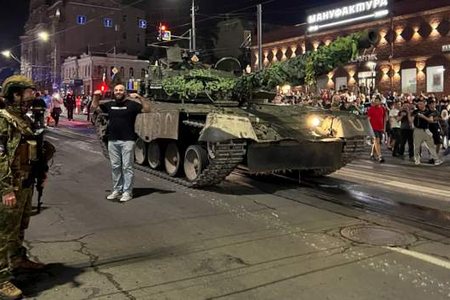
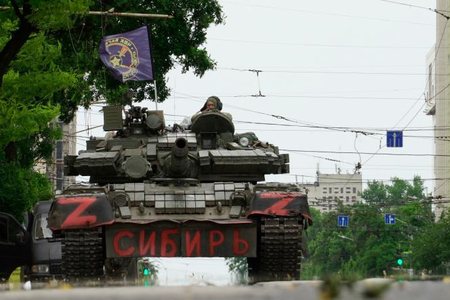
When the Russian despot sent his troops to march to take Kiev, he never imagined that 16 months later the troops of Wagner's mercenary group would march on Moscow.
Likewise, Napoleon never imagined that the invasion of Russia would lead to his exile and the restoration of the monarchy in France. Hitler never imagined that the invasion of Poland would lead to his own suicide and the division of Germany. Iraq's Saddam Hussein never imagined that the invasion of Kuwait would ultimately lead to the overthrow of his regime and his death.
War is inherently an unpredictable and dangerous business, the consequences of which can never be clearly predicted and rarely managed successfully. The illusion of a dictator's control can all too often crumble in the cauldron of fighting, especially if the war turns into a protracted and bloody conflict, as has happened in Ukraine.
Many analysts have assumed that time was on Putin's side in this war because Russia is so much bigger than Ukraine and because Ukraine is so dependent on the support of. But we are now seeing that time may be on Ukraine's side after all, because its government was democratically elected and enjoys the near-unanimous support of its people, to wage a war of territorial defense.
On the other hand, Putin's criminal regime has forced the Russian people to submit, but there is no loyalty or love for him. Like many dictatorships, Putin's regime turns out to be more fragile than it appears from the outside. He has always relied on his ability to manage competing centers of power, pitting oligarchs and various branches of government against each other so that he is the final arbiter of decision-making. This model worked for two decades, but it is breaking down under the pressure of a lost war that is destroying the country and the Russian military.
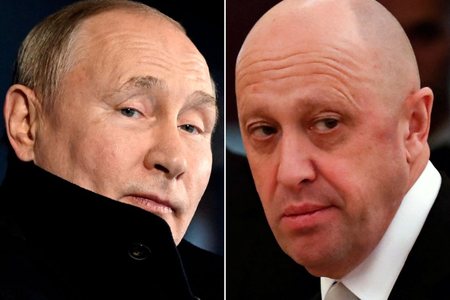
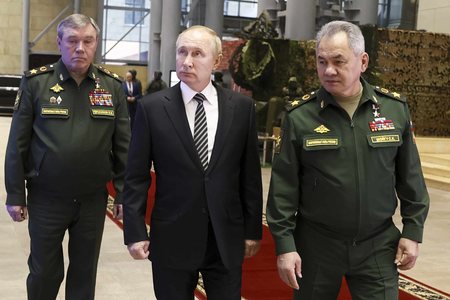
The purest case is that of the conflict between the Russian army and Wagner. As Prigozhin became more powerful, he began releasing videos mocking Russian Defense Minister Sergei Shoigu and General Valery Gerasimov, the chief of the General Staff, calling them cowards and criminals.
Putin initially did not intervene, perhaps imagining that a rivalry to make military progress in Ukraine would work to his advantage. But nowadays the rivalry between Wagner and the Ministry of Defense got out of control. But with the help of the Belarusian leader, he managed to restore peace in the country.
However, the Wagner crisis has exposed the hidden instability of the Putin regime and shaken its aura of power. This could still create opportunities for a Ukrainian counteroffensive that, so far, has only been in the works. If the Russians are distracted by infighting, Ukraine may have the opportunity to score more successes on the battlefield, and this in turn could further undermine Putin's hold on power.
But what happened today was a lesson to all future tyrants who might think of launching wars of aggression, and Xi Jinping is one of those who should heed the occasion./ Adapted " Pamphlet from "The Washington Post"


Lini një Përgjigje