


 Shkruar nga Pamfleti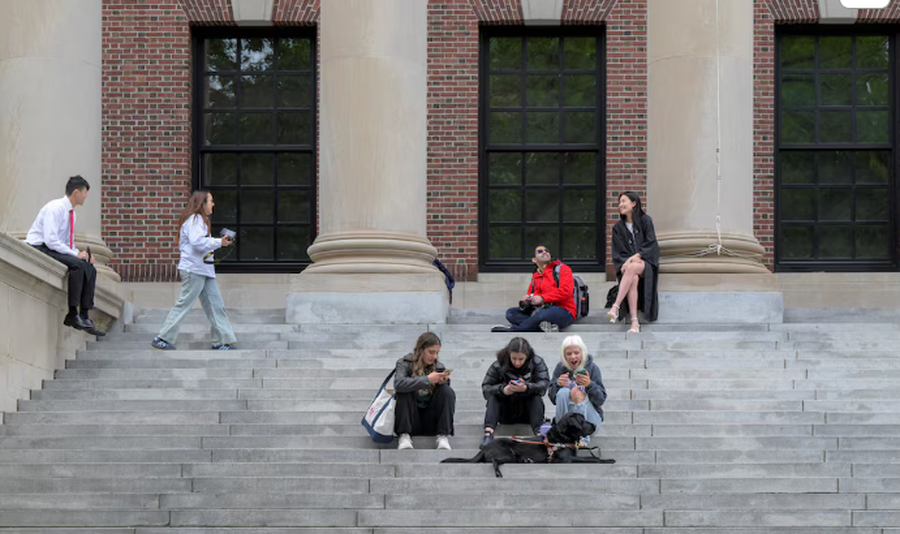
Harvard University will ask a federal judge on Monday to order the administration of U.S. President Donald Trump to restore about $2.5 billion in canceled federal grants and stop efforts to cut off research funding for the prestigious Ivy League school.
The hearing before U.S. District Judge Allison Burroughs in Boston marks a pivotal moment in the White House's growing conflict with Harvard, which has been the administration's target since it rejected a list of demands to make changes to its governance, hiring and admissions practices in April.
The Cambridge, Massachusetts-based university says hundreds of research projects, including those related to cancer treatments, infectious diseases and Parkinson's disease, will be at risk unless a judge rules the grant cancellations illegal.
The oldest and wealthiest university in the US was placed at the center of the administration's campaign to use federal funds to force change, after Trump said Harvard had been overtaken by anti-Semitic and "radical left" ideologies.
"The Trump administration's proposal is simple and based on common sense: don't let anti-Semitism and DEI run your campus, don't break the law, and protect the civil liberties of all students," White House spokesman Harrison Fields said in a statement.
Among the first actions the administration took against Harvard was to cancel hundreds of grants awarded to scholars on the grounds that the school did not do enough to address the harassment of Jewish students on its campus.
The Trump administration has since tried to ban international students from attending the school; threatened Harvard's accreditation status; and opened the door to cutting off more funding after finding it violated federal civil rights law.
As part of Trump's spending and tax bill, the Republican-led Congress increased the federal excise tax on Harvard's income from its $53 billion endowment to 8% from 1.4%. Income from the endowment covers 40% of Harvard's operating budget.
Harvard President Alan Garber said last week that various federal actions since Trump returned to office in January could strip the school of nearly $1 billion a year, forcing it to lay off staff and freeze hiring.
Harvard has said it has taken steps to ensure its campus is welcoming to Jewish and Israeli students, who it acknowledges have experienced "vicious and reprehensible" treatment following the start of Israel's war against Hamas in Gaza in October 2023.
But Garber has said the administration's demands have gone beyond addressing anti-Semitism and aim to illegally regulate "intellectual conditions" on its campus by controlling who it hires and who it teaches.
Those demands, which were listed in an April 11 letter from an administration task force, included calls for the private university to restructure its governance, change hiring and admissions practices to ensure an ideological balance of views, and end some academic programs.
After Harvard rejected these demands, it said the administration began retaliating against it in violation of the free speech protections of the First Amendment of the U.S. Constitution, abruptly cutting funding that the school says is vital to supporting scientific and medical research.
Burroughs, an appointee of Democratic President Barack Obama, has in one particular case blocked the administration regarding international students.
Trump has expressed optimism that Harvard will eventually agree with his administration.
Fields said Friday that a good deal was more than possible and that the administration is "confident that Harvard will ultimately accept and support the president's vision."
In court, the administration argued that Burroughs lacked jurisdiction to hear the objection and that the grant contracts made it clear that they could be canceled if the funded projects did not meet the federal government's policy objectives. / Adapted from Reuters /






Lini një Përgjigje