


 Shkruar nga Pamfleti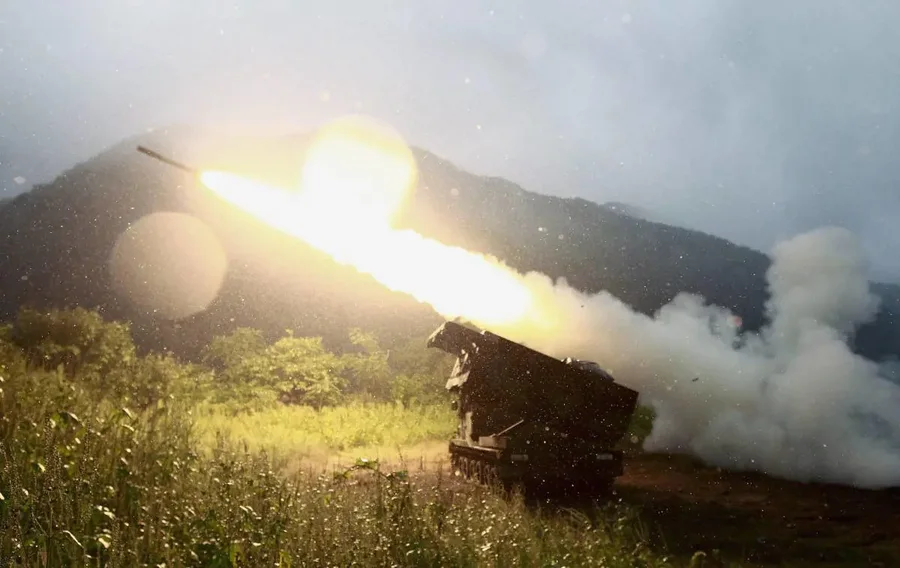
US defense contractors are producing a new series of low-cost cruise missiles to win a hypothetical war of attrition against Beijing...
Focusing on low-cost missiles to bolster depleted arsenals in critical areas of the world, from the Middle East to Ukraine, through the Asia-Pacific, and having a sufficient range of weapons to deploy against China should a conflict break out. This is the strategy the United States is pursuing to narrow the war gap with Beijing. Specifically, American defense contractors have been tasked with producing a new wave of low-cost cruise missiles to win a hypothetical high-tech war.
As Reuters reported, US contractor L3Harris Technologies has just unveiled the "Red Wolf" and "Green Wolf" missiles, which offer long-range, affordable strikes to the US military amid rising tensions with China in the Pacific. The systems support the US Department of Defense's (DoD) strategy of "affordable force," shaped by recent conflicts in Ukraine and Israel, which have highlighted the need to rely on massive stockpiles of deployable munitions.
Both multi-role missiles have a range of more than 200 nautical miles and can hit moving naval targets. Red Wolf, Asia Times noted, focuses on precision strikes, while Green Wolf is designed for electronic warfare and intelligence gathering. Production is underway in Ashburn, Virginia. L3Harris has a price tag of about $300,000 per unit and aims to produce about 1,000 per year. Having successfully completed more than 40 test flights, the systems represent a strategic breakthrough in a market dominated by Lockheed Martin and RTX.
The Red Wolf and Green Wolf systems join a growing list of weapons marketed under the mass-affordable concept, including Anduril's Barracuda and Lockheed Martin's Common Multi-Mission Truck (CMMT), which embody conflicting visions of low-cost, mass-produced cruise missiles designed to overwhelm their adversaries.
Anduril's Barracuda, available in three scalable configurations, aims for rapid production through the use of off-the-shelf components, modular payloads, and autonomous collaboration, powered by Lattice software. Designed for flexibility in air, sea, and land launches, this model is part of a prototype project by the U.S. Air Force and the Defense Innovation Unit (DIU).
In contrast, Lockheed's CMMT, or "Comet," is a modular, non-stealthy, $150,000 missile optimized for global assembly and mass palletized launch from cargo aircraft. The Barracuda emphasizes software-defined autonomy and mission role flexibility, while the CMMT focuses on industrial-scale modularity and global assembly for cost-effective mass deployment.
But the question that awaits an answer is: can these cheaper weapons offer enough firepower, scale and survivability to compensate for US industrial shortcomings and sustain prolonged fighting in a high-intensity war with China? / Adapted Pamphlet from Il Giornale /







Lini një Përgjigje