


 Shkruar nga Pamfleti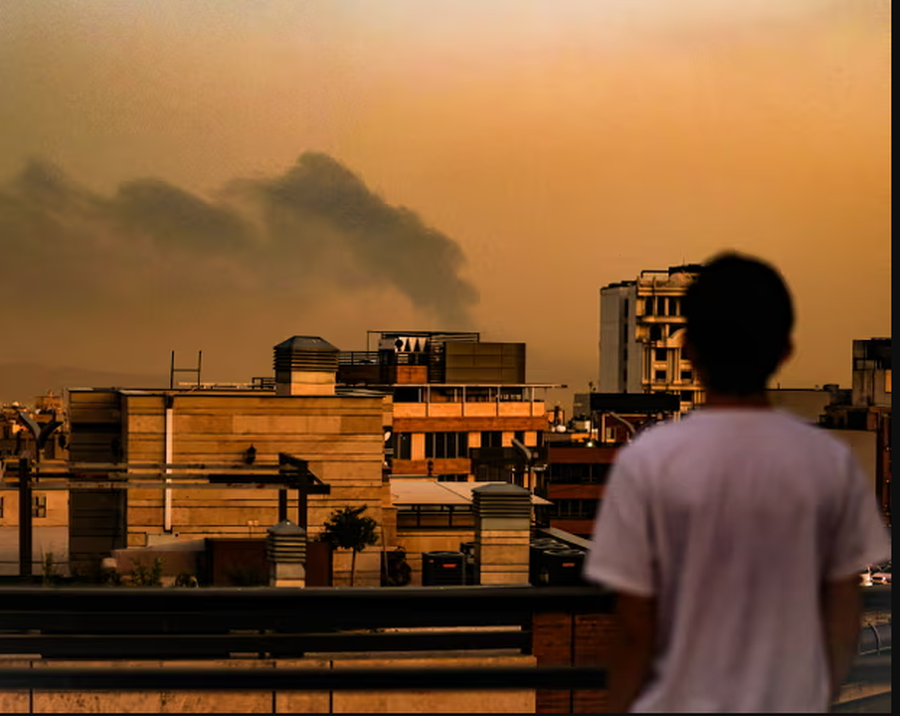
Following Israel's surprise attack on Iran on Friday, there have been days of escalating attacks between the two former enemies...
Israel and Iran have been exchanging artillery fire for four days, with each side threatening to escalate the attacks. This is the largest direct confrontation between the two countries, which began on Friday with a large-scale Israeli attack across Iran.
What has happened so far in the conflict between Israel and Iran?
Israel struck more than 100 key targets in Iran on Friday, including nuclear facilities and missile bases, killing top military commanders and scientists. Satellite images showed significant damage to areas of the Natanz nuclear plant, Iran's most important nuclear enrichment facility, but the fuel enrichment plant appeared to be unharmed. A nuclear research center in Isfahan was also hit.
Among those killed were senior military figures, including the chief of staff of Iran's armed forces, Major General Mohammad Bagheri, and the commander of the Islamic Revolutionary Guard Corps (IRGC), General Hossein Salami, as well as at least six Iranian nuclear scientists.
Israeli attacks continued over the weekend and into Monday, as the Israel Defense Forces (IDF) targeted air defenses around Tehran and claimed to have gained control of the skies over the capital.
The Israeli military said it had struck "more than 80" targets in Tehran since Saturday, including the defense ministry headquarters and missile launchers used to strike Israel and defend Iran. Iran's oil ministry said Israel had targeted two fuel depots in the Tehran area. Iran has accused Israel of hitting civilian areas in Tehran, while the health ministry reported that Israeli strikes had killed 224 people since Friday.

Iran has fired several rockets at Israel since Friday, with Israeli authorities saying at least 14 people were killed and 390 wounded. Rescue workers and medics said a Saturday attack destroyed a three-story building in the town of Tamra, killing four women. Six people were killed and at least 180 were wounded at the scene of an attack in Bat Yam, near Tel Aviv. That toll is expected to rise on Monday after Iranian missiles hit Tel Aviv and Haifa, with fires also seen burning at a power plant in the northern city.
Iran warned the US , UK and France that their military bases and ships would be targeted if they helped block Iranian missile and drone retaliation to Israel's attack.
US officials told several media outlets that US air defense systems and a Navy destroyer helped Israel shoot down several incoming ballistic missiles on Friday. The United Kingdom was moving fighter jets and other military assets to the Middle East after UK Prime Minister Keir Starmer refused to rule out Israel's defense.
Justifying the attack, Israeli Prime Minister Benjamin Netanyahu said he had acted to prevent a secret Iranian program to build a nuclear bomb, claiming that Tehran already had the capacity to build nine nuclear bombs.
The International Atomic Energy Agency (IAEA) board ruled on Thursday that Iran had violated its obligations under the nuclear non-proliferation treaty by failing to fully cooperate with IAEA inspections and by stockpiling about 400 kg of enriched uranium in bulk. Western intelligence assessments have so far generally said that Iran has not made the final decision to build a bomb.
Iran's supreme leader, Ayatollah Ali Khamenei , threatened "harsh punishment" and claimed that residential areas had been targeted. The latest round of US-Iran nuclear talks, scheduled for Sunday, were canceled and Tehran reportedly told potential mediators Qatar and Oman that it was not open to negotiating a ceasefire while it is under Israeli attack.
US Secretary of State Marco Rubio said early Friday that the US had not participated in the Israeli attack, which he described as "unilateral", but later in the day, President Donald Trump told reporters that the US had been aware of the impending attack.
At the G7 conference in Canada on Sunday, Trump claimed he was working behind the scenes on a deal, while elsewhere Reuters reported that the president had vetoed an Israeli plan in recent days to assassinate Iran's supreme leader. /Adapted from The Guardian/



Lini një Përgjigje