


 Shkruar nga Pamfleti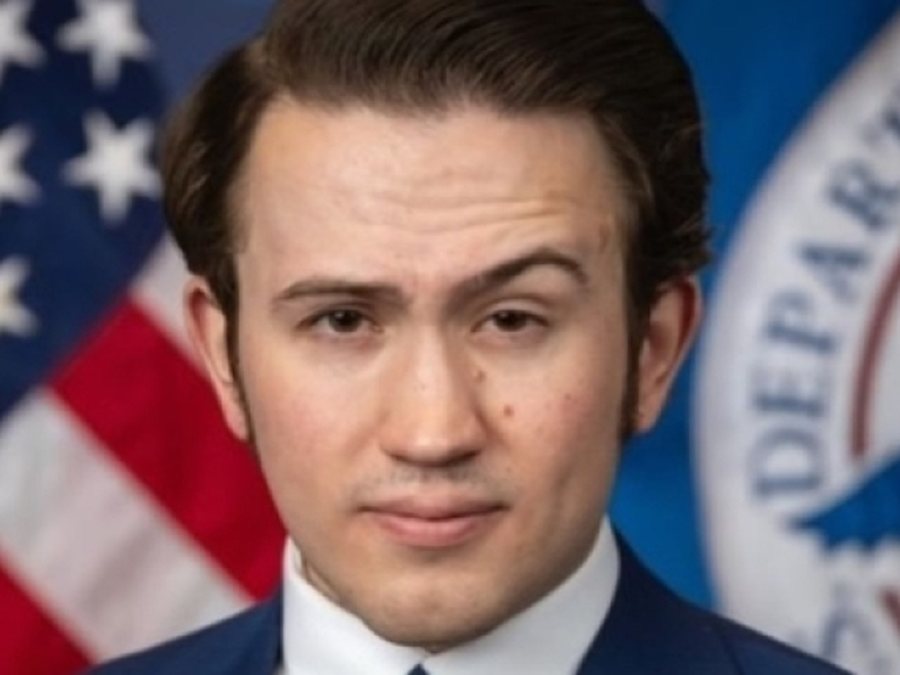
With no experience in the security field, but with a stint at a conservative think tank and political allegiances, Fugate replaces an expert with 20 years of experience in the fight against terrorism. The US, on the verge of a new confrontation with Iran, leaves the domestic front in untested hands...
While bombing Iran, risking retaliation from Tehran against American bases in the Middle East, but also terrorist attacks on American soil, the Trump Administration appoints 22-year-old Thomas Fugate as director of CP3, the Homeland Security Department unit that deals with terrorism prevention.
Fugate, who replaces Bill Braniff, an Army veteran with 20 years of experience in the fight against terrorism, has no experience in this field. His previous activities are quite limited, understandably due to his young age, as a gardener and a delivery driver at a supermarket.
Then, last year, things changed, first with an internship at the Heritage Foundation and then with a commitment to the Trump campaign. Thus, he became part of the army of "loyalists" parachuted into the new Republican administration.
He was hired by the Department of Homeland Security, but in the sections dealing with the fight against illegal immigration. He has now been appointed to replace Braniff, who resigned due to the government's decision to cut three-quarters of the budget of the agency he headed.
Fugate will not be on the front lines of confronting domestic threats, but the case is significant for the new Administration's ideological and rather superficial approach to growing risks, in an era when the homeland security of the United States is threatened both by physical terrorist attacks and, increasingly, by cyberattacks on vital networks for the country.
Particularly worrying are Trump's decision to cut by 20 percent the already limited funding for CISA, the agency responsible for protecting US strategic infrastructure from foreign attacks, as well as Congress's refusal to expand the executive branch's powers to detect and destroy drones in sensitive areas of the country, a proposal rejected by Senator Rand Paul, chairman of the Homeland Security Committee, a Libertarian Republican, on the grounds that there are no immediate threats.
A year ago, CISA director Jen Easterly reported to Congress on new capabilities acquired by China through a computer network infiltration structure called Salt Typhoon, capable of causing major damage in the event of a conflict, for example to Taiwan, on American networks, such as blocking gas pipelines, contaminating water supplies, paralyzing electricity distribution, telecommunications systems and transportation networks, including air traffic control systems.
These are particularly serious risks in a country where many of these networks are privately owned, where owners are reluctant to give up profits to invest in national security. Risks that are being significantly underestimated by the new Administration, which, in addition to firing Easterly, is partially dismantling an agency created by Trump himself in 2018, but which had been targeted by him since 2020, when his appointed director, Kris Krebs, refused to question the integrity of the presidential election won by Biden. Angry and eager to show determination, Trump still today asks the Justice Department to prosecute Krebs for that refusal, while CISA is being hit with accusations that it follows employment policies based on “diversity, equity and inclusion”, now prohibited.
In reality, Trump is now dismantling cybersecurity programs designed to monitor foreign influence on the network, foreign election disinformation, and attempts to disrupt critical infrastructure, including the power grid and the integrity of voting systems. Since Trump’s inauguration on January 20, the full focus of the fight against foreign terrorism has been on the fight against illegal immigration, culminating in the call to activate the Alien Enemies Act, a 1798 law that allows the deportation of suspected enemies during wartime, to deport hundreds of Venezuelans suspected of being part of the Tren de Aragua criminal gang, now declared a foreign terrorist organization by Trump, to El Salvador. It is hard to believe, however, that if there are hidden Iranian terrorist cells in the US, they will be neutralized by raids by ICE, the anti-immigration police. / Corriere Della Sera




Lini një Përgjigje