


 Shkruar nga Daniel Serwer
There are many other countries that stand to gain or lose something in the transition.
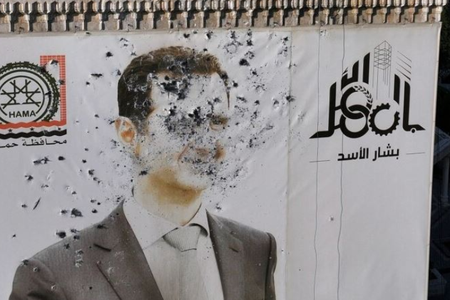
The success of the Syrians in ousting Bashar al-Assad raises the question of who wins and who loses. Inside Syria, Hayat Tahrir al Sham is the big winner at the moment. He led the exodus from Idlib and inspired numerous uprisings elsewhere in Syria.
There are many other countries that stand to gain or lose something in the transition. Let's assume that Syria remains fairly stable and its government essentially inclusive and not vindictive, which seems to be the goal of HTS. We can try to guess the pluses and minuses for the rest of the world.
Turkey is the big winner
In the region, Turkey is the big winner. President Erdogan had been ready to negotiate with Assad, who refused to engage. Erdogan lost his temper and supported a military result. It released both Turkish proxies and HTS, which could not have been adequately armed and equipped without Ankara's cooperation. He does not control HTS 100%, especially now that he is in Damascus. But it will have a good influence on his behavior. Let's hope he uses it in the democratic and less religious direction. However, this is the opposite of what he has been doing at home.
Erdogan has two main goals in Syria. First is achieving sufficient stability there to allow the return of many of the three million Syrian refugees to Turkey. Returns will take time, but there is already a spontaneous flow in Syria. The second is keeping Syrian Kurds affiliated with the Kurdistan Workers' Party (PKK) away from Turkey's border with Syria. Erdogan would also like to see his Autonomous Administration of North and East Syria (AANES) disbanded. Or at least as far from power as possible.
Refugee returns seem like a good bet. Abolishing the Kurds in eastern and northern Syria does not. They are well established and work closely with US forces in the area. The next President Trump will want to attract Americans. But the Kurdish-led Syrian Democratic Forces will remain essential to fighting the Islamic State (IS). HTS, IS, and the PKK all carry the "terrorist" label in the US and Europe. But HTS and IS are rivals. HTS will want the Kurds to continue fighting IS. They will also be vital, at least temporarily, to prevent Iran from re-establishing a land route through Syria to Lebanon.
Israel wins and loses
The Israeli government would have preferred to see the devil Assad know how to stay in power. But its fall means the Iranians and their proxies will no longer be stationed along Israel's northeastern border. The Israelis have already moved their troops into a UN-patrolled buffer zone inside Syria. They didn't want any known or unknown force to fill that vacuum. This advance could give them a stronger position in future negotiations with Damascus, whenever they take place.
Lebanon and Jordan
Lebanon and Jordan, Syria's two main neighbors, can hope to be winners from regime change. Both will want to see Syrian refugees return home, as they were a strain on their economies. They will also benefit from reconstruction and ultimately a more prosperous Syria. Decent people in both Beirut and Amman will welcome relief from that flood of poisons in and through their societies. Some of their corrupt politicians may regret it.
Lebanon will have to reabsorb Hezbollah fighters who supported Assad. They will be a defeated and disaffected lot. But the Lebanese army and state will benefit from any weakening and demoralization of Hezbollah. Anyone serious about Beirut should see the current situation as an opportunity to strengthen both.
Iran and Russia are the biggest losers
Apart from Assad, Tehran and Moscow are the biggest losers. They supported Assad with men, force, money and diplomacy. Now they are completely discredited.
Iran has already evacuated its personnel from Syria. Tehran has lost not only its best ally, but also the land route to Lebanon.
Russia still has its bases. Almost any future Syrian government will have a hard time seeing what it gains from the presence of the Russian air force. Moscow's air force brutalized Syrian civilians for almost 10 years. The air bases will no longer be of any use to Moscow either. Moscow will prioritize maintaining the naval base in Tartus, which is important for its operations in the Mediterranean.
Gulf wins, Iraq loses
Gulf diplomacy has been trying to normalize relations with Assad in the last year or two. But few mammals will mourn his regime, provided stability is maintained. Qatar may be more satisfied than Saudi Arabia or Abu Dhabi. Saudis and Emiratis are less tolerant of political Islam. Nor do they like to see regimes fail. Qatar is more comfortable with political change, including that of the Islamist variety.
Iraq's Shia-dominated government loses a friend in Damascus. It will not welcome a Sunni-dominated government in Damascus. But Baghdad, like the Gulf, is unlikely to mourn the fall of Assad. He did his best to make life difficult for Iraqis after the fall of Saddam Hussein.
The United States and Europe win, but will have to be overtaken
The United States and Europe have long viewed Assad as a necessary evil. They hesitated to take him down for fear of what might come next. Now they must step up and end Syria's recovery, primarily through the IMF and the World Bank. They will also want to invest the money of the Gulf.
This is also the best way for them to gain leverage over the political solution. If they want a comprehensive result, they will have to be willing to pay for it. Hesitation can open the door to malevolent influence.
Let the Syrians decide
That said, the details of the political solution should be left to the Syrians. They will have to write a new constitution and eventually hold elections. The wide-ranging constitutional discussions that the UN has been organizing for a decade may shed some light on what Syrians want. Equally important in my view is the way the new powers will handle ownership issues. Only if property rights are clearly established and protected can Syria's economy be revived. But who rightfully owns what and what to do about the destroyed property are complicated and difficult issues./ Adapted "Pamphlet" from "Peacefare"



Lini një Përgjigje