


 Shkruar nga Pamfleti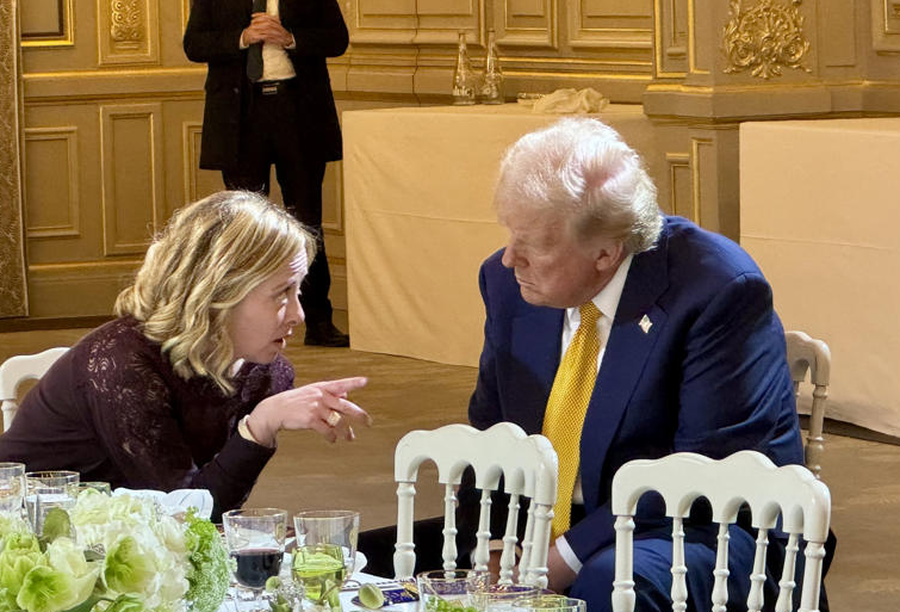
Meloni may have a new friend in Washington, but she'll have to stay on good terms with her old friends closer to home.
Generations of Italians have flocked to America in search of opportunity and dreams. On a recent visit to New York, albeit only for a short trip in September, Meloni seemed to achieve both.
Giorgia Meloni, the Italian prime minister, found herself dressed in unique style at a glitzy ceremony on the sidelines of the annual United Nations convention in Manhattan. She received an award from Elon Musk. The world's richest man declared Ms. Meloni "someone who is even more beautiful on the inside than she is on the outside," among other compliments.
Then, mutual flattery ensued: Mr. Musk is a "precious genius," apparently. Photos of the two staring deep into each other's eyes soon became tongues wagging. The entrepreneur's mother was quick to throw cold water on the rumours, stating that her son had returned to his hotel alone that night.
Meloni is back in Europe now, while Musk can sometimes be found at Mar-a-Lago, the Florida lair from which Donald Trump is preparing his return to the White House. His second term is the cause of much anxiety in Europe, a country that depends on America for its protection. Embarrassingly for Europe, Trump says he wants to end the war in Ukraine "within a day," he thinks of NATO as a ploy to undermine America, and he has vowed loudly to curb imports through fees. Desperate to soften the blow, Europeans are looking within their ranks for someone to rein in the president, if that's possible.
Meloni has perhaps the most plausible claim. But rapprochement with America could jeopardize the most important relationship with its EU colleagues. Two groups of Europeans are vying for Trump's love. The first is the continent's old guard – the leaders of France, Germany and Poland, as well as the bigwigs of the European Union and NATO – who have traditionally handled the European end of the transatlantic relationship.
While they may privately hate Trump, they all feel they have a "connection" to him. (France's Emmanuel Macron, for example, was already in office for part of Trump's first term and now hosts him in Paris to unveil the renovated Notre Dame cathedral on Dec. 7. But this group is in a precarious position. Macron presides over the most chaotic political scene outside the Korean peninsula; Germany's Olaf Scholz is likely to be ousted in February; Poland faces a divided government, at least until the presidential election in the spring. Only the EU institutions have stable leadership. But Trump looks down on the bloc.
The second group of Trump hopefuls are his ideological comrades. Viktor Orban, the Hungarian prime minister, has cultivated ties to the MAGA movement. Alongside others who share his autocratic bent, such as Slovakia's Robert Fico, he has swept aside checks and balances in ways Trump can only aspire to. But for this very reason, Orban would create a shaky relationship between the EU and America: however influential in Trumpian circles, he is not trusted by anyone in Europe. If he is a bridge from MAGA, it is a bridge to nowhere.
In contrast, Meloni finds himself with one foot in both camps. She comes from the hard right and can lash out at migrants and "woke" types as furiously as anyone at a Trump or Orban rally. Beyond her ties to Musk, for years she was cozy with Steve Bannon, a MAGA ideologue. In power since 2022 and not facing an election for another three years, Meloni has masterfully managed to stay in the EU mainstream. Unlike others in her political camp, she has supported Ukraine to the hilt. Far from fighting with Brussels, it has done everything to appear a constructive partner.
Trump is likely to have his share of quarrels with Italy, which does two things he finds reprehensible. First, Italy is the second largest exporter of EU goods to America after Germany, and buys relatively little from there. The second is to work hard on defense. Italy spends just 1.5% of GDP on its armed forces, well below the 2% target agreed a decade ago by NATO allies.
Meloni faces a balancing act: how to take advantage of her proximity to Trump without alienating existing EU allies. In the past, being on good terms with Europe and America was compatible. Soon it may not be. In Ukraine, Meloni may find himself having to choose between Trump's "plan" and the one favored in European capitals.
Trump has tried the divide and rule tactic for the EU in the past, for example on trade. It might be tempting for Italy to join the new establishment in Washington if, in return, Parmesan cheese faced lower tariffs than, say, Gouda.
Meloni's Italy could end up as a kind of swing vote, a major EU country with the ability to sway the bloc in line with Trump's worldview. But only up to a point. Giorgia Meloni has a lot to lose in the fights with Brussels. Italy has high debts and tepid economic prospects and benefits from EU funds as well as implicit guarantees on its loans. Meloni may have a new friend in Washington, but she will have to maintain good relations with her old friends closer to home./ Adapted "Pamphlet" from "TheEconomist"






Lini një Përgjigje