


 Shkruar nga Pamfleti
The American president, however, wants to leave the "winner." Therefore, someone is needed to take on the most difficult task: ensuring safe navigation in the Strait of Hormuz. And who better than European and Asian partners?
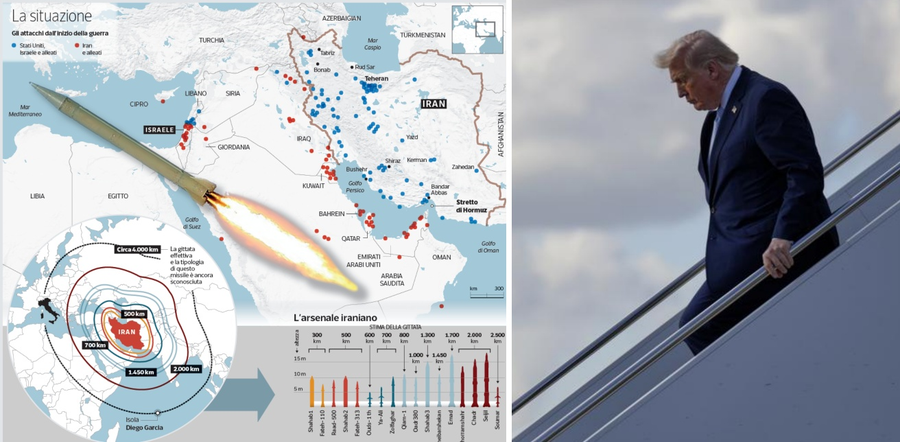
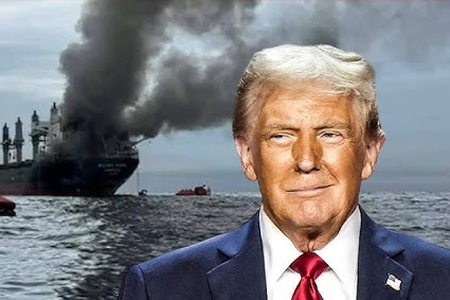
Donald Trump announces that the "objectives" of the war are "very close." In a five-point post published on his social media platform "Truth," the US president announces the imminent end of the conflict in Iran, in the same way he began it on February 28.
Unilaterally, without warning or consulting anyone.
In the text, the American leader lists the "almost" achieved results after three weeks of bombing. In order: the total destruction of the missile "launch capabilities"; the destruction of the military "industrial base"; the elimination of the enemy's naval and air forces; the elimination of the possibility of enriching uranium to build an atomic bomb; the protection "at the highest level" of allies in the Middle East, "including Israel, Saudi Arabia, Qatar, the United Arab Emirates, Bahrain, Kuwait and others."
Finally, perhaps most worryingly, Trump has announced that the Americans intend to withdraw as soon as possible, leaving to "other countries" the task of guaranteeing navigation in the Strait of Hormuz, the waterway through which one-fifth of the world's oil is transported.
"The Straits should be guarded by the countries that use them, certainly not by the United States. If they ask us, we can help those same countries, but once we've eliminated the Iranian threat, it shouldn't be a difficult military operation for them," Trump says mockingly.
In recent weeks, Trump's swings have been dizzying.
Even seasoned observers are now expressing caution. Is this really the president’s intention? It’s a question that dominated a weekend seminar organized by the Aspen Institute Italia in Venice. Among the speakers was Victoria Coates, a former deputy national security adviser during Trump’s first term and now a leading figure at the Heritage Foundation, the conservative think tank closest to the administration.
Coates connects Trump's words to domestic political needs: "We have nine months until the midterm elections.
The question of whether this war should be considered a success or not and the issue of energy prices will dominate voters' thinking. So I take seriously Trump's statements when he says it will be a matter of weeks, not months. "I think that in a short time, the administration will be able to demonstrate that it has indeed achieved its military objectives."
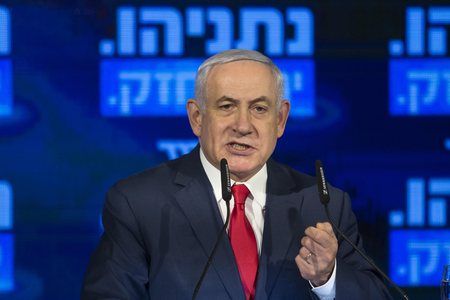
The American president, in reality, faces a crucial choice. Either he follows Israeli Prime Minister Benjamin Netanyahu's maximalist plan, namely the extermination of the theocratic regime; or he adapts to it. Pentagon generals have made it clear that to overthrow the ayatollahs, a ground invasion would be necessary, involving the deployment of hundreds of thousands of soldiers and a huge expenditure: at least $200 billion for the first 100 days alone. In concrete terms, this would mean: massive casualties, a constant stream of coffins draped in the stars and stripes; a devastating energy crisis; a conflict with an uncertain outcome. Perhaps worse than Afghanistan and Iraq.
Trump claims to have defended his Gulf partners “at the highest level.” But the United Arab Emirates, Qatar and others have become easy targets for Iranian retaliation. The leaders of these states are realizing that American soldiers will not die for Dubai or Doha.
So a way out is urgently needed. The most feasible one seems to be the one outlined in Trump's announcement.
The American president, however, wants to leave the "winner". Therefore, someone is needed to take on the most difficult task: ensuring safe navigation in the Strait of Hormuz. And who better than European and Asian partners? / Corrire della Sera



Lini një Përgjigje