


 Shkruar nga Pamfleti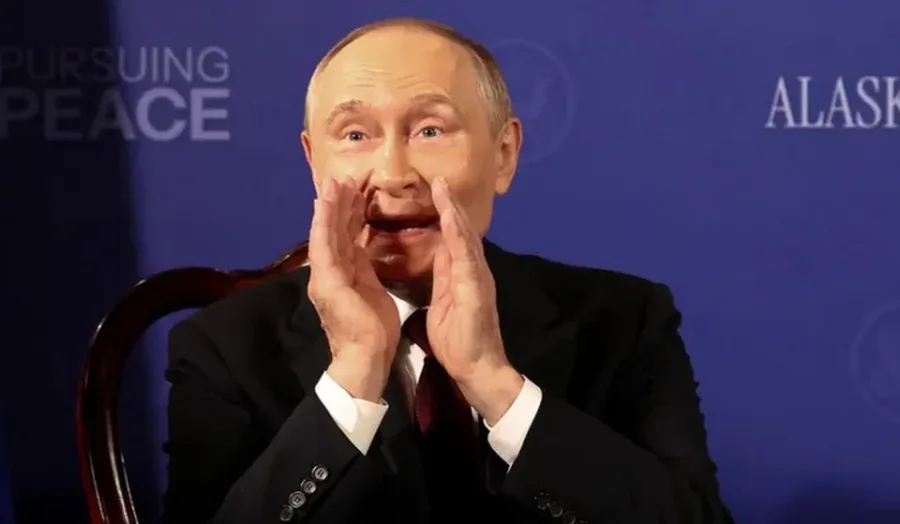
Last spring, during a video conference with the Ministry of Foreign Affairs, Vladimir Putin said that Russia would stop its claims to territories that had already been annexed to the Federation through referendums held in September 2022.
“We will not go further than the four regions.”
But in that case, he added another important detail. The president seemed to strongly reject the possibility of a "freeze" of the conflict in Ukraine, Corriere reports.
List of claims
Now we finally know what Moscow is demanding to stop the fighting and achieve peace. In short, it is about Ukraine's withdrawal from Lugansk and Donetsk, the two regions that make up Donbass, including the areas not yet occupied by the Russian Army, with recognition of borders along the current front line in Zaporizhzhia and Kherson in return. These are easily readable claims.
The issue becomes more complex with demands that are not based on geographical data: a “commitment” not to attack other Ukrainian territories or other countries; recognition of the Russian language as one of the official languages in Ukraine; religious freedom for the Russian Orthodox Church; recognition of Crimea, occupied since 2014, and ultimately the lifting of sanctions imposed by the United States, the European Union and other countries.
The biggest issue Russia could put on the table would be to accept Ukraine’s request for “security guarantees” that mirror those of NATO’s Article 5, without bringing Kiev into the Atlantic Alliance. To avoid the risk, the Kremlin seems to have demanded that this kind of protection be provided not only by the US and European countries, but also by other states, including China.
Precisely because some cards have been placed on the table, it is legitimate to ask what Russia really wants and what its true intentions are.
There is one goal that seems even clearer after the Alaska summit, a kind of “elephant in the room.” Putin wants to return to having complete international freedom of action without paying further obligations for the war in Ukraine.
In this sense, there may be a real basis for the speculation unanimously spread by Telegram channels that deal with whispers and calls from the Kremlin chambers.
The Russian president had set Trump a new condition for concluding a peace agreement with Kiev: the withdrawal of all charges that serve as the basis for arrest warrants from the International Criminal Court in The Hague.
According to these alleged inside sources, Putin had explained that this obstacle even prevents him from going to some friendly countries, for example South Africa or Brazil.
The great enemy
The real news about the possibilities of Russian concessions is what Steve Witkoff revealed yesterday. According to Trump's envoy, the Kremlin could "legally legitimize" the commitment not to attack European countries, perhaps even by inserting this clause into the Constitution.
But it seems unlikely that Russia would accept such a condition. Putin himself has always said that “it is absurd.” Recently, he spoke about it at the St. Petersburg Economic Forum: “The legend that Russia would attack NATO countries is an incredible lie. A real delusion that even those who say it do not believe.”
Of course, Moscow aims for “regime change” in Kiev. That remains an open question. During the Anchorage press conference, after declaring that he hoped that Ukraine and Europe would not try to sabotage the negotiations “with provocations and intrigue,” Putin brushed aside a few notes. Perhaps he preferred not to delve into them. But Zelensky is his archenemy, the man who has openly challenged him. It is difficult for this question to remain unanswered.
Act of faith
Compared to the programmatic speech delivered on June 14, 2024, during which he formulated “another clear and true proposal for peace,” the Russian president has not changed or given much. The so-called denazification remains a vague and principled concept, while the issue of demilitarization will return during the talks, with an attempt to determine exactly the quantity and categories of weapons that Kiev can keep.
Although today he mentions this possibility, the point on which Moscow can hardly agree is the admission of European troops.
Because the ultimate goal remains a “neutralized and non-aligned” Ukraine, as Putin said on June 14. In exchange for all this, there is a promise to be good and to respect the new borders. To trust this, without a constitutional commitment, requires a lot of trust. After February 24, 2022, almost an act of faith.



Lini një Përgjigje