


 Shkruar nga Joseph Gagliano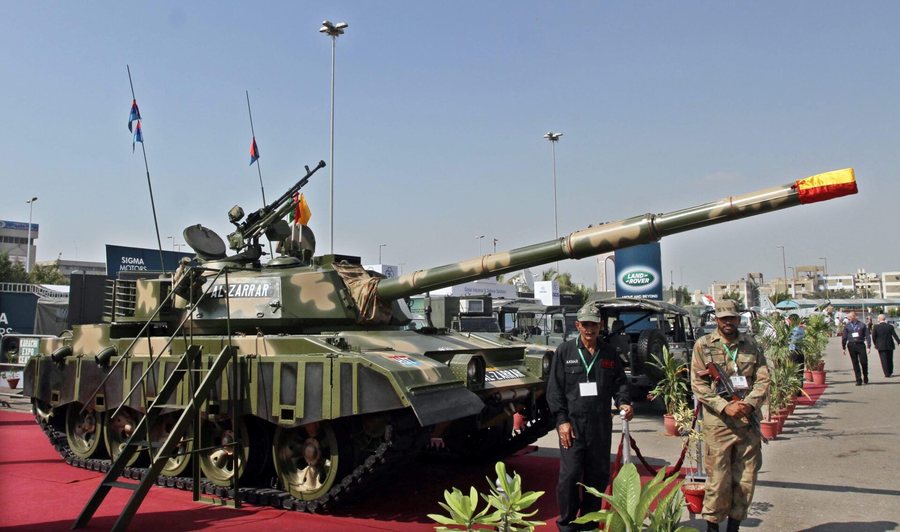
For the first time in twenty years, the bulk of US military exports went to Europe (35 percent), surpassing the Middle East (33 percent).
Over the past five years, the global arms market has accelerated dramatically. Europe, overwhelmed by the conflict in Ukraine and the need to strengthen its arsenals, has seen a 155 percent increase in weapons imports. But the real winner of this arms race has a precise name: the United States, which today controls 43 percent of the world market, consolidating its supremacy as the leading global arms supplier.
This trend is confirmed by the latest report by the Stockholm International Peace Research Institute (SIPRI), which accurately captures the transformation of the balance of power in the global military industry. Between 2020 and 2024, Ukraine became the world's largest importer of weapons, with impressive growth compared to the previous five years. The West has poured billions in military aid into Kiev, with the United States leading the way (45 percent of supplies to Kiev), followed by Germany (12 percent) and Poland (11 percent).
But it's not just Ukraine that's spending. European governments, spurred on by fear of Russia and American pressure, have embarked on an unprecedented arms race. And as Washington ramps up contracts, France is overtaking Russia to become the world's second-largest arms exporter. Italy? Quiet, but growing: it's now the world's sixth-largest exporter, up 138 percent over the previous five years.
The US dominates the market: war is a golden business
The American war machine is in full swing. Between 2020 and 2024, US exports increased from 35 percent to 43 percent of the global market. The United States sold weapons to 107 countries, with a significant change in trend: for the first time in twenty years, the bulk of US military exports went to Europe (35 percent), surpassing the Middle East (33 percent). However, Washington's best customer remains Saudi Arabia, which alone absorbs 12 percent of US exports.
For the US, the war in Ukraine represented a colossal opportunity: European NATO countries, terrified by the idea of a prolonged conflict, went on a shopping spree in the US arms market. The result? Arms imports from European allies doubled between 2015-2019 and 2020-2024, with Washington supplying 64 percent of military supplies to Europe and NATO.
Meanwhile, Russia has suffered a steep decline in arms exports. Today, Moscow is the world's third-largest exporter with a 7.8 percent share, surpassed by France (9.6 percent). The reason? The war in Ukraine has drained Russia's military resources, forcing the Kremlin to use its arsenal rather than sell it. In addition, Western sanctions and diplomatic pressure have prompted many countries to seek alternatives to Russian weapons systems.
Italy: Silent rise, golden business in the Middle East
Italy doesn't make much noise, but it is consolidating its role in the global defense industry. With a 138 percent increase in military exports, Rome climbed to sixth place among the world's largest arms exporters, with a 4.8 percent share of the total market.
Where do Italian weapons end up? Mainly in the Middle East. 71 percent of Italian military exports were destined for countries in the region, with a particularly strong role in supplies to Qatar, Saudi Arabia, Egypt and Kuwait. Italy has risen in the ranks of global suppliers, overtaking countries such as Israel and Germany and positioning itself as a key player in emerging markets.
At the European level, Rome remains a second-rate partner compared to giants like the United States and France, but the trend is clear: Made in Italy defense is increasingly in demand.
Europe Arms: More NATO, Less Independence
If there is one thing that emerges clearly from the SIPRI analysis, it is that Europe is becoming increasingly dependent on the United States for its security. Over the past five years, US arms imports from European NATO states have increased from 52 percent to 64 percent, making the continent even more constrained by Washington’s military strategy.
The message is clear: despite its declarations of "strategic autonomy", the European Union remains anchored in the American protective umbrella. In 2020-2024, European states purchased nearly 500 fighter jets from the United States and still have dozens of ongoing orders for other advanced weapons systems. Meanwhile, France is trying to position itself as an alternative with its Rafale, but the market is still dominated by the American F-35 and F-16.
That's why Europe is investing heavily in defense, but with a clear direction: rearmament goes through Washington. European industries – although growing – are still too small to compete on a global scale with the American giant.
Where is the global arms market heading?
As Europe and the United States build up their arsenals, other regions of the world are following different trajectories. The Middle East, for example, saw a 20 percent drop in arms imports, although Qatar, Saudi Arabia, Egypt and Kuwait remain among the largest buyers.
In Asia, China is reducing its dependence on Russian weapons and accelerating domestic production. Beijing has increased exports and is now the world's fourth-largest exporter with 5.9 percent of the global market, but many countries remain reluctant to buy Chinese weapons for political reasons.
West Africa, on the other hand, is in the midst of a war boom: arms imports have almost doubled in the last decade (+82 percent), with countries like Nigeria, Burkina Faso, and Mali increasingly investing in armaments. Here, Turkey is giving itself a growing role, challenging traditional powers like France, Russia, and the United States.
The business of war never stops.
The SIPRI report confirms an irrefutable truth: war is (still) one of the most profitable businesses in the world. The United States is consolidating its position as the absolute market leader, Europe is arming itself and leaning more and more towards Washington, while Italy is carving out a place of honor for itself among the leading exporters.
If this trend continues, we are likely to see an even more intense arms race in the coming years, with Western governments willing to invest billions to protect their strategic interests. And as the great powers do business, the world continues to arm itself, fueling a vicious cycle that seems destined to never end./ Adapted from "Pamphlet" by "InsideOver"



Lini një Përgjigje