


 Shkruar nga Pamfleti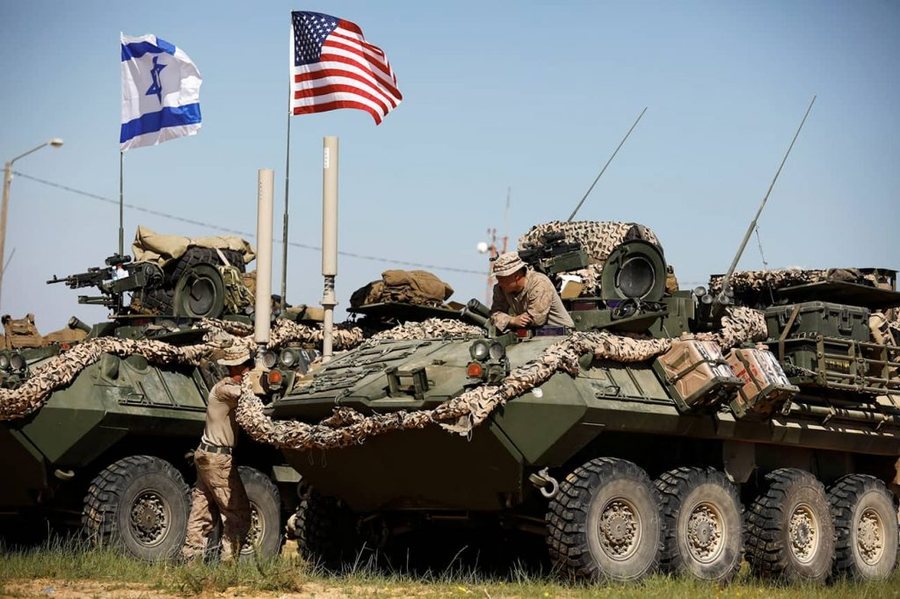
US, billions in costs for Israel's defense: 12 days of war with Iran, 4 years of emptiness in American arsenals...
Since October 7, 2023, the United States' military support for Israel in the field of air and missile defense has created a heavy bill for Washington. The peak of spending was recorded during the 12-day war between Tel Aviv and Iran, when the US military used a significant part of its strategic arsenal to defend Israeli airspace.
Pentagon documents obtained by Bloomberg show that the US needs at least $3.5 billion to replenish its arsenals depleted by shipments to Israel. RTX's SM-3 interceptor missiles alone account for about $1 billion in the bill, with an average cost of $10 million per missile.
Part of the expenses also include repairing radar systems, replacing worn-out electronics, and modernizing the batteries of warships stationed in the Mediterranean.
Thaad, the exhausted strategic arsenal
Reports show that in just 12 days, the US consumed 20% of the global Thaad arsenal, the most advanced American ground-based missile defense system, intended to counter threats from countries like Iran, North Korea, but also rival powers like China and Russia.
The Thaad system was activated 80 times in 12 days, costing the US between $800 million and $1.2 billion. Some Defense News sources put this figure as high as a quarter of the global Thaad stockpile.
In total, support for Israel has created a bill of $6.2 billion to $6.7 billion for American missile defense. The biggest problem: production rates are so slow that, according to 2025-2026 budget projections, it will take about 4 years to recover the arsenal consumed during the 12-Day War alone.
This fact raises alarm among American strategists: if the US had difficulty dealing with the Iranian arsenal, what could happen in the event of a conflict with China, which possesses around 2,700 ballistic missiles of various ranges and continues to add to them?
According to analysts, support for Israel has often come at the expense of the US's own national security, a trend evident in both the Joe Biden and Donald Trump eras. This dependence of Washington on Tel Aviv's needs is seen as a strategic rift that exposes America to global rivals. /Adapted from "Inside Over"




Lini një Përgjigje