


 Shkruar nga Pamfleti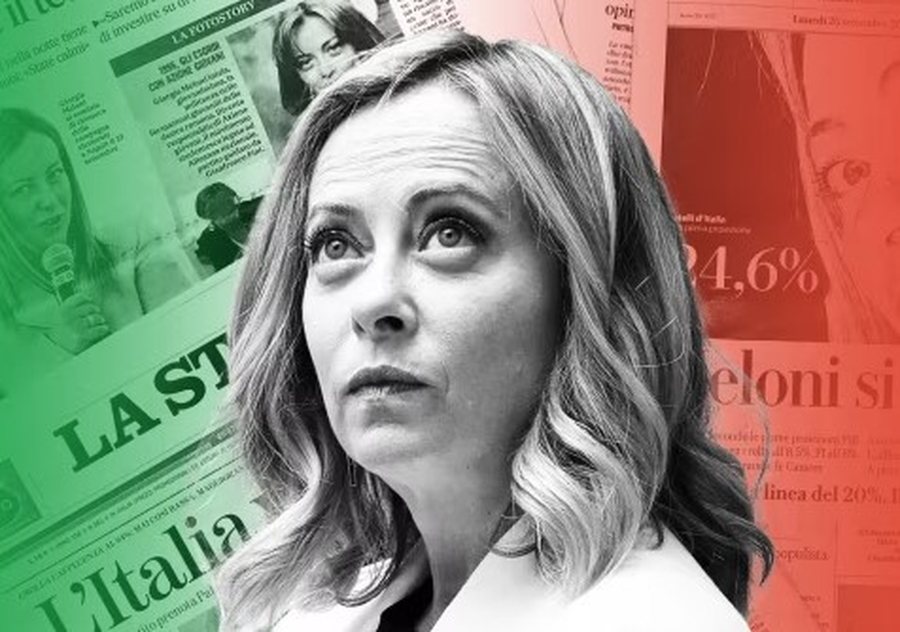
A freelance journalist was fined 5,000 euros last month for social media posts in 2021 in which she mocked Meloni about her height.
As a reporter for Il Foglio, Italy's liberal, free-market-oriented newspaper, Luciano Capone never shied away from harsh criticism of what he described as the government's protectionist impulses and statist policies.
But a column in which he quipped that Industry Minister Adolfo Urso should be called Urss, the Italian acronym for the Soviet Union, landed Capone in the kind of legal trouble that critics say has become more frequent under Prime Minister Giorgia Meloni. .
The journalist is now facing a long and expensive legal battle after Urso sued him for defamation and demanded €250,000 in damages.
" It's a bit surreal and funny. He accuses me of delegitimizing the government, but then he asks for money for himself ," Capone told the Financial Times.
Urso's contempt - and his lawsuit - reflect the strained relationship between journalists and Meloni's government, a clash that has also prompted Brussels to accuse Rome of using legal action to stifle media criticism.
Italy fell five places in the global press freedom index compiled by Reporters Without Borders this year, ranking 46th out of 180 countries.
Journalists, media freedom watchdogs and lawyers say members of Meloni's right-wing coalition are thin and quick to sue for poor coverage. The government has also imposed restrictions on reporting on criminal proceedings.
" We can certainly say that this government has a more repressive attitude and is less open to freedom of information. This is a change that we have all perceived. . . They are less willing to accept criticism at the political level ," said Andrea Di Pietro, a media lawyer based in Rome.
Věra Jourová, a vice president of the European Commission, last month accused Melon's government of "intimidation" by increasingly using lawsuits to undermine the work of journalists and seek to politically interfere with state public broadcaster RAI.
Meloni hit back at the commission for allegedly giving credence to "sloppy and false attacks" by "professionals of disinformation and mystification" and accused various Italian newspapers of trying to "manipulate" Brussels.
"I don't think there is a rule in Italy that says if you have a press card, you can freely defame someone," Meloni told reporters.
Senator Lucio Malan, a member of Meloni's right-wing Brotherhood of Italy party, said there was precedent for the prime minister to seek recourse in the courts when angered by criticism.
" There are many cases of prime ministers who have done it before. I understand that someone may not like it. But it is no different from the past ," said Malan.
Italy's postwar constitution—adopted after the fall of Benito Mussolini's fascist dictatorship—guarantees the right of citizens to express their opinions by speech, writing, or any other form of written communication.
However, Italy's criminal code also includes a Fascist-era criminal defamation law, which provides for several years in prison and fines for damaging someone's reputation. Unlike countries like the UK, these offenses can include insults as well as specific claims about a person.
Oxygen for Information, a Rome-based observatory, estimates that more than 6,000 defamation complaints are filed each year and less than 10 percent result in convictions.
" There's an incentive problem, " said Capone, who was sued several years ago for defamation by a lawmaker from the populist Five Star Movement. The case was eventually dismissed.
" Making a complaint costs nothing to the politicians and costs a lot to those who receive it. . . Given the slow pace of justice in Italy, it hangs the sword of Damocles over a journalist's head and leaves it there for four or five years ," he said.
During her years in opposition, Meloni often sued critics for allegedly insulting her, and many of those cases — which she did not withdraw after becoming prime minister — have recently led to high-profile rulings.
Meloni, who sharpened her political teeth in a neo-fascist youth movement, alarmed allies in Europe and beyond when she came to power in 2022. But she quickly allayed those fears by forging strong ties with Brussels and Washington, even as the erosion media freedom remained a concern.
Just weeks after Meloni took office, proceedings began in her 2020 defamation case against writer Roberto Saviano for calling him and far-right League leader Matteo Salvini "bastards" over their hard-line stance to migration. In October, Saviano was convicted and ordered to pay Meloni €1,000.
A freelance journalist was fined 5,000 euros last month for social media posts in 2021 in which she mocked Meloni about her height. Other cases are looming, with Luciano Canfora, an 82-year-old history professor, set to go on trial in October for calling Meloni "a neo-Nazi at heart".
In Italy, judges usually don't condone offensive language, media lawyer Di Pietro said, even if it involves a convicted criminal. When a journalist called a dead mob hitman "a piece of shit", he was fined €600, plus legal costs in 2020.
" Italian jurisprudence does not legitimize the freedom of insults. Sometimes defamation is not about what you say, but how you say it ," said Di Pietro.
Other members of Meloni's cabinet have also sought legal action against critics. Defense Minister Guido Crosetto threatened to sue a newspaper for claiming he had a conflict of interest because of his previous work in the defense industry.
Crosetto did not take the newspaper to court, but three of its journalists are under criminal investigation for allegedly obtaining and publishing details of confidential documents, including the minister's tax return. If convicted, they could face up to 5 years in prison.
Agriculture Minister Francesco Lollobrigida, Meloni's brother-in-law, sued a Rome-based philosophy professor who described his comments about the "ethnic replacement" of Italians by immigrants as reminiscent of a "neo-Hitler governor". But Lollobrigida's appeal was dismissed by a judge in May.
Il Foglio reporter Capone said he sees Urso's defamation case more as a concern than a threat, but still finds himself weighing every word he writes.
" This adds a little pressure. Every time I write about the topics that the ministry deals with, I ask myself how to talk about them, what words to use ," Capone said./ Adapted "Pamphlet" from "FinancialTimes"
*Editorial title


Lini një Përgjigje