


 Shkruar nga Pamfleti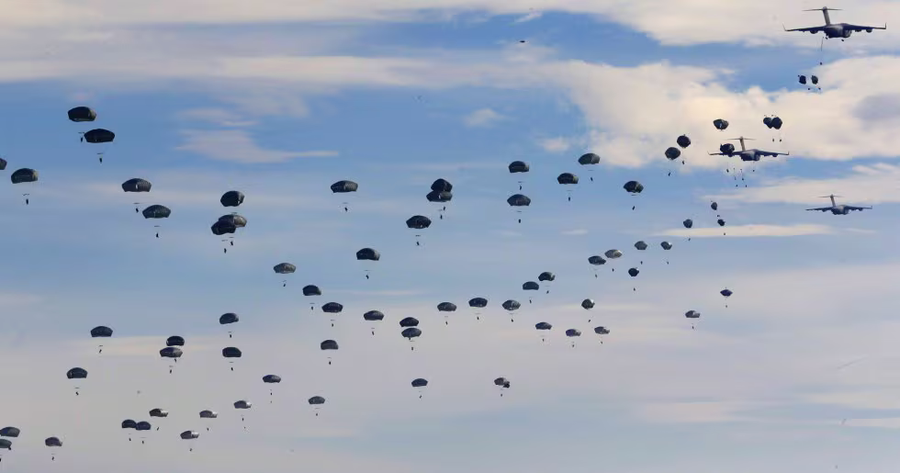
US President extends Tehran's deadline until April 6, warning of serious consequences if it refuses
The large contingent of warships and aircraft that Donald Trump ordered to be sent to the Middle East a few weeks before the war against Iran, showed that the president of the United States had in mind an air offensive. The reinforcements of thousands of soldiers, already on the way or recently mobilized, herald a new phase: the deployment of troops on Iranian territory. While the Republican president puts pressure on Tehran to immediately accept a deal, the White House promises that, otherwise, he will “break all hell”.
One day before the deadline that Trump had given the ayatollahs' regime to accept his terms expired, and two days before the war entered its fifth week, the president decided to extend this deadline until April 6, "at the request of the Iranian government," Truth announced on his social network.
"I am postponing the phase of the destruction of the power plants for ten days, until Monday, April 6, at 8:00 p.m. Washington time. Talks continue," the president declared, adding that the negotiations "are going very well."
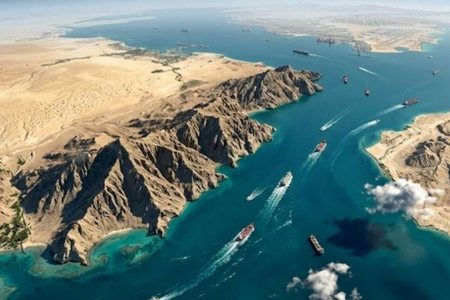
However, despite this latest gesture, signs of rapprochement were minimal, especially after Israel killed Alireza Tangsiri, the commander of the Revolutionary Guards' naval forces. Both sides maintain maximalist and opposing positions. Tehran, which sees no reason to make concessions to Washington, demands the payment of reparations, the preservation of control over the strategic and closed Strait of Hormuz, and the withdrawal of American troops. The Republican administration demands the opening of Hormuz, Iran's renunciation of nuclear weapons, and the cessation of support for radical Islamist groups in the Middle East.
Both sides are promising a tougher confrontation in the new phase if the ongoing diplomatic contacts fail: Iran is fortifying the island of Kharg, considered a potential target for US forces, according to CNN. The White House is threatening an attack on the adversary “bigger than anything it has ever experienced.” The problem for the US is that some of this pressure has already been exerted: as Trump himself points out, many of the leaders of the pre-war period have been killed, the Iranian war fleet has been sunk and its arsenals have been severely damaged. This limits the capacity for further pressure.
If he fails to convince Iran, and barring an immediate withdrawal that would leave the situation worse than before, the only option left for Trump is escalation. That is, to do what he promised during the campaign that he would not do: put troops on the ground in wars abroad.
After a closed-door briefing Tuesday at the House Armed Services Committee, US lawmakers appear to consider such an operation a possibility. Republican Congresswoman Nancy Mace wrote on social media: “I just left the hearing. I repeat: I will not support troops on the ground in Iran, and certainly not after this hearing.”
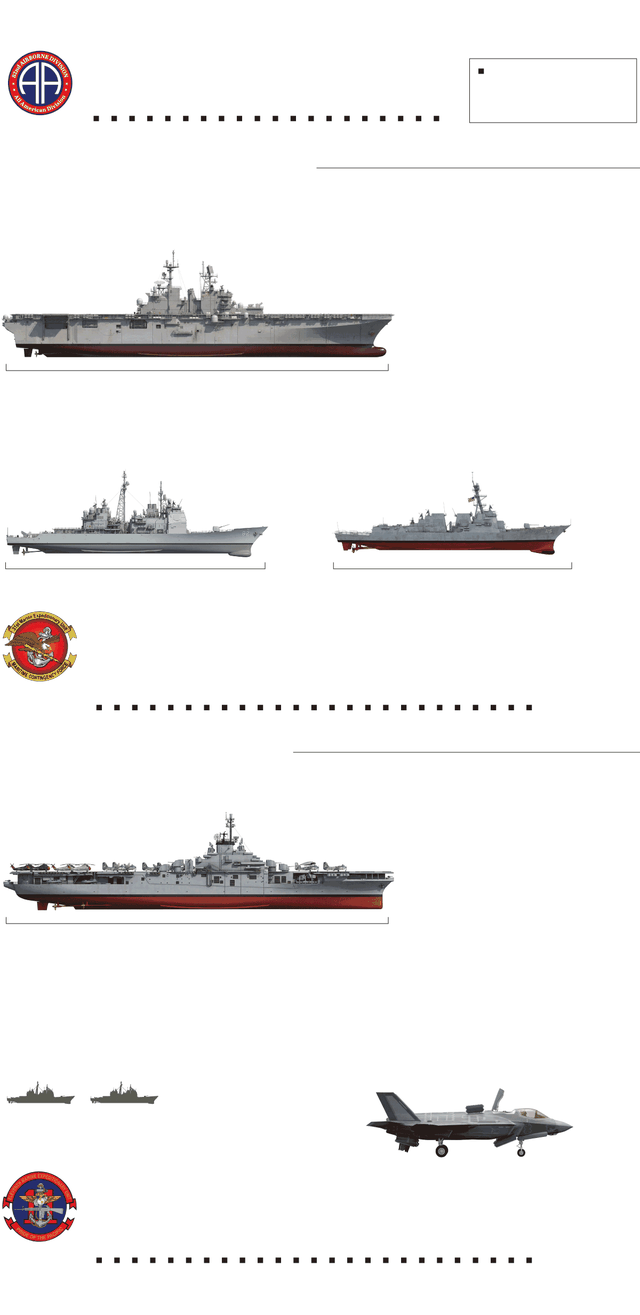
Central Command, responsible for US forces in the Middle East, is about to receive significant reinforcements that offer it a wide range of options if Trump decides to escalate: a command structure for a division, elite paratroopers, amphibious assault ships equipped with fighter jets and about 5,000 Marines.
On Tuesday, the Pentagon sent mobilization orders to major commands and about 2,000 soldiers of the 82nd Airborne Division, a highly decorated unit known for participating in the Normandy landings in 1944, in Vietnam and, most recently, in the evacuation of Kabul airport in 2021. The mobilized brigade can reach any part of the world in just 18 hours.
Also, starting this Friday, a group of amphibious assault ships, suitable for landings, is expected to arrive in the Central Command area in the Middle East. This contingent, which was supplied on the 23rd of the month at the British-American base Diego García in the Indian Ocean, has on board about 2,500 soldiers of the 31st Marine Expeditionary Unit. These units are known for their flexibility and have participated in both humanitarian missions, such as after the earthquake in Haiti in 2010, and in field operations. The 31st unit also participated in Operation “Desert Fox” for the patrol of Kuwait in 1998.
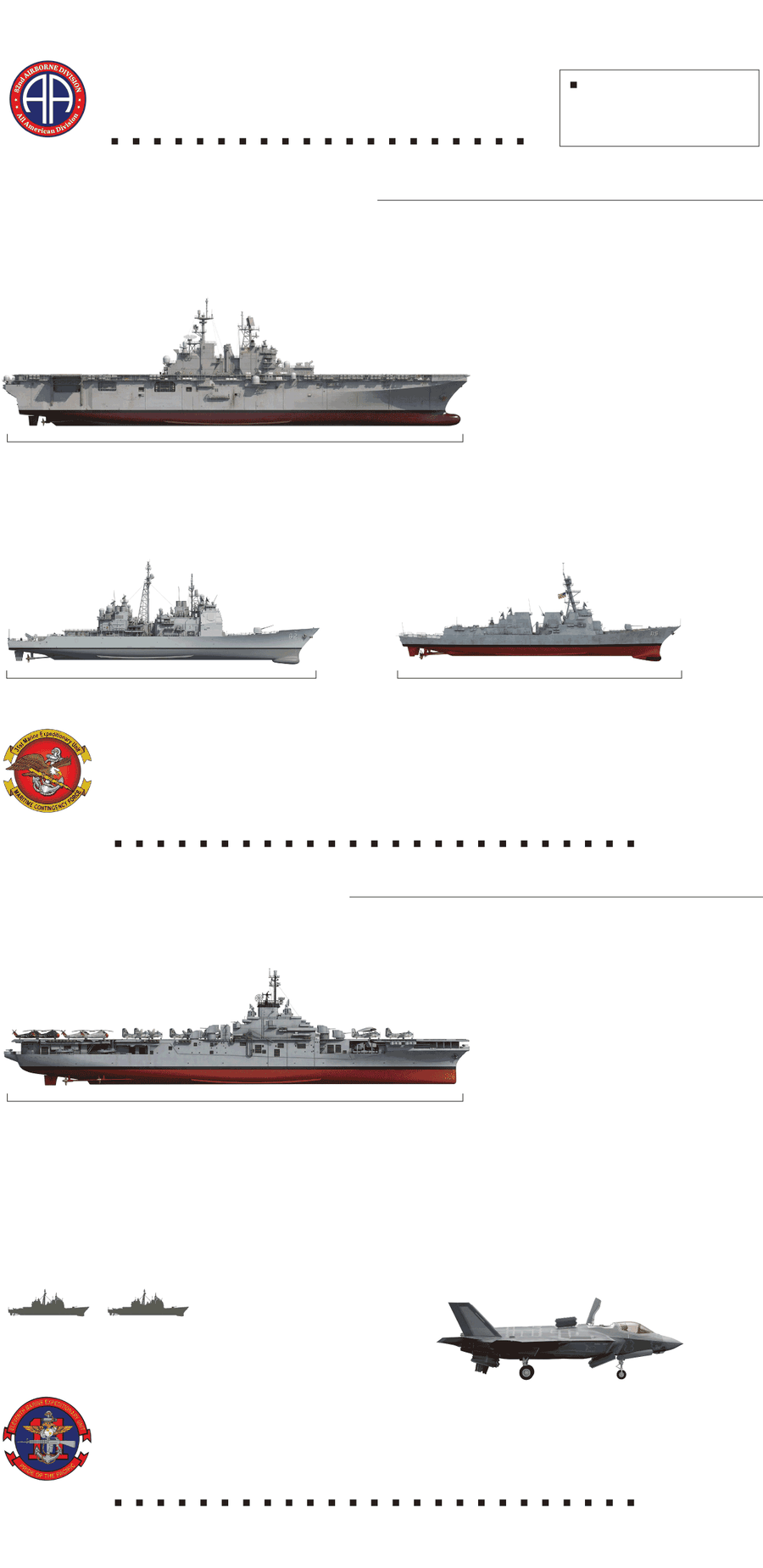
"A Marine Expeditionary Unit (MEU) is like the entire Marine Corps rolled into a group of 2,500 soldiers. It ranges from the F-35 fighter jet, one of the most advanced in existence, to a simple soldier with a rifle and bayonet. A MEU gives the commander a full range of options," retired General Sam Mundy explained in a video conference on Monday.
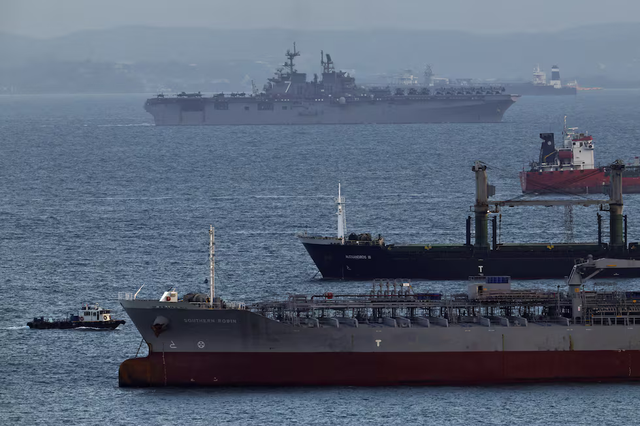
At the head of this group, based in Japan, is the 261-meter-long Tripoli, capable of operating as a mini-aircraft carrier for F-35B aircraft. The ship is accompanied by the guided-missile destroyers Robert Smalls and Rafael Peralta.
This contingent will be reinforced in the coming weeks by another similar one, also consisting of three amphibious ships, about 2,000 sailors and 2,500 marines of the 11th Expeditionary Unit, which was stationed in the Iraqi province of Najaf during the Iraq war. Led by the ship Boxer, this group departed this week from its base in San Diego (California) and, due to the distance of about 22,000 kilometers, is expected to arrive in mid-April.
In total, the 7,000 additional soldiers and 2,000 sailors already on the way are not nearly enough for an invasion of Iran similar to the 2003 invasion of Iraq, a country with a third of the territory and much less complex terrain.
According to The Wall Street Journal, the Pentagon is considering sending an additional 10,000 infantry soldiers and armored vehicles. But even that wouldn't be enough: the George W. Bush administration sent 160,000 troops to Iraq.
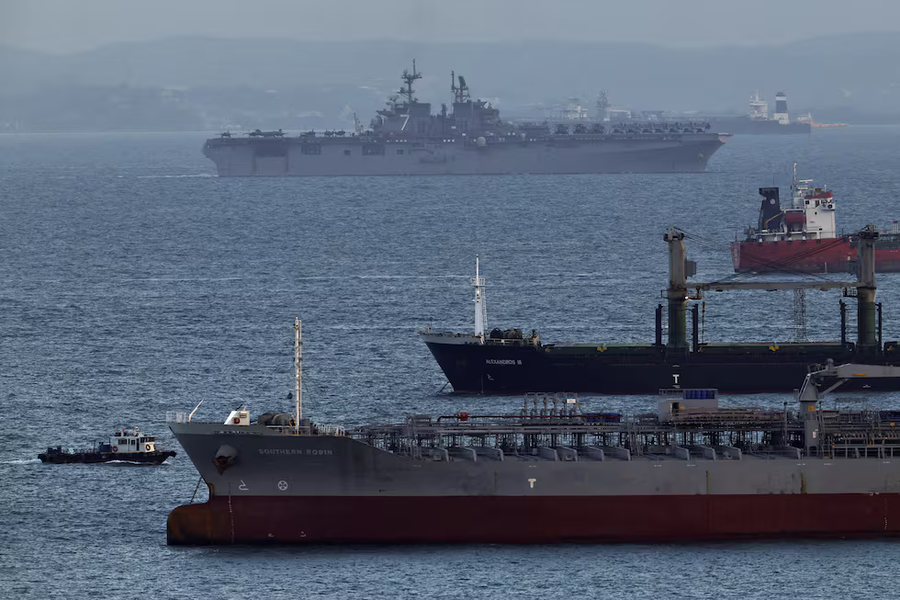
The specialization and number of reinforcements suggest more likely an attempt to seize control of several Iranian islands in the Strait of Hormuz to force the passage open, or of Kharg Island, where the US attacked military targets two weeks ago, including an airfield. The island, located 26 kilometers off the Iranian coast, is the center of the country's oil industry. Another possibility would be a limited intervention to recover Iranian uranium, located deep under the rubble of nuclear facilities hit by the US in June during Operation Midnight Hammer.
In the case of Khargu, “the size of the target is proportional to the force being prepared,” General Mundy said. He added that consideration should be given to whether there is still military capacity on the island, the presence of local workers, and the likely duration of the operation, taking into account the needs for supplies such as fuel, water, food, and ammunition.
Currently, Central Command has about 50,000 troops deployed to bases in the Middle East and in the naval fleet deployed for this war. A battle group led by the aircraft carrier Abraham Lincoln is in the Gulf area, while a second aircraft carrier, the Gerald R. Ford, the most modern in the US fleet, has been withdrawn to the military base of Suda, in the eastern Mediterranean, for repairs after a fire on board. /Adapted from El Pais /



Lini një Përgjigje