


 Shkruar nga Pamfleti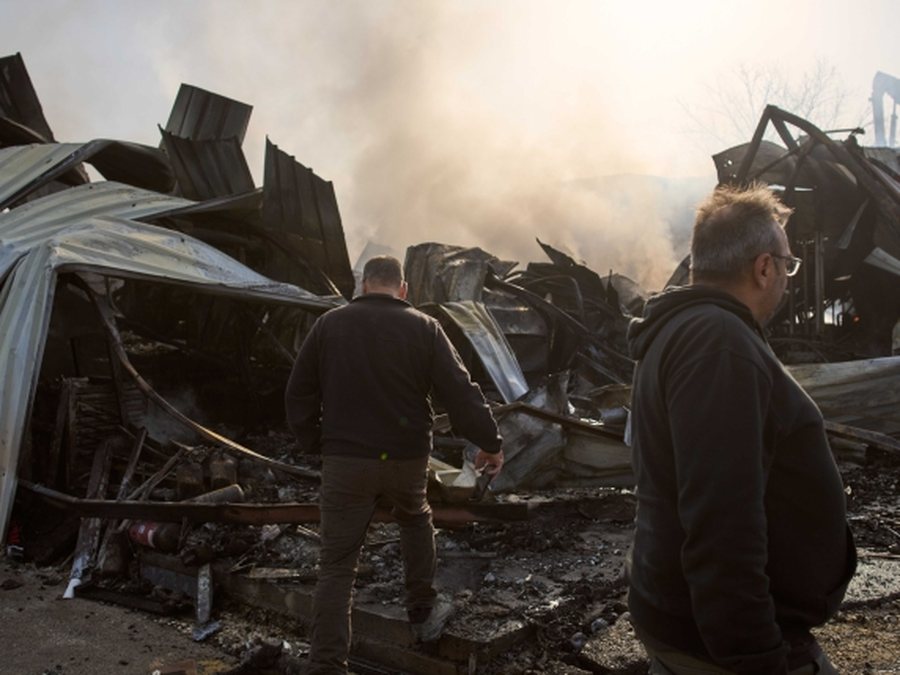
It's hard to say whether there is even a platform on which we can gather to express a common judgment...
On October 7, 2001, Secretary of Defense Donald Rumsfeld announced the start of Operation Enduring Freedom, the campaign in Afghanistan after September 11, the response to a terrorist attack carried out in the heart of America. The choice was clear: it evoked the defense of a collective good. The president himself, Republican George W. Bush, seemed to want to clarify: " We did not ask for this mission, but we will see it through to the end. We are defending not only our precious freedoms, but also the freedom of everyone to live without fear ." He was speaking to the world, seeking unanimity.
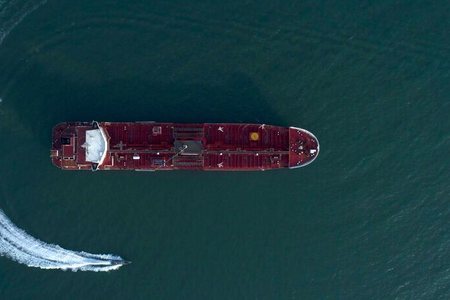
On February 28, 2026, a quarter of a century or an entire era later, Donald Trump, another Republican president, ordered the launch of Operation Epic Fury, a preventive action with objectives more or less in common with Israel, the other protagonist of the attack, the destruction of the Iranian nuclear arsenal? Beheading the leadership to provoke a “regime change” from within? Weakening the Islamic Republic’s capacity to strike through its allies in the Middle East? All three?. The name was immediately associated with a video game, with an entertainment product, more than with a strategic mission. Even the language used by American leaders seemed more like a clash than a policy. Trump, at first, said: “We are destroying Iran’s missile capabilities, we are destroying their Navy… ”.
Even Secretary of State Marco Rubio, the more reasonable one, was revealing: "It's important to remind the American people why the largest military in history is engaged in this operation ." America talks to itself, and about itself, all the time.
During a meeting at a high school in Milan, dedicated to Iran, a hand was raised from the class: "Who will judge how this war went? What is the moment that will make us say acceptable/unacceptable?". Precisely, will there be "a moment"? A tribune above the parties? It is difficult to say whether there is even a platform on which we can gather to express a common judgment.
Behind the names, Fury versus Freedom, emerges an even deeper technical difference measured by the degree of international legitimacy. In 2001, the UN Security Council had already condemned the September 11 attacks with resolutions 1368 and 1373. The military coalition included the United States, the United Kingdom, Australia, Canada, France, Germany, Italy, Japan, New Zealand, Poland, Russia, Turkey, among dozens of other countries. NATO activated Article 5 for the first time – “an attack on one is an attack on all”.
What does the situation look like in 2026? The Security Council met at the request of China and Russia, Secretary-General Guterres “called” for an immediate ceasefire. France described the escalation as “dangerous”. NATO declared its non-participation, rejecting, for the time being, Trump’s pressures. Spain, through Prime Minister Sánchez, called the intervention “unjustified and dangerous” and declared its bases “off”. Of course, grand diplomatic maneuvers have often been an instrument of legitimizing power. But it is a fact that today that “fatigue” of negotiations is neither thought about nor seriously faced. Ukraine, between phone calls and summits, has entered its fifth year of war. The right has suddenly become a sword in the hand of the strongest on the field.
A generation of students who raise their hands, we risk not knowing how to tell them which points to connect on the map to judge how the war went./ Adapted from "Pamphlet" by "Corriere della Sera"


Lini një Përgjigje