


 Shkruar nga Pamfleti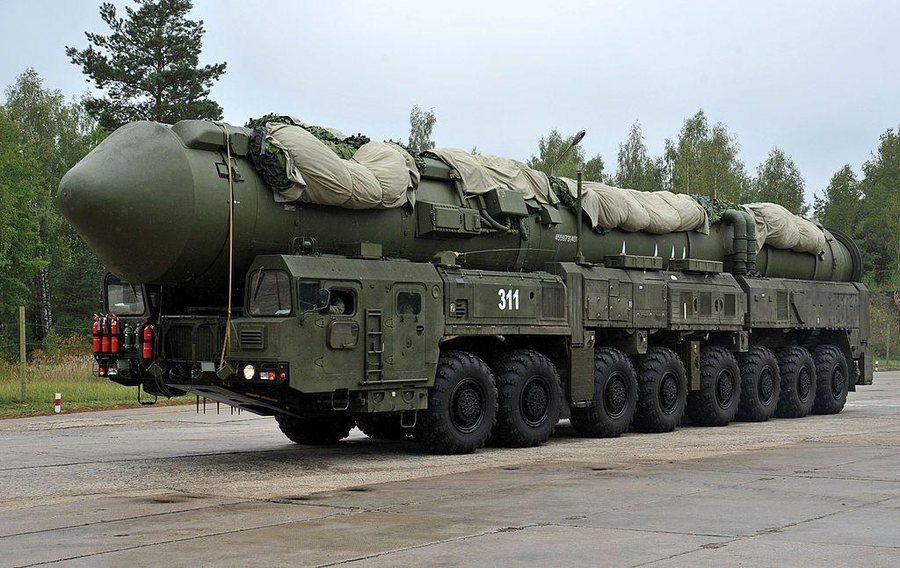
Intermediate-range missiles have a range of 3,000-5,500 km...
Vladimir Putin said Russia will begin mass production of a new hypersonic, non-nuclear ballistic missile like the one that struck Ukraine on Thursday.
In a televised address last night, President Putin said the medium-range missile, which he named 'Oreshnik', was used in an attack on the Ukrainian city of Dnipro in response to the Ukrainian attack with US and British weapons.
Putin bragged about the missiles, saying that "no one in the world has such weapons." He said that Moscow will start producing them on a massive scale.
What do we know about Putin's new weapon?
Intermediate-range missiles have a range of 3,000-5,500 km (1,860-3,415 miles), which would allow them to strike anywhere in Europe or the US from Russia.
Sky News military analyst Sean Bell notes that this is not a new capability for Russia.
While the missile that hit Ukraine on Thursday did not have a nuclear warhead, Putin said it is so powerful that using several conventional warheads in an attack could be as devastating as a nuclear strike.
Detailing the missile's alleged capabilities during a speech on Thursday, Putin claimed that air defenses would not be able to destroy it as it travels 10 times the speed of sound (Mach 10-12,348 km/h).
According to Ukrainian military officials, the missile that struck Dnipro had reached a speed of Mach 11 and carried six non-nuclear warheads, each releasing six sub-warheads. (Mach is a measurement of supersonic speed. Mach 11 is equal to about 13,600 km/h).
Bell said the Oreshnik has six to eight separate warheads, and each of them can be individually programmed, meaning they can hit different targets at once.
Normally, he said, the missile would be designed for nuclear weapons, but it can also carry conventional ones.
While noting that their speed makes them difficult to catch, pointing to Mr Putin's claim that no system can take them down, he said the West has managed to take down these types of formats rockets.
" It's hard to shoot them down when they're in space, but inevitably they slow down a lot once they hit the Earth's atmosphere and then they become more vulnerable ," he said.
Bell explained how air density slows down missiles, increasing the chances of interception.
The way ICBMs work is by going through space so they can travel faster. / Sky News







Lini një Përgjigje