


 Shkruar nga Pamfleti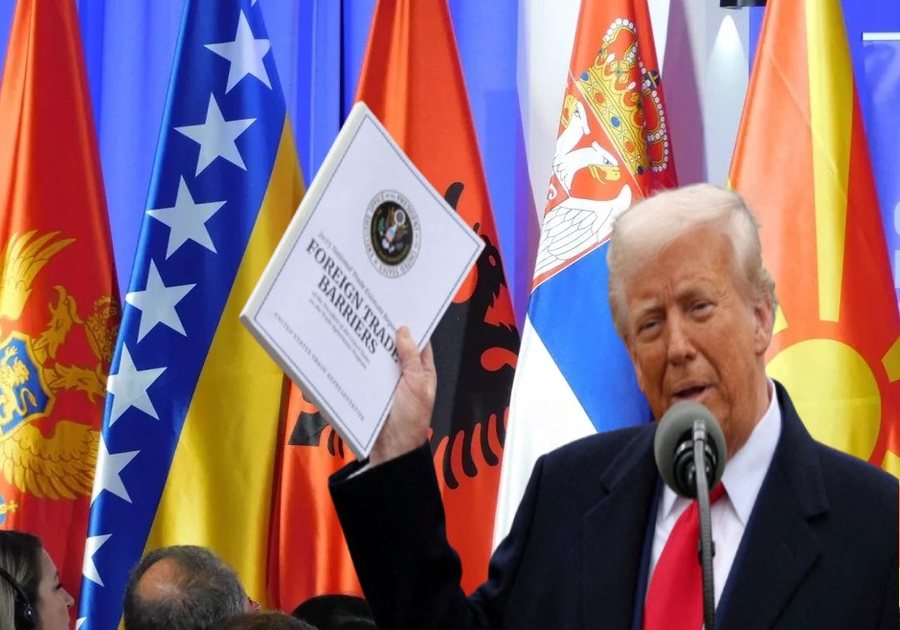
Countries in the region were not spared from Donald Trump's tariffs...
On April 2, 2025, US President Donald Trump declared a national emergency, imposing an additional 10% tariff on all products entering the US. It was also announced that "higher individualized reciprocal tariffs" would replace the base rate of 10% for the 60 "worst trade violators".
In addition to the EU, the US will impose higher reciprocal tariffs on several other European trading partners, including Western Balkan countries.
The 37% tariff imposed on Serbia makes it among the highest in Europe, with only six countries worldwide facing a higher tariff level. Bosnia and Herzegovina is facing a 35% tariff, followed by 33% for North Macedonia and 31% for Moldova. The standard 10% tariff will be imposed on Albania, Kosovo and Montenegro.
Some items exempt from reciprocal obligations include copper, pharmaceuticals, semiconductor materials, lumber, energy, and minerals that are not available in the U.S. Steel, aluminum, and automobile goods will be subject to 25% tariffs.
With exports to the US accounting for less than 2% of the total in 2024, the direct impact is limited, but the indirect impact is not. Several industries will be directly affected, including automobiles, electrical machinery manufacturers, ammunition manufacturers, and agriculture.
The indirect impact stemming from the integration of these economies into European and global supply chains poses a greater threat to their growth prospects. Some of the main sectors that could be indirectly harmed by higher tariffs in the EU include electrical and mechanical machinery, chemicals, rubber goods and furniture.
For the Western Balkan countries, the impact of 20% tariffs on their main trading partners within the EU, including Germany, Italy, Romania, Croatia and Bulgaria, will have the most direct impact. Weaker EU industrial demand will result in a downward revision of growth forecasts across the region in our May forecast update.
Trade in services with the US, unaffected by tariffs, is more important for the Western Balkan countries. For Serbia, this means that its exports of ICT services to the US, the largest market for such activities and which constitute the largest segment of Serbia’s services exports worth around €1.7 billion in 2024, will remain unaffected by the current regime. ICT services are also one of the fastest growing sectors in North Macedonia, generating €0.5 billion in exports in 2023, with the US also one of the largest export markets.
The imposition of the US tariffs comes against the backdrop of a political deadlock in Bosnia and Herzegovina, where state authorities have issued an arrest warrant for Bosnian Serb leader Milorad Dodik, ongoing anti-government protests in Serbia, and protests in North Macedonia over the Kocani nightclub fire. The socio-economic fallout from the tariffs carries the risk of further fueling public discontent, which has implications for security and political stability in the region.
Moldova is already facing a 72% weighted average tariff increase on its electricity imports from Romania due to an energy crisis starting in early 2025. Rising global protectionism adds further headwinds to its trade outlook. The government’s focus is likely to remain on maintaining support for the Action and Solidarity Party, founded by the incumbent president, ahead of the next elections, which will be held by October 11, 2025, through subsidies and financial assistance for low-income households to offset increased energy costs. /Adapted from “Pamphlet” by “S&P Global Market Intelligence”
* Written by Dragana Ignjatovic-Shuchita Shukla-Dijedon Imeri




Lini një Përgjigje