


 Shkruar nga Stephen Davies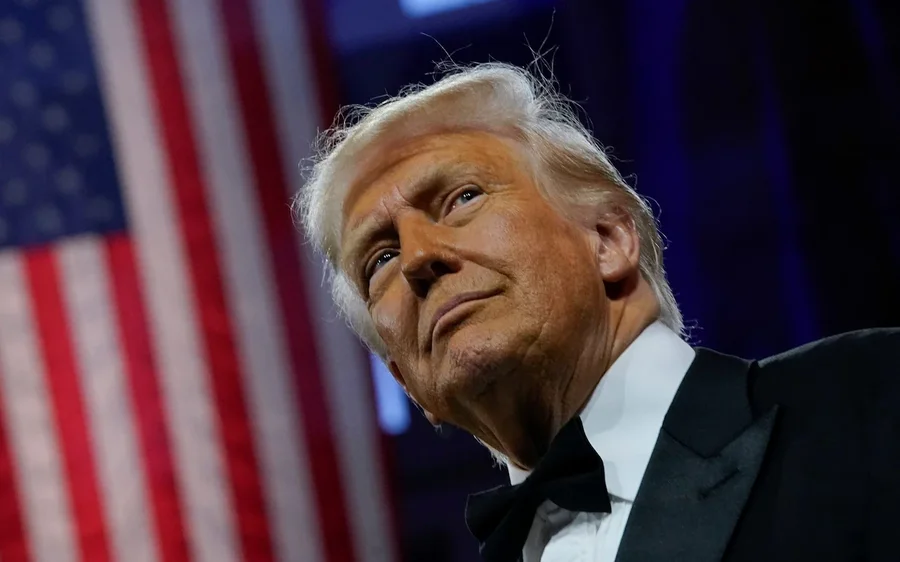
The world of free trade and globalization is over. Today we have a world of protectionism and tariffs…
Financial markets and many commentators are in the early stages of grief. They hope and believe that Donald Trump will not stick to his tariff program but will reverse the decision; that he will be forced to make a U-turn; that this is simply a bargaining chip aimed at extracting concessions from other countries. And as a result, deals will be made, but nothing fundamental will change.
There are even many who think that Trump's ultimate goal is to get rid of all trade barriers and have a truly open world.
What the key people on his team believe; what is the purpose of the fees and the vision of the world that inspires him.
Most importantly, the connection of this tariff program to US domestic politics and the political movement that Trump has led to victory is misunderstood.
Trump has said repeatedly and explicitly, for nearly 40 years, that tariffs and protectionism are something he supports and that they are essential to the way he sees the world.
Contrary to popular belief, he is not simply an impulsive, unpredictable, and capricious creature: this is an important feature of his nature and the way he acts, but not all of it.
He has several core positions, which he adheres to firmly and consistently. And more specifically, there are three.
One is hostility to immigration. Another, made clear recently, is the unilateralism of foreign policy.
The main one, however, is economic nationalism: it is fundamental to how he understands the world. These tariffs are not the product of whim, but a deliberate policy that reflects his beliefs and instincts.
Moreover, the tariffs announced last week show much more than Trump's strange personal stance on trade.
This is a political program as well as an economic one. It has strategic goals that have been worked out in detail and laid out in writing by people like his top economic adviser, Stephen Miran. It is not just Trump's personal crusade, but a project supported by almost all the major players in the current administration.
This project is to restructure and reorient the American economy, and along with it the entire international or global economic order.
Domestically, the goal is for Americans to stop importing and produce most of what they consume themselves, to reverse the process of transferring production to other parts of the world.
This means reorienting the economy away from services, and especially those traded globally, towards local manufacturing and services. This means reducing the role of finance and increasing that of other sectors.
All of this means a radical reshaping of the way the global trade and financial system works. The US dollar is central to the way things are. Currently, the US imports vast quantities of goods in exchange for pieces of paper.
Producers will get them elsewhere because of the dollar's role in international trade - they can exchange them in turn for products from other countries.
Ultimately, the dollars return to the US, as their holders convert them into US assets, primarily sovereign debt. This allows the US government to run an enormous budget deficit.
Miran and others believe that this agreement no longer serves U.S. interests. It benefits some Americans, those who work in globally connected countries and sectors. But they believe it does not benefit others. Importantly, it is incompatible with their domestic political project of rebuilding the productive side of the economy.
This means that this trade policy – tariffs – is essential to a much larger project. The economic pain and chaos it will cause is accepted as a necessary side effect.
The fall in the exchange value of the dollar is the goal of this policy (because it reduces American imports, which are seen as bad), so a fall will not deter them, but encourage them to continue.
All of this means that, as Keir Starmer has said, we are in a new world. The globalizing world that we have had since at least 1990 is over because its central support, the role of the US as the ultimate consumer, is being destroyed by the US government itself.
We are, by design, entering a neo-mercantilist world of protectionist trading blocs. This is truly bad news.
The international business wing, represented by people like Elon Musk, has lost. They are likely to lose another key battle soon, over visas and immigration.
We all have to adapt to the new political world, in which nationalism takes center stage. The world we had last week will not return. / Adapted from The Telegraph Pamphlet/




Lini një Përgjigje