


 Shkruar nga Pamfleti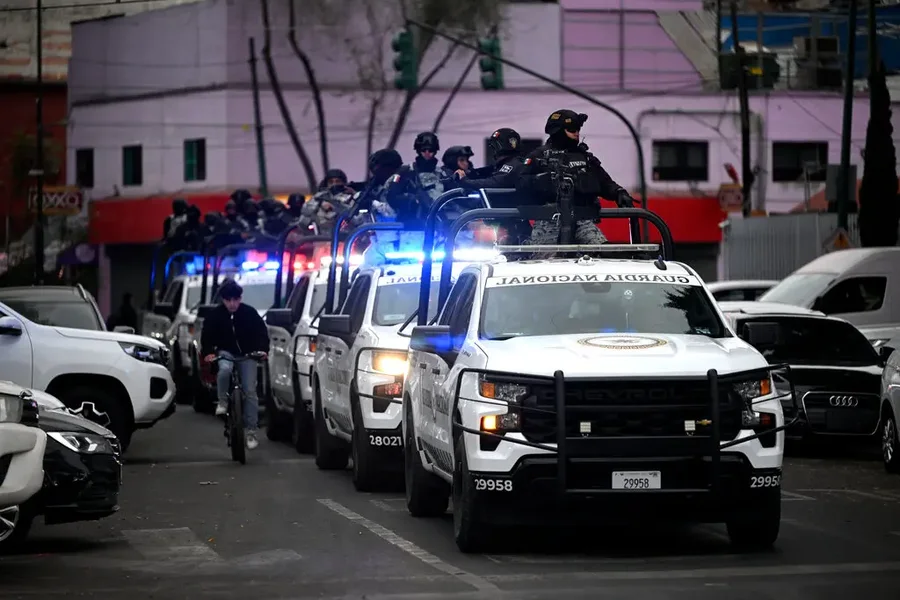
The elimination of the leader of the Jalisco New Generation Cartel opens a new phase of uncertainty: temporary stability or escalation of violence?
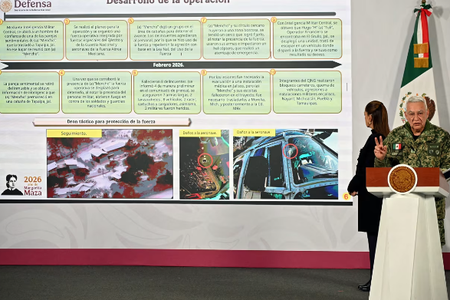
Mexican security forces have confirmed the killing of Nemesio Oseguera Cervantes, known as “El Mencho,” the leader of the Jalisco New Generation Cartel (CJNG), one of the most powerful criminal organizations in the world. The operation marks one of the most significant blows to organized crime in the country in recent years.
Immediately after the intervention, in Guadalajara – Mexico’s third largest city and capital of Jalisco state – armed groups burned shops and banks, blocked highways and spread violence to other urban and tourist areas. Authorities are trying to restore order and prevent the situation from escalating.
Will the cartel survive?
The future of the CJNG depends on the leadership's ability to quickly appoint a successor and maintain internal unity. Otherwise, the organization risks fragmentation and power struggles. Analysts warn that an internal war could lead to increased violence in some regions of the country.
The government simultaneously faces pressure to weaken the CJNG and manage the ongoing clash with the Sinaloa Cartel, the group's historic rival from Jalisco.
The CJNG evolved into a global criminal network. In addition to trafficking cocaine and methamphetamine to the United States and Australia, the organization became involved in other illegal activities, including smuggling migrants, cultivating avocados in regions it controlled, and exploiting illegal gold mines in South America.
Eduardo Guerrero, a former security official and cartel expert, called the development “the most significant blow to drug trafficking in Mexico.” According to him, no other organization has had the same level of territorial control and political penetration as the CJNG. This is an analytical assessment, while the real impact will depend on the cartel’s internal dynamics in the coming weeks.
Legacy and possible scenarios
The CJNG was born from the dissolution of the Milenio Cartel after the arrests and killings of its leaders. By 2009, “El Mencho” had consolidated power and built a centralized and armed structure.
Several of his brothers have been arrested, while his son was extradited to the United States in 2020. Rosalinda González Valencia, his widow, is considered a key figure in the organization's financial management, but experts express doubts whether she can take operational leadership.
The most likely scenario, according to analysts, is for one of the four main commanders to take the lead, if they reach a consensus. In the absence of an agreement, internal clashes seem inevitable.
Consequences for Mexico and abroad
Some analysts see the weakening of cartels as a positive development for the United States, especially in terms of the fight against drug trafficking. However, for Mexico, the fragmentation of large groups has often produced more violence at the local level, due to new rivalries.
Under the leadership of “El Mencho,” the CJNG became one of the most violent organizations in the country and a major supplier of cocaine and methamphetamine. The cartel stayed out of the fentanyl market for a while, but US officials have signaled that there were signs of involvement in that segment as well.
According to United Nations data, an estimated 25 million people used cocaine in 2023, a significant increase from a decade earlier. This shows that, despite crackdowns on major leaders, global demand for the drug remains high.
Challenge for the government
The killing of “El Mencho” comes at a sensitive time for President Claudia Sheinbaum. Her predecessor, Andrés Manuel López Obrador, pursued a strategy summed up in the phrase “hugs, not bullets,” which failed to significantly reduce the level of violence.
Currently, the Minister of Security, Omar García Harfuch, is focusing efforts against the Sinaloa Cartel, while the military carried out the operation against the CJNG. Analysts emphasize that full coordination between institutions will be crucial to avoid power vacuums that could be exploited by criminal groups.
Experts point out that eliminating senior leaders attracts public attention, but dismantling the middle chain of command and financial networks remains essential for the long-term weakening of criminal organizations.



Lini një Përgjigje