


 Shkruar nga Pamfleti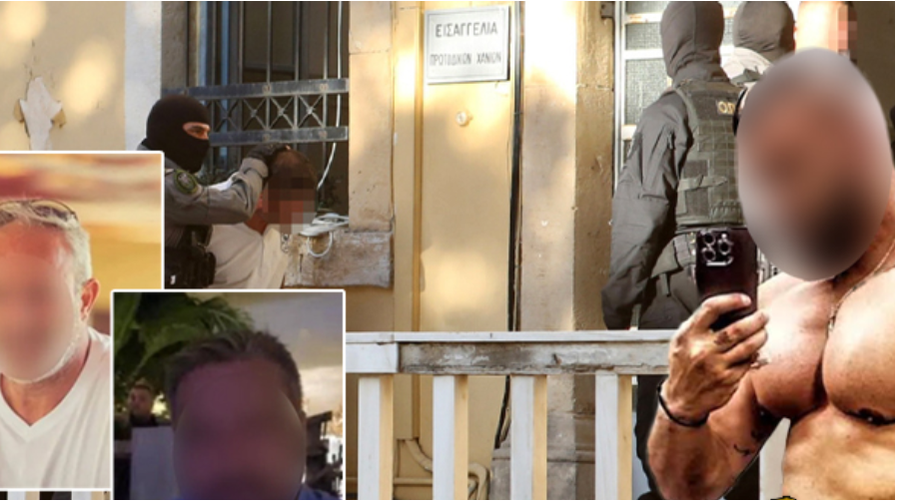
Members of the criminal organization that was dismantled in Crete, and specifically in Chania, face a series of charges that constitute almost half of the articles contained in the Greek Penal Code.
The gang, which was active in drug trafficking, extortion and bombings, had members ranging from police and military officers to businessmen, while finding a way to buy and sell church land.
As if that weren't enough, she also "distributed" diplomas in collaboration with university professors.
"Australos", "Mikros", "Atzela", "Mbigalis", "Koulis" and "Agas", are some of the nicknames of the accused. Among those arrested is a police officer nicknamed "Gomena" or "Kopela" and an Air Force soldier, while two well-known businessmen from Crete are said to have played a key role.
The criminal organization also has a "female scent", as there are two women among the accused.
The targets of extortion were very often hoteliers, while members of the network drove around in expensive cars and motorcycles.

Structure and operation of the organization
Zougla.gr reveals the scheme of how the 49 members of the criminal organization operated, while the role of 41 other individuals is also being investigated.
The leader of the organization is suspected to be PA, from Kolymbari, Chania, who, together with 7 other people, supplied drugs to users and other members of the criminal organization, dividing the prefecture of Chania into three groups, while each subgroup trafficked a specific drug (cocaine, cannabis, heroin).
Key members then legalized the black money in various ways, either by paying the cash equivalent of the drugs by transferring it to a bank account, Iris or Revolut, of the members, or via a bank card on the electronic payment terminal "POS" system of the criminal organization members' legitimate business.
The investigation revealed that the defendants maintained relationships and contacts with the two men responsible for the bomb in the apartment building in Chania where a police officer lived, while two businessmen in the hotel and tourism sectors, who allegedly solved many problems, played an important role in the activities of the criminal organization.
The investigation also revealed that they were also blackmailing members of the church community, with a total benefit of over 1.5 million euros.
In addition to PA, who was the leader, the Greek Police determined that there were 7 other key members. The aforementioned were the ones who supplied other "executives" with narcotics.
However, of particular interest is the fact that the organization, and more specifically 4 of its members, are involved in cases of blackmailing clergy and businessmen (hoteliers) in Chania, declassifying forest land, and exerting influence over the awarding of higher education diplomas.
In addition, there are indications of bribery of government officials. Gang members spent their profits on expensive cars and motorcycles.
"Business" with Church lands
A number of responsible declarations and authorizations were found in the home of a businessman who is a member of the organization. The investigation by the Chania Security Service shows that the organization had found another way to fill its coffers: through the purchase and sale of plots of land that appeared to belong to the Church.
Under pressure, they bought plots of land at a "bargain" price and then either resold them at multiples of their value or exploited them themselves.
At the same time, the phone records reveal the defendants' keen interest in who the new Metropolitan of Chania would be. Using influential people, it appears they sought to have a person of their own choosing take over the position.





Lini një Përgjigje