


 Shkruar nga Pamfleti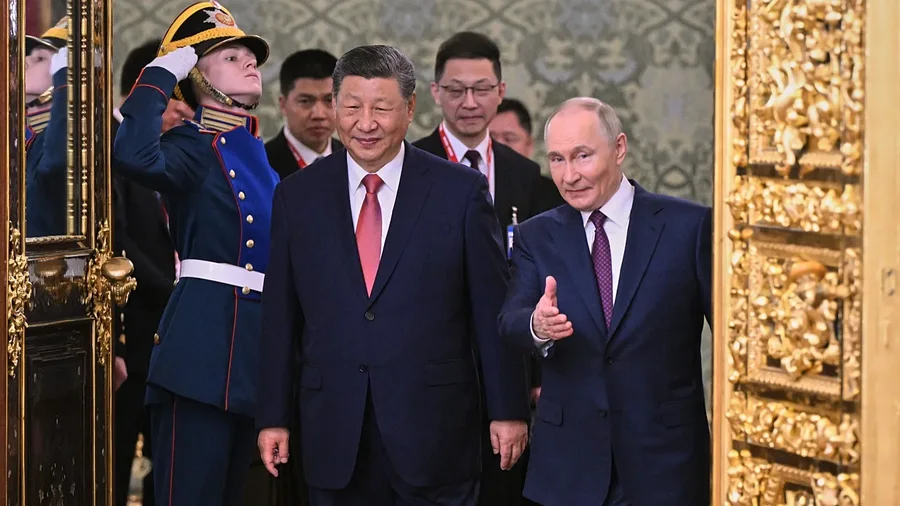
At a time when Trump is boasting about his peacemaking credentials, any new concentration of military power in the East that includes Russia is setting off alarm bells for the West...
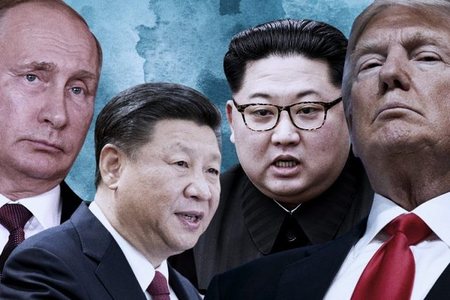
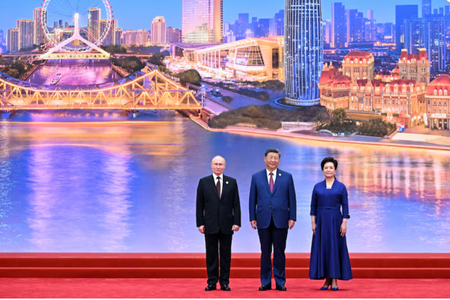
In a show of solidarity with the aggressors in Europe's worst war in 80 years, China's Xi Jinping will meet with his Russian and North Korean counterparts for the first time, while Donald Trump and other Western leaders will watch from afar.
Vladimir Putin and Kim Jong Un's visit to Beijing for a massive military parade this week underscores the Chinese president's influence over authoritarian regimes seeking to redefine the Western-led global order, while Trump's isolationist stance is straining long-standing US alliances.
The gathering of what Western analysts have dubbed the “Axis of Disruption” could build on a mutual defense pact signed by Russia and North Korea in June 2024, and a similar alliance between Beijing and Pyongyang, an outcome that could change military calculations in the Asia-Pacific region.
Kim arrived in China early Tuesday on his special train. Meanwhile, Xi and Putin gathered at the Great Hall of the People for a meeting with Mongolia's leader, where they are expected to discuss a major gas pipeline project and bilateral talks.
Putin thanked his "dear friend" Xi for the warm welcome and said the close communication showed that Russia's relations with China were at an "unprecedented high level," according to a video posted on the Kremlin's official Telegram messaging app.
"We must continue to take a clear stance against hegemonism and power politics," Xi said at a meeting with more than 20 leaders of non-Western countries at a summit held on Monday, a thinly veiled jab at his geopolitical rival across the Pacific Ocean.
Xi also held talks with Indian Prime Minister Narendra Modi, restoring strained bilateral relations, while Trump increased trade pressure on New Delhi over its purchases of Russian oil.
Trump's Treasury Secretary Scott Bessent on Monday called the summit "performance-oriented" and accused China and India of being "bad actors" fueling Russia's three-and-a-half-year war with Ukraine.
At a time when Trump is boasting about his peacemaking credentials, any new concentration of military power in the East that includes Russia is setting off alarm bells for the West.
“Trilateral military maneuvers between Russia, China and North Korea seem almost inevitable,” Youngjun Kim, an analyst at the US-based National Bureau of Asian Research, wrote in March, noting how the conflict in Ukraine has brought Moscow and Pyongyang closer.
The country transported 600,000 barrels of heavy crude oil by tanker on Monday.
"Until a few years ago, China and Russia were important partners in imposing international sanctions on North Korea for its nuclear and missile tests... They are now potential military partners of the Democratic People's Republic of Korea during a crisis on the Korean peninsula," he added, using the diplomatically isolated country's official name.
Kim is a significant stakeholder in the conflict in Ukraine: the North Korean leader has supplied over 15,000 troops to support Putin's war.
In 2024, he also hosted the Russian leader in Pyongyang, the first summit of its kind in 24 years, in a move widely interpreted as a snub to Xi and an attempt to ease his outcast status by reducing North Korea's dependence on China.
Around 600 North Korean soldiers have died fighting for Russia in the Kursk region, according to South Korea's intelligence agency, which believes Pyongyang is planning another troop deployment.
Putin also told the Shanghai Cooperation Organization summit in Tianjin that a "fair balance in the security sphere" must be restored, in short for Russia's criticism of NATO's eastward expansion and European Security.
His visit to Beijing and expected meeting with Xi and Kim could provide clues to Putin's intentions. / Adapted from Reuters /


Lini një Përgjigje