


 Shkruar nga Pamfleti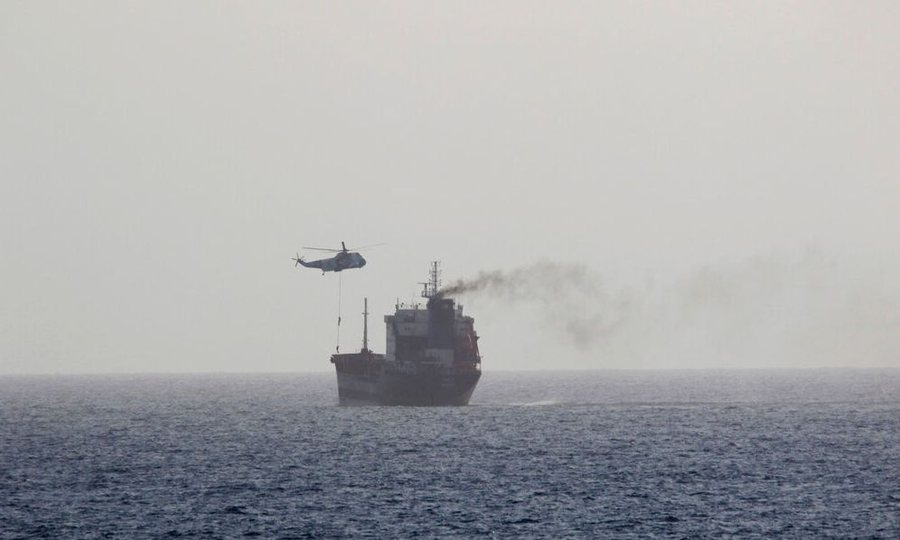
Two Iranian-linked tankers exited the Gulf through the Strait of Hormuz ahead of a planned US blockade of Iranian ports and coastal areas.
Reuters reported that the Auroura tanker is loaded with Iranian oil products, while the New Future tanker is transporting loaded crude oil from the port of Hamriyah in the United Arab Emirates.
US President Donald Trump announced on Sunday, through a long post on the social network Truth Social, a plan to impose a blockade on the Strait of Hormuz.
In his statement, Trump said that the United States would "begin the process of blocking any ship attempting to enter or exit the Strait of Hormuz," adding that other countries would also be involved in this operation.
He also stressed that US forces would stop any vessel in international waters that has paid tariffs to Iran. “No one who pays an illegal tariff will have safe passage on the high seas,” Trump wrote, warning that any Iranian attack on US forces or civilian vessels would be met with a severe response.
The US military's Central Command (CENTCOM) later clarified that the blockade would only apply to ships traveling to or from Iran, including Iranian ports in the Persian Gulf and the Gulf of Oman.
According to this institution, US forces will not impede the freedom of navigation of ships passing through the Strait of Hormuz to non-Iranian ports. CENTCOM announced that further details will be released later.
In the early hours of Monday, Trump published another message on social media regarding the issue, without immediately providing additional details.
According to analyses, if the strategy proposed by Donald Trump were successful, it would remove Iran's main tool of pressure in negotiations with the US and would once again ensure free passage through the strait for global trade, potentially reducing oil prices.
However, experts point out that a naval blockade is considered an act of war and requires significant and prolonged engagement of warships.
"Trump wants a quick fix. In reality, this mission is difficult to implement alone and is likely to be unsustainable in the medium and long term," said Dana Stroul, a former senior Pentagon official during the Biden administration, currently at the Washington Institute for Near East Policy.
The US military has not yet provided basic details on the plan, including the number of ships to be deployed, the possible use of fighter jets or the participation of Gulf allies. US Central Command did not respond to requests for comment.
Experts estimate that with a sufficient number of ships, the US Navy could impose a blockade that would discourage many commercial tankers from transporting Iranian oil.
However, it remains unclear whether the United States would be willing to stop and seize, or even damage or sink, ships attempting to break the blockade.



Lini një Përgjigje