


 Shkruar nga Joseph Sarcina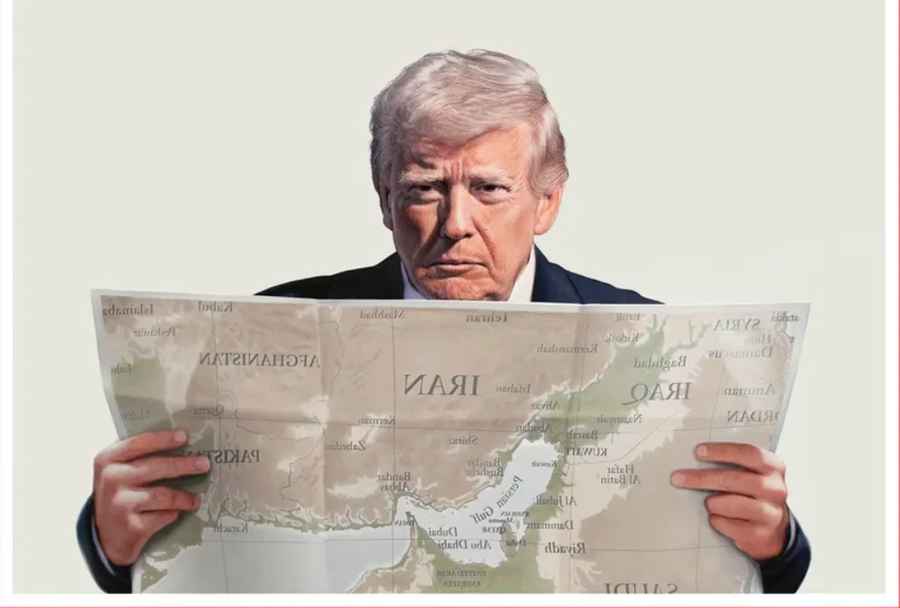
Once again, Donald Trump has made the most dangerous move. Yesterday, he reacted to the failure of negotiations in Pakistan by ordering a naval blockade of the Strait of Hormuz. It is objectively difficult to imagine how this decision could revive negotiations that, formally, have not been suspended, while at the same time preserving the already unstable two-week ceasefire agreed to on Tuesday, April 7.
In theory, therefore, there would be time to resume discussions until April 21. Trump believes that he can convince the Iranians to return to the negotiating table, using force and threats. The President of the United States is attributing to himself the right to stop, on what legal, political or moral grounds it is unclear, all oil tankers that are willing to pay the tax imposed by Tehran.
On the other hand, today the alternative for cargo ships in the Strait is clear: risk stepping on mines laid by the Pasdaran or be blackmailed. But how and why did we get to this point?
What is the way out?
Before the war, no one in Iran had ever considered closing the Strait, through which, it is worth remembering, approximately 20% of the world's oil and gas transit passes. This should have prompted caution, especially among Americans. But Vice President JD Vance appeared in Islamabad, the Pakistani capital, demanding more surrender than agreement. On the other hand, the speaker of Tehran's parliament, Bagher Ghalibaf, refused to make any concessions, as if the country did not risk facing a new and, perhaps, even more massive wave of bombing. As might be expected, the clash between the two maximalist approaches yielded nothing. Essentially, it is as if nothing has changed since February 27, when Omani Foreign Minister Al Busaidi was received at the White House by none other than Vance. The Omani minister had brokered the summit in Geneva and was convinced that there was room for further negotiations. But Vance did not make any significant proposals, in line with Trump's indications.
On February 27, as on April 11, the main issue was the nuclear issue. The Americans, pushed by Israeli Prime Minister Benjamin Netanyahu, want to reduce the capacity of the ayatollahs' atomic laboratories to zero. They demand the handover of over 400 kilograms of uranium already enriched to 60%. Experts explain that to build the bomb, the level must be increased to 90%: a step forward that, at least in theory, Iranian scientists could achieve in weeks or months. Not years.
From Tel Aviv's perspective, this is a deadly threat; for Tehran, it is a vital obstacle. Until a compromise formula is found on this fundamental issue, there is no chance of agreement. The problem is that so far there are no concrete proposals on the table. Neither Vance nor Ghalibaf have budged an inch from their initial stance.
The American diplomatic effort seemed to be weakened from the start by Israel's stance.
Vance negotiated, and Netanyahu, unwavering, continued to bomb Lebanon, as if it had nothing to do with the war against Iran. The Iranian delegation also failed to show the flexibility necessary to at least keep the dialogue alive: they demanded the complete lifting of sanctions imposed by the Americans, albeit intermittently, since 1979 and reaffirmed by the European Union in 2016. Moreover, Tehran is demanding compensation for the damages suffered during the 40 days of conflict: another condition considered unacceptable by Washington.
It is difficult to imagine now if and how the confrontation will continue. Trump has relied on what, in the end, have turned out to be fragile shores.
The leaders of Oman and Pakistan have been largely “facilitators,” gracious hosts but without any added political value. So far, the Europeans have been left out. Now Trump is announcing that the British Navy will assist the US Navy in clearing mines in the Strait of Hormuz. In reality, the UK is taking broader action.
She leads a "new coalition of the willing," made up of 41 countries, including Italy, which is developing a four-step plan to normalize maritime traffic flows. In broad terms: promoting a vote in the UN General Assembly in favor of freedom of navigation, guaranteed by international law; studying further sanctions to increase pressure on Iran; obtaining from the Pasdaran a safe maritime corridor to evacuate ships stranded in the Strait; and establishing economic priorities with shipowners and the most affected industries.
Now a fifth point is needed: a genuine mediation proposal. A written document open to the participation of powers that have so far remained on the sidelines, such as India and, to some extent, China, from which a more direct engagement is rightly expected.
Difficult? Yes, difficult. But there is a precedent that is all too often ignored: the 2015 Iranian nuclear deal, signed by the United States, but also by China, Russia, the United Kingdom, France, Germany and with the participation of the European Union./ Corriere della Sera




Lini një Përgjigje